
The mess you make in the toilet might not smell like roses, but it could help grow them.
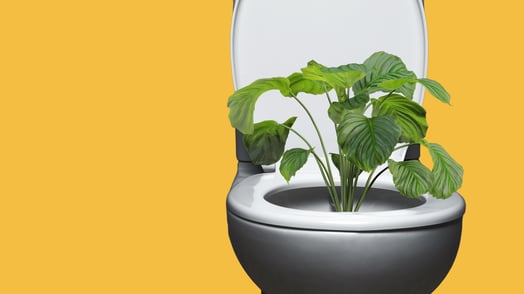
Urine, it so happens, is full of nutrients, like phosphorus and nitrogen (even more so now that everyone’s eating excessive amounts of protein) that are vital to plant growth.
Rather than letting those nutrients go to waste, startups like VunaNexus are developing tech to harvest urine and turn it into a natural alternative to synthetic fertilizer.
How it works
The Swiss startup’s process is similar to the way batteries are recycled separately for their minerals, per The Guardian.
- Using special but normal-looking urine-diverting toilets, undiluted pee is flushed down a pipe to a treatment facility in the basement of a building.
- Then, the yellow stuff goes through a series of filtration tanks that separate micropollutants and odors from the desired nutrients and pasteurize the liquid to kill any viruses.
- What’s left is distilled water and usable fertilizer, or “Aurin,” which the startup claims is the only mineral fertilizer made entirely of human urine currently on the market.
“This is not a hippy thing”...
… founder David de Chambrier told The Guardian. Although that’s how it was widely regarded until the wars in Ukraine and Iran made raw materials for fertilizer inaccessible and sent prices soaring. Then, suddenly, alternatives like Aurin started seeing serious demand.
Not only are they more sustainable than synthetic fertilizers, they’re also critical at a time when:
- Fertilizer prices are expected to rise by nearly a third this year.
- The United Nations estimates 45m people globally are at risk of acute food insecurity due to strained fertilizer supply.
Fortunately, several other startups are working on similar solutions.
What’s next?
Aurin is currently being tested by cities in France and Switzerland, installed in residential and commercial buildings (including the European Space Agency’s headquarters), where it is already recycling 3m liters of urine annually.
The ultimate goal is to bring cheap, sustainable crop fuel to urban and rural communities — though, for now, that’s proving to be a challenge: Extracting one kilogram of nitrogen from pee using VunaNexus’ process is currently 40x-50x more expensive compared to synthetic fertilizer.
Gee whiz — who knew something so gross and free could be so expensive?
%20copy%205-1.png)
%20copy%2021.png)
%20copy%2016.png)
%20copy%204.png)
-1.png)
%20(3)%20(1)-1.png)
-1.png)
%20(1).png)