Customers have been frequenting convenience stores for their affordable prices, greatly improved food selection, and, well, convenience. Texas-based Buc-ee’s even has its own cult following.
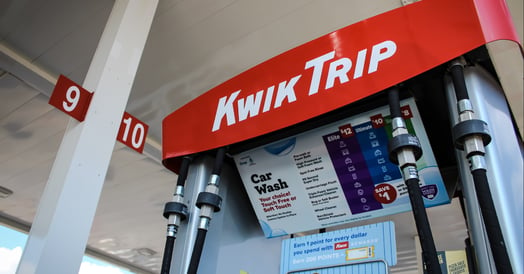
Yet it’s Kwik Trip, a Wisconsin-based gas station chain with 900+ locations across the Midwest, that topped this year’sAmerican Customer Satisfaction Index (ACSI) convenience store study with 84 points, compared to Wawa and Sheetz’s 82, and Buc-ee’s 79. BP-owned ampm came in last at 73.
Why?
Forrest Morgeson, associate professor of marketing at Michigan State University and director of research emeritus at the ACSI, said via a release that the top convenience brands don’t just sell coffee and snacks, but build communities.
“As in-store sales outpace fuel and digital tools become table stakes, the brands that will win are those that double down on quality, innovation, and authentic connection,” he said.
So how exactly does a c-store build a community? Morgeson noted that because most offer a similar array of items, differentiation is key. That often involves a rewards program, members of which typically:
- Visit their store more often
- Are more likely to recommend the brand to others
- Report greater overall satisfaction
They’re also more likely to use and value a store’s mobile app. While just 34% of respondents reported using a store’s app, that figure increased to 60% among loyalty members.
What sets Kwik Trip apart?
It has a small grocery section, its own bakery, and a branded coffee line, plus offers made-to-order food — key at a time when 92% of consumers say food and drink, not gas, is their primary reason for visiting a c-store.
The Wisconsin Rapids Tribune asked members of the Wisconsin Kwik Trip Enthusiast Club Facebook group, which has 158k+ members, what they liked about it. Respondents appreciated the stores’ cleanliness and food, but also the fact that workers say “See ya next time” when customers leave and the brand’s funny social media presence.
Also of interest: Kwik Trip recently announced it would round down all cash transactions to the nearest five cents to avoid requiring pennies, which the federal government is phasing out. Americans for Common Cents, which has lobbied to save the penny, previously raised concerns that retailers would round up.
Ecommerce and Retail
%20copy%207-1.png)
%20copy%2012.png)
%20(1)-1.png)
%20(1)-2.png)
-1.png)