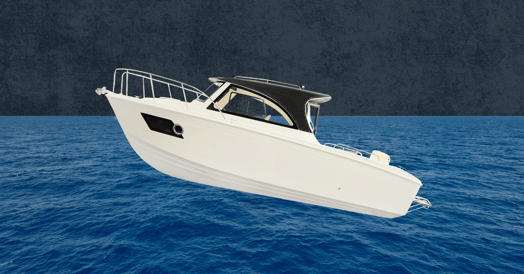
No captain. No crew. No scurvy — one multisector maritime startup sent a solar-powered vessel 7.5k miles across the Pacific from San Diego to Japan, unmanned.
"Great news for Navy divorce rates!" said Navy veteran Mike Lehn, who served aboard the USS Pittsburgh, a now-decommissioned attack submarine.
He's only half joking. Long deployments have strained marriages and have deeply affected the physical and mental well-being of those at sea — an issue reinforced by the recent news from the USS Abraham Lincoln.
Research and commercial crews also endure long stretches of isolation on voyages.
Seasats, the San Diego startup developing autonomous vessels, is ready to make some of the most dangerous jobs on the planet a lot safer.
How it started
Founded in 2020 by CEO Mike Flanigan, Seasats was born from the idea that a “healthy functioning and free ocean is fundamentally key to human existence,” Flanigan told The Hustle.
Mankind has been seafaring for over 50k years, and the ocean's challenges have made the maritime industry a hub of innovation. "Robotics and autonomy are enabling a new level of access and cost reduction that is creating a revolution and how we can operate on the ocean."
Seasats' ships include:
- Lightfish (flagship): 11 ft, solar-powered, 6-month/8k-mile range — crossed the Pacific.
- Quickfish: built for speed (35+ knots), lasts only about a month unattended.
- Heavyfish: largest option — 9k lbs, 6-month endurance.
How its going
Seasats is showing promise in every capacity — working tech and securing investments.
- $40m raised total, including a recent $20m Series A
- $100m+ in government contracts
- Costs 10-30x less than crewed vessels for similar missions
We shouldn’t expect Moby Dick sized autonomous boats anytime soon though. "The economics and liability for shipping converge on minimal crews, not zero crews," Flanigan said, comparing it to aviation. “Automating 99% of a trip is easy, but the last 1% keeps humans in the loop.” Flanigan said the biggest challenges are similar to those in the space industry, where the underlying physics is brutally hard.
Only half-kidding about divorce rates, veteran Mike Lehn is fully serious about autonomous boats, saying they “could significantly alleviate the fatigue and melancholy that come from long missions. A positive resource in shipping, research, and warfare.”
Transportation
%20copy%2012.png)
%20copy%2018.png)