.jpg?width=48&height=48&name=IMG_2563%20(1).jpg)
If you’ve ever envied a nearly toothless baby sucking down a pouch of fruits and veggies, you’ll be delighted to know you can now join in on the fun.
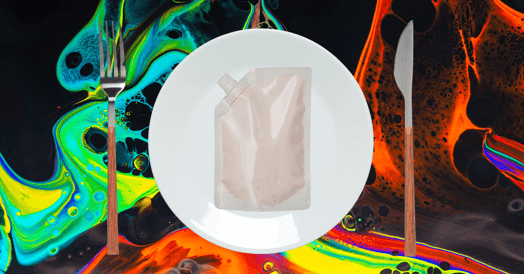
While many adults do have teeth, they don’t have time — especially burnt out millennials. But those sleepy consumers still care a lot about their health, sending many in search of a quick, mindless solution.
Enter: goo
For those too tired to meal plan or prep, a growing number of meal-replacement companies are promising nutrition, hold the chewing. And the sector is growing faster than a rehydrated blueberry, per The New York Times:
- Liquid+, which touts a “liquid salad,” saw December 2025 sales surpass $100k after going viral on TikTok.
- Huel makes ready to drink shakes, powered meals, and dehydrated hot options. The company reported $289m in revenue in July 2024, a 16% YoY increase. After introducing its products in Costco and Target, US retail revenue jumped 300%.
- Ka’Chava makes “all in one nutrition shakes” that cost $70 for a bag of powder.
It’s not a brand-new concept: Soylent walked so these on-the-go meals could run. Created by a software engineer in 2013, the Silicon Valley meal replacement became emblematic of toxic work culture.
Though less sinister…
… today’s meal replacements come with their own concerns. For one: Do we have teeth for a reason? Dietitians say “maybe.”
Plus, a recent Consumer Reports analysis found that many meal-replacement powders and shakes contain more lead in a single serving than a person should consume in a day.
- The potential perk: As GLP-1 use explodes, nutrient-packed meal replacements could pack more nutrients into shrinking appetites.
So, will all your meals be liquid soon? Probably not.
But with the meal-replacement shake sector projected to be worth $7B by 2035, we suggest keeping a straw handy.
Food
%20copy%208.png)
%20copy%2011.png)
%20copy%206.png)
%20(1)%20(1)-1.png)
-1.png)