Clothing is a basic necessity. Fashion, on the other hand?
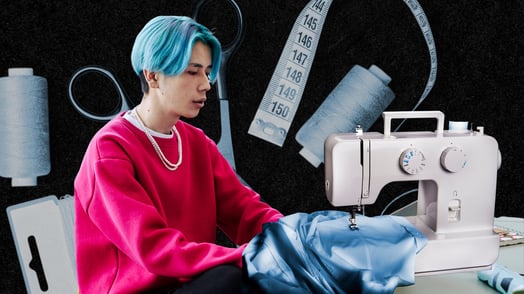
It’s more of a luxury expenditure that falls to the wayside when you’re already stretching your budget to afford other necessities like food and rent.
That’s why, as the cost of living continues to increase, people are getting crafty with the way they come by nifty new threads. The evidence: Sewing is back in style, per The New York Times.
Not just your grandma’s hobby
Instead of buying new, people of all ages, but particularly Gen Zers, are increasingly opting to patch up their old clothes or mend secondhand finds.
The trend, the latest geriatric activity to come into favor, is evident on TikTok, where sewing videos have racked up millions of views, and in other corners of the internet like Reddit, where the r/sewing subreddit now boasts 2m+ followers.
And despite being predicated on others’ financial hardships, it’s been a boon for the businesses teaching people the age-old craft…
… like the New York Sewing Center
Launched in 2014, it offers classes ranging from ~$50 to $300 — e.g., intensive daylong boot camps, “sip & sew” sessions, courses for teens, embroidery workshops — and a membership program that lets people use its equipment and space for just $10/hour.
Founder and former fashion designer Kristine Frailing told NYT that while demand has always been steady, it’s now (a-hem) bursting at the seams, with revenue up 75% YoY and classes filling up weeks in advance.
Business has been so good, in fact, that it expanded to a second location in March and is opening a third in December.
Patching pants, pinching pennies
Economic uncertainty tends to bring out people’s crafty side — the pandemic, a time defined by a lot of uncertainty, also saw renewed interest in sewing and similar crafts, as did the Great Recession before that.
But there are other factors driving the trend, too. Sewing taps into a growing interest in:
- Upcycling, a market worth ~$8.5B and projected to hit $20B+ by 2034. According to a Capital One report, ~33% of US clothing purchases in the last year were secondhand.
- Phone-free, hands-on skills — disillusioned by the digital age, many young people are trading desk jobs for old-school trades like butchery, farmwork, and, well, sewing.
-2.png)