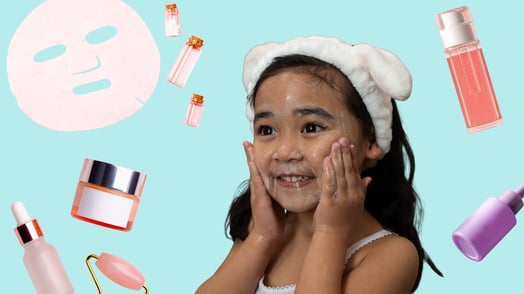
What need do children have for expensive anti-aging lotions and serums? None — but that doesn’t mean they don’t want it, anyway.
TikTok-influenced teenyboppers have been driving demand for skincare since 2023, when beauty retailer Sephora reported a 2x increase in the number of customers ages 9-12 (AKA “Sephora tweens”) over the past five years, per Forbes.
Now, a new crop of beauty companies are tapping into the youthful market with kid-friendly serums, toners, and cleansers, packaged in colorful containers and touted as “clean,” “gentle,” and dermatologist-tested.
- Evereden, which launched in 2018 as a skincare company for mothers and infants, released a preteen skincare line in 2021. Today, it is the brand’s fastest-growing segment and a driving force behind Evereden’s $100m in annual sales. (It also sells crayon-shaped lipstick and Barbie-branded moisturizer for kids as young as 3.)
- Sincerely Yours, another new skincare brand for tweens, co-founded by a 15-year-old influencer, saw 80k+ people attend a Sephora-hosted pop-up event in September. Its products sold out within the first hour.
- Others include Bubble Skin Care, Pipa, and Rini, which launched in November, founded by celebrity-entrepreneur Shay Mitchell.
These products are more expensive than traditional children’s options — e.g., Johnson’s baby lotion costs just ~$5, compared to Evereden’s $28 moisturizer — but cheaper than ones by kid-favored adult brands, like Drunk Elephant’s $70 lotion.
Starting them young
The children’s cosmetics market, a global industry valued at ~$1.6B, is undeniable.
A 2024 study by Ulta Beauty found that, thanks to social media, kids now start toying around with beauty products by age 8. Whereas, for millennials and Gen Z, that didn’t happen until about ages 15 and 12, respectively.
On TikTok, young girls are mimicking older influencers with their own GRWM-style videos that showcase their extensive beauty routines.
But not everyone is happy about it
The beauty-for-babies trend has divided parents, dermatologists, and the internet, with many calling it out as unnecessary and potentially harmful to kids’ developing skin as well as their mental health.
- Rini faced serious backlash over its debut product, ~$7 animal-themed hydrogel sheet masks for preschoolers, and its “healthy habits, spark confidence” marketing language, which one critic who spoke to The New York Times called dystopian.
But with adult skincare brands already making bank selling kids products meant for more mature skin, these new companies argue they’re simply offering safer alternatives to products kids are already curious about.
Let’s just hope that, with the way things are going, “baby botox” doesn’t eventually take on a more literal meaning.
-2.png)