Before you hit the beach this summer, it might serve you to know a bit about the current climate surrounding coastlines, which have become hotbeds of controversy, thanks to one divisive beach day necessity: sun shades.
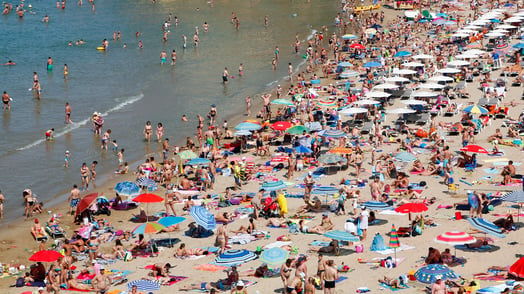
The structures, while keeping some beachgoers nice and cool, has got others hot and bothered.
And the tensest battleground is perhaps the east coast — specifically, the Carolinas, where the Shibumi, a $255+ blue canopy, has become ubiquitous along the states’ coastline, per The Wall Street Journal.
- Invented by three UNC-Chapel Hill students, they’ve sold 500k+ of the four-pound wind-powered sun shades since 2016, when the trio handmade the first prototype.
- Beloved by beachgoers for its easy setup and light weight, it consists of a polyester sheet and an arched aluminum pole that’s meant to be buried in the sand.
So, what’s the issue?
Surprisingly it’s not the cost, but the fact that they’re harshing the vibes of a relaxing day by the ocean, according to critics.
- Local residents, including those with beachfront property, consider the sea of blue tarps an eyesore, while some beachgoers say the fabric flaps in the wind so loudly that it’s hard to have conversations.
- Others claim their large size (~15x9 feet), which has made them popular among families and big groups, can lead to congestion, space hogging, and mounds of leftover trash.
One of the biggest issues for city officials, though, seems to be safety.
- South Carolina’s Myrtle Beach, as well as a few beaches in Delaware and New Jersey, have restricted their use, citing hazards like obscuring lifeguards’ views of the water, blocking beach access for emergency responders, and tripping over guy lines and anchors.
But the problem is bigger than Shibumi
Large sun shades and canopies, which have become a preferred apparatus of refuge for sun bums in recent years, have sparked outrage on beaches from the US to Australia to the UK and Spain.
As a result, a growing number of locales are now banning them and implementing fines over similar concerns (though that hasn’t stopped people from propping them up illegally, anyway).
Shibumi co-founder Dane Barnes told WSJ he now dedicates much of his time to lobbying against those bans.
But if that doesn’t work out, the company is also pushing a new canopy meant for parks and personal backyards, where the city has no say over how you choose to chill.
Small Business