Every fall, America drowns in pumpkin-flavored everything. But each spring, there’s a lesser-known seasonal frenzy that grips communities around the country, driven by scarcity and the sweet taste of nostalgia: Indian mangoes.
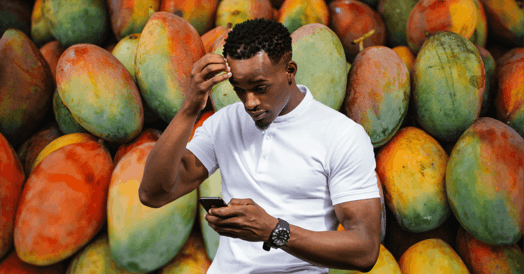
Specifically, varieties like the Kesar, Banganapalli, and the coveted Alphonso, AKA the king of mangoes.
- Grown along India’s western coast, it’s protected by its own Geographical Indication tag (similar to Champagne or Parmesan-Reggiano) and renowned for its rich, buttery flavor and sweet aroma.
- Demand has grown steadily (particularly among South Asian communities) since 2007, when the US lifted an import ban on Indian mangoes, with then-President George W. Bush calling it “a hell of a fruit” and kicking off what’s known as “mango diplomacy.”
So, how do you get your hands on one?
IYKYK…
… and if you don’t, you probably won’t be munching on some of the world’s most delectable fruit this season, which runs from April through June.
Even for the initiated, many of whom place orders through private mango dealers, scoring a crate of these rare varieties can be a challenge.
- For the real fiends, it can require waiting attentively on Whatsapp mango shipment alerts, tracking flights, leaving work meetings, and driving to warehouses and parking lots at odd hours, per The Wall Street Journal.
What makes them so hard to get?
Logistics, mainly: On top of their seasonality, they’re also highly perishable due to their thin skin, making them tricky to import.
That means consumers have about seven days to eat them, and that one supply chain hiccup could spell an expensively rotten time for both importers and devoted mango lovers.
Plus, already ~5x the cost of regular supermarket mangoes, this year they’re even pricier — going for ~$60 a dozen, up from ~$40 in 2025 — due to a weather-related shortage, tariffs, and rising fuel prices.
But none of this, WSJ reports, has tamped down demand for a fleeting fix of the sweet treat.
Meanwhile, in India…
… which produces ~50% of the world’s mangoes but exports just 1%, supply is abundant and, like pumpkin patches in America, the goods can be harvested right from the source.
Kerala-based agricultural startup Rent A Tree lets customers lease a mango tree for a whole season, guaranteeing ~66 pounds of fruit, which they can harvest themselves or have shipped anywhere in the country — starting at less than $100.
-1.png)
%20copy%208.png)
%20copy%2011.png)
%20copy%206.png)

%20(1)%20(1)-1.png)
-1.png)