Some of our favorite startup innovations are those that make workers safer: for example, the robot that tamps down grain in silos, or the one that paints lines on roads. They offer a practical solution to some of the most dangerous, yet necessary work humans perform.
Power-line work is one of those risky jobs. Though the industry adheres to practices meant to safeguard workers from dangerous currents, fatal accidents can still occur.
One of the biggest hazards is induction:
- That’s when a worker comes into contact with a line or piece of equipment that isn’t supposed to be energized but has become so due to nearby electric or magnetic fields, resulting in shocks, injury, or death.
- There were 81 induction accidents in the US between 1985 and 2021, resulting in 60 deaths, per US Bureau of Labor Statistics data.
But Eduardo Ramirez Bettoni, who helped develop a suit that protects workers and who now works for a power-distribution equipment firm, told IEEE Spectrum that he believes there are hundreds of induction contacts every year in the US alone.
He also suspects incidents are increasing as grid operators attempt to boost capacity.
About this suit…
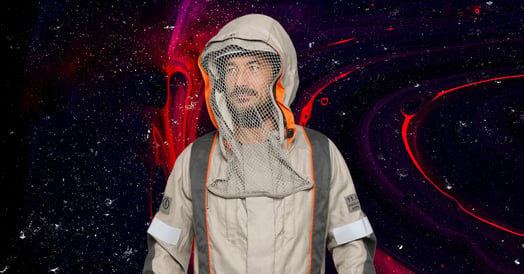
It comes from Electrostatics, a Budapest startup that makes jumpsuits (complete with gloves and socks) to protect workers.
How they work:
- The suits are made with conductive materials, but also have low-resistance conductive straps through which current can flow out.
- They’re flame retardant and insulated to protect against heat.
- They keep exposure below the “let-go” threshold — when a current is so strong, it causes the muscles to seize involuntarily and prevents someone from releasing themselves.
Electrostatics began selling the suits in 2023, and now provides them to transmission operators across the US, Europe, Canada, and elsewhere. In the US, they cost ~$5.2k per suit.
A small price to pay for safety — and not as expensive as other protective gear. A firefighter’s full outfit, for example, can run between $12.8k and and $18.6k.
labor