Trust falls. Improv workshops. Rage rooms.
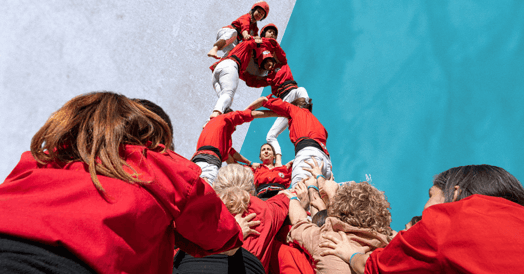
If the mere mention of team-building activities elicits groans — brace yourself for the latest: climbing on the boss's shoulders.
Companies in Spain are clambering to join the newest fad: castells — human towers built of coworkers, per The Wall Street Journal.
Climbing the corporate castell
Dating to the 18th century, the Catalan tradition of castells are undoubtedly impressive symbols of collaboration, unity, and communal strength.
TeamTowers, which leads castell workshops, contends the experience fosters shared leadership, trust, communication, and commitment. And participants, ranging from IKEA employees to tech workers, seem to agree.
While some team building activities may seem silly, awkward, or trivial, studies show they can be effective.
- One study found team building activities boosted productivity by 30%.
- Conversely, workplace isolation derailed productivity up to 21% according to Gallup.
- Group bonding activities led to a 16% increase in how meaningful employees judged their work to be, according to Harvard Business School.
- Another study found that 48% of participants found greater meaning at work when they participated in activities that included three core elements of group rituals: physical, communal, and psychological.
- A Harvard study found that the "best predictors of productivity were a team’s energy and engagement outside formal meetings."
- The study also found social time was deeply critical to team performance, leading to 50% improvements in communication.
Risky business
While there are potential benefits to team building — and a multibillion dollar industry that also benefits — there are downsides.
- Physically demanding activities like castells, escape rooms, and, yes, flying trapeze, risk ostracizing employees with disabilities (visible or not) or other limitations. (Not to mention the risk of injury.)
- A recent study reveals that nearly half of employees find "forced fun" activities to be uncomfortable. They feel like a performance review, while ignoring the diversity that makes a great team.
- Activities can feel like a flashy fix that glosses over fundamental team or leadership issues.
As the return-to-office push continues to intensify, we're bound to see increasingly outlandish team building activities designed to rebuild connections or lure workers back. After all, trust falls over Zoom don't work too well.
Guess we'll be seeing you from the top of the castell.
Workplace Issues
-1.png)