If you were asked to imagine a driverless car, you’d probably think of:
- An autonomous vehicle, like a Waymo
- A situation that’s gone very awry
With Vay, a Berlin-based startup that offers on-demand car rentals in Las Vegas, it means a third thing: remotely controlled cars.
How does that work?
Vay’s fleet consists of 100 Kia Niro SUVs, per Business Insider, which customers can order through its app.
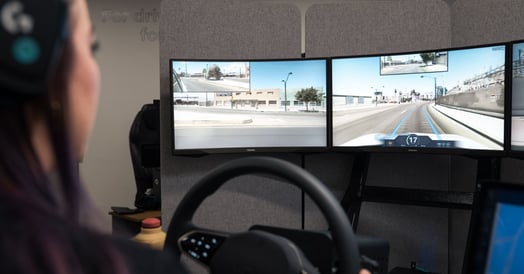
- Customers can pick up their car themselves, or a remote driver — a human sitting in Vay’s office in front of several monitors, a steering wheel, and pedals — can pilot it from Vay’s office to the customer.
- Once a customer receives the car, they take over driving and the remote driver is disconnected. Customers return cars in designated service zones or hand them back off to remote drivers.
Vincent Reddy, an operations lead, told BI that Vay’s remote driving setup is similar to “high-grade racing sims” but without the ability to feel the road or the car’s movement.
Unlike autonomous vehicles, which often use LiDAR to navigate, Vay uses only cameras. It’s a lot cheaper, and a human — not a bot — remains in control.
Vay’s cars can’t drive over 25mph until renters take over, and if there’s an emergency, remote drivers can push a red button to pull over.
Who uses this service?
Vay’s been operating in Vegas since January 2024, and, as of March 2025, had provided 10k+ rides. Customers seem to like it, with some logging 100+ trips.
Vay aims to be cheaper and more convenient than Uber, charging $0.35 per minute while driving and $0.05 while parked.
The Las Vegas Review-Journal estimated that a trip from UNLV to the Hoover Dam and back, with a one-hour stopover, would cost ~$32. About half of Vay’s trips include a stopover — which makes sense considering it’s probably easier to use a service like this than call multiple Ubers to run a day’s worth of errands.
BTW: A McKinsey survey suggested some use cases for letting a remote driver take over your car, including valet parking, refueling or recharging, vehicle maintenance, assisted driving for those with disabilities, and remote chauffeuring.
%20copy%2012.png)
%20copy%205-1.png)
%20copy%2021.png)
%20copy%2018.png)
%20copy%2016.png)
%20copy%204.png)
-1.png)
-1.png)