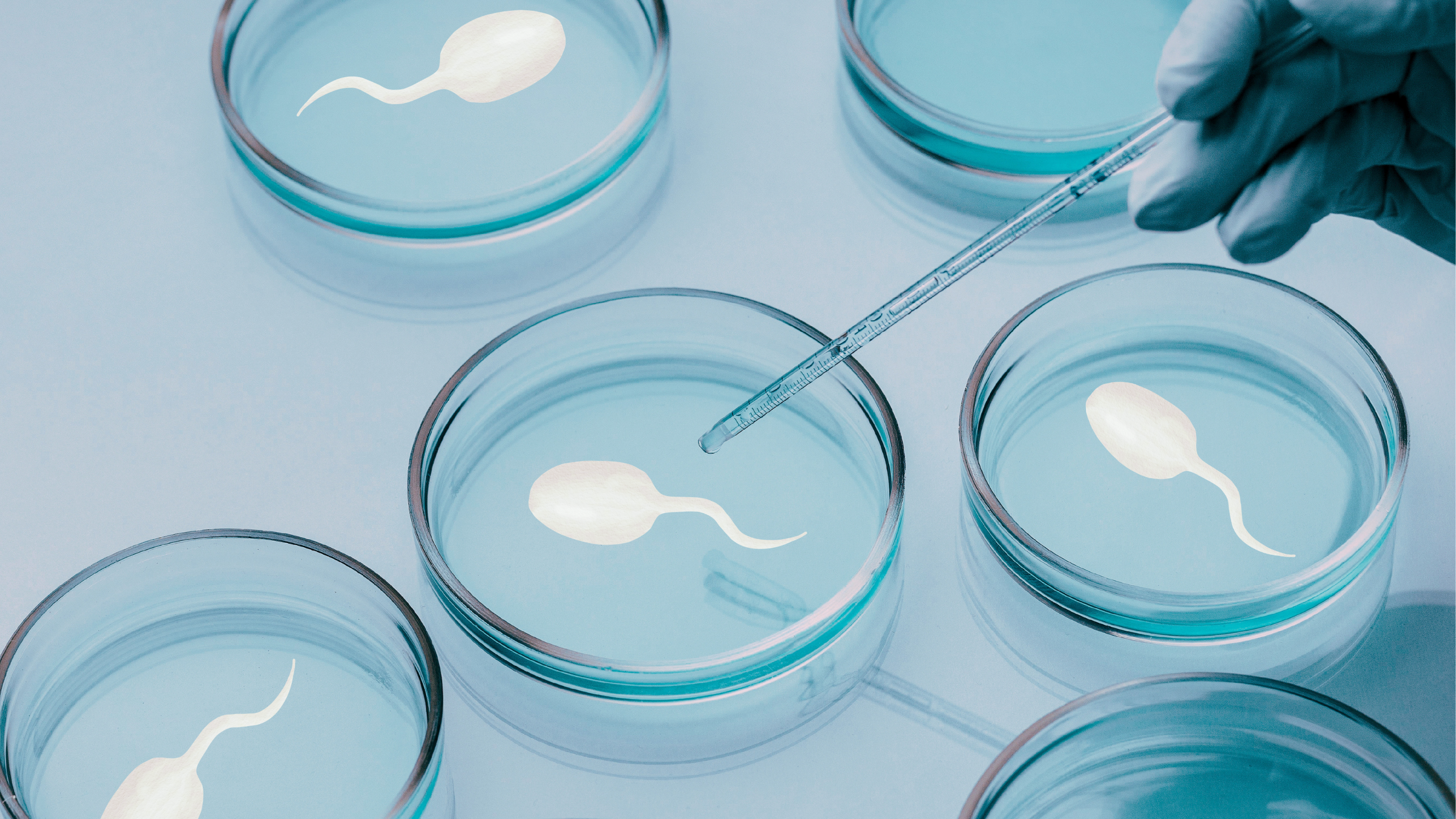
If there’s one thing most people can agree on, even if for different reasons, it’s that animal testing is bad — ask animal rights activists, politicians on either side of the aisle, or even the FDA, which has been pushing to move away from the practice since 2022.
%20copy%2017.png?width=524&height=393&name=SF%20TEMPLATES%20TO%20USE%20(2)%20copy%2017.png)
Not only is it cruel, it’s also a wildly expensive, time-consuming, and unproductive way to gauge the efficacy and safety of drugs on humans (e.g., finding a cure for cancer in rats doesn’t necessarily equal finding a cure for humans because, well, we’re not rats).
- Clinical trials can cost tens of millions of dollars and 90% fail to receive FDA approval, a number that pretty much hasn’t changed for decades, largely due to the research models behind them, like animal and single-cell testing.
Biotech startup Vivodyne thinks its tech could help do away with animal testing while making drug development faster and a lot more effective.
It just opened the world’s largest “biological data center” near San Francisco, where it is using AI to run experiments on lab-grown human tissue.
How it works
- In 12 robotic mini labs, it uses human cells to grow 20+ different types of human organ tissues on “biological chips” to the size of large medical biopsies that self-assemble into structures with blood vessels, immune cells, and some of the same organ functions.
- The automated system then runs thousands of AI-designed experiments on the tissues, both healthy and diseased, to see how they respond to different therapies or drugs, powering a self-driving experimentation loop to better predict how safe and effective a drug will be.
A better way to test
At least 20 other biotechs are also working on “organ-on-a-chip” platforms. But what sets Vivodyne’s system apart is its scale.
- The startup’s data center can run controlled trials on 3m+ human tissues every year — twice the capacity of every clinical trial in the US combined, and up to 1k times the scale of similar platforms.
Plus, Vivodyne, which is already working with several major pharmaceutical companies, says that its AI system would not only speed up drug discovery but also vastly enhance our understanding of human biology by making it “computable.”
In the meantime, CEO Andrei Georgescu says that animal testing will continue, but that lab rats should probably consider their retirement plans pretty soon.
“The failure rate is so high from animals, I think any alternative is going to very quickly dominate,” he told Fast Company.
Science and research
%20copy-2.png)
%20copy%2013.png)
%20copy-1.png)
%20(1)%20(1)-1.png)
-1.png)