Since 2001, the growth of suburban America has contributed to the loss of 24m+ acres of natural habitat, with white picket fences and roads replacing local flora and fauna.
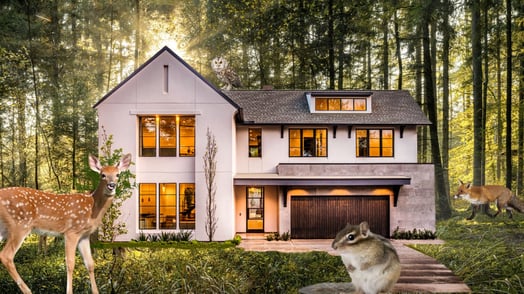
But Homegrown National Park — not an actual place but a marketing concept with the goal of restoring 20m acres of natural habitat in America — thinks suburbia could be the answer to tackling the biodiversity crisis it’s helped create, by taking conservation efforts private.
HNP’s first dedicated community, Sunbridge, a residential mega-development near Orlando, Florida, is on its way to doing just that, per Fast Company.
The great out(side your)doors
The expansive community will cover 27k acres, including homes, retail spaces, and 13k acres of natural habitats, with lakes, wetlands, and plants native to the region.
- The homes range in price from ~$300k to $600k.
- Residents will be given digital water dashboards to track their consumption, plus resources on lawn care and conservation to help them adhere to HNP’s philosophy of sustainable landscaping and native planting.
So far, a few neighborhoods, walking trails, and a school have been built, but the ambitious project will take ~30 years to fully complete, with a goal of 30k+ total houses.
A win-win
For Sunbridge, it takes advantage of Central Florida’s population boom by offering housing, while residents are both steps from being entrenched in nature and also just 15 minutes from the airport.
It also offers cost savings and a healthier environment for kids and pets, since native plants require less fertilizer and water, meaning fewer chemicals and lower utility costs.
Why do conservation on private land?
Because if we don’t, “we’re going to fail,” HNP co-founder Doug Tallamy told Fast Company. “You can’t say we’re not going to do conservation where we develop, because that’s everywhere.”
- Nearly 80% of US land is privately owned, including 85% of land east of the Mississippi.
- Suburban sprawl has put ~40% of American plants, animals, and ecosystems at risk.
Advocates say rewilding efforts like Sunbridge’s can help slow the biodiversity crisis taking place globally.
Sunbridge sets the stage for a new approach to sustainable suburban development, but you don't necessarily have to move to do your part — HNP tracks small-scale efforts of landowners and local orgs with an interactive “biodiversity map” that you can check out here.
%20copy.png)
%20copy%2013.png)
%20copy%2010.png)
%20copy%205.png)
.png)
-1.png)
-1.png)

-1.png)