The UK produces 30k tons of to-go coffee cup waste annually, most of which can’t be recycled and wind up in the trash.
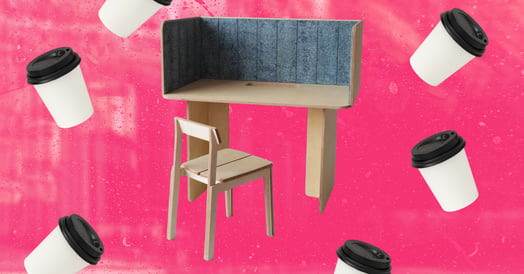
London-based Blast Studio’s solution is to turn the cups into a biomaterial it calls Cupsan, per Dezeen. Cupsan comes in high-density boards — each square meter containing ~840 cups — that can be shaped just like wood.
Blast Studio began working with mycelium, but switched to paper-pulp, which is easier and faster to scale.
How it works
First Mile, Blast Studio’s waste-management partner, collects and delivers cups from around North London. Then, Blast:
- Shreds and cleans the cups, a process which also removes their plastic linings
- Adds a plant-based binder to hold fibers together
- Cures the material
Blast typically processes nearly one ton’s worth every month. The resulting boards have a texture like stone. Color can be added, or the original cup’s color can remain.
"For us, the cup has become a symbol of the megacity, of speed and disposability,” co-founder Paola Garnousset told Dezeen. "By reworking it into Cupsan, we try to slow it down, transforming it into a material that could last for decades."
How it’s been used
Cupsan has been most often used as wall paneling or shaped into furniture. For example:
- A phonebooth for Opendesk, a marketplace for office furniture
- Lampshades for a light installation at One West Point towers in London
- Mini-lampshades and wall panels for Happy Sky Bakery, a Japanese bakery in London
In the bakery’s case, TMTO Architecture’s Kazuya Ogino approached Blast Studios to create a space embracing Wabi-Sabi, a Japanese philosophy that finds beauty in things that are imperfect, impermanent, or incomplete. Each of Cupsan’s boards are different, meaning the bakery’s panels are all irregular from one another.
Elsewhere…
… are several other startups participating in the circular economy. Here are a few fun examples:
- Solgaard makes luggage out of plastic collected from beaches and riverways.
- Bureo recycles fishing nets to create a material that can be turned into clothing, sunglasses, and more.
- Richard’s Rainwater turns rain into bottled drinking water. It even comes in sparkling.
sustainability
%20(1).png)