

👋 Good morning. Better check your phone — your dog might need you. There was lots of new tech on display at MWC 2026, but PetPhone might be among the most important inventions. The $90 smart collar attachment uses GPS signals to track your pet and has a “Paw Call Me” feature that triggers a call to your phone if your pet jumps over a foot three times in six seconds. A built-in speaker lets pet owners talk back, because separation anxiety goes both ways. Just make sure DND is off.
STARTING UP

Your hairline — lab-grown
❌ The problem: Current hair-loss treatments slow thinning, but they don’t stop the progression, leaving millions without a long-term option.
💡 The pitch: Tokyo-based OrganTech, Inc. claims to have identified the smallest combination of stem cells needed to grow functional hair follicles in a lab. Researchers combined two known stem cell types with a newly identified cell to create lab-grown follicles that are able to keep growing and producing hair. The company says the new approach would mean treatments that can actually regrow hair, not just slow loss.
🚀 The outlook: With the global hair restoration market projected to exceed $15B in the next decade, OrganTech filed international patents and is pursuing clinical applications targeting alopecia.
NEWS FLASH
-
Cat people: Pet care app Rover says it’s seeing an increase in demand for cat care, especially among Gen Z customers. CEO Brent Turner told Business Insider this is because cats are generally lower-maintenance and lower-cost than dogs. Rover acquired Meowtel, a cat-sitting app, in January.
-
More than meat: Beyond Meat is now Beyond The Plant Protein Co. as its offerings have expanded. In January, Beyond launched a sparkling protein drink that’s done well enough that four new flavors were introduced this month.
-
Life’s a game: AI startup Simile is developing a way to predict human behavior and offer market insights using digital twins trained on interviews with humans and other data. Per Gizmodo, Simile co-founder and CEO Joon Park co-authored a study about simulating human behavior, notably inspired by… “The Sims.”
-
Upkeep help: Startup City Detect attaches cameras to public vehicles, then uses AI to analyze the resulting images for code violations, graffiti, litter, and other problems. Co-founder and CEO Gavin Baum-Blake told TechCrunch that while human employees can track 50 buildings per week, City Detect can track thousands.
NEWSLETTER GOALS

How 52 newsletters found 1k fans
With just 1k email subscribers, you could be earning $100-$1k+ per month. Imagine what you’d do with all that extra money.
Then, feast your eyes on 50+ newsletter launch plans, including early growth case studies on Morning Brew, theSkimm, Milk Road, MarketBeat, and more.
Find your path to profit:
- Niche newsletter summaries
- Revenue and subscribers data
- Main strategy and acquisition channel
- Tools in their original tech stacks
- Links to full-blown case studies
Plus: What made each send unique, which matters more than ever.
THE BIG IDEA
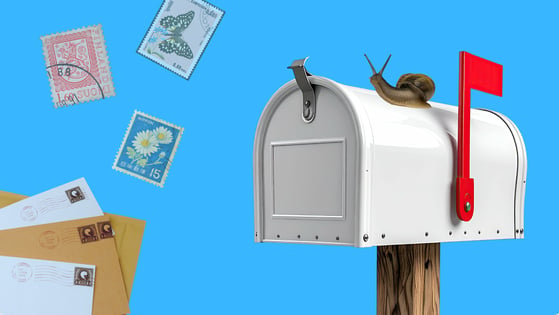
Snail mail is slowly making a comeback
When you check the mail, you can usually expect to find a predictable mix of bills, a clothing catalogue or two, and, probably, more bills
But mailboxes once held a bit of magic. Some of us might remember the small thrill of receiving an unexpected postcard or a letter from a loved one.
For those who miss that feeling — or who’ve never known it — mail clubs are returning some of that whimsy back to our mailboxes.
Signed, sealed, delivering
The concept is simple: For a small monthly fee, mail club subscribers receive an envelope of hand-curated print material, like illustrations, poems, stickers, letters, etc.
They combine Gen Z’s love of physical media and the excitement of a blind box, and have become a popular way for the digitally exhausted to connect offline and slow down from the fast pace of the internet by engaging with things they enjoy in a tactile, distraction-free way.
And while, for some creatives, the point might be to share their art, it’s also proven to be a lucrative side gig, per The Wall Street Journal.
- Last month, designer-turned-crossing guard Christine Tyler Hill started sending out a zine detailing her streetside observations for $8/month. Now, she has ~2k subscribers and pulls in ~$14k a month.
- The Tiny Post by Texas-based Hannah Gustafson, a monthly mailer that includes a personal letter and recipes, brought it $45k+ in revenue in January.
In some cases, demand has been so high that creators, who create, assemble, and send out the packages themselves, are struggling to keep pace.
Not long after launching, Hill had to pause new subscriptions, leading to a 3.6k-person waitlist.
Snail mail’s revival…
… is taking other forms, too. Not all are necessarily analog, but they all tap into the same desire to slow life down just a smidge.
- For ~$88 a year, History By Mail sends subscribers reproductions of historical letters and documents along with explainers.
- The Slowly app takes snail mail digital by connecting users with pen pals around the world. But unlike sending a DM or an email, messages take longer to deliver based on how far pen pals are from one another.
-
Escargot, an AI-powered app that just raised $2.8m in seed funding, lets users send physical greeting cards from their smartphones. For $8, it’ll print, stamp and mail a card for you — no post office trip needed.
HIGHLY RECOMMENDED
Hate marketing? There might be another way to get views. Here’s how one founder built an app that makes $13k/month without having to don a marketing hat.
NEWSWORTHY NUMBER

Discount that shoppers in Iceland, the country, will receive at Iceland, the UK grocery chain, as part of a truce following a decadelong trademark dispute that ended last week, per The New York Times.
Long story short: The supermarket was granted exclusive rights to the word “Iceland” in 2014, but lost them in 2019 after a successful lawsuit by the island nation. Instead of filing yet another appeal, the company, which has 1k+ locations globally, including three in Iceland, has decided to cut its losses, essentially saying, “f*ck this” — and also “sorry.”
AROUND THE WEB
📅 On this day: In 2000, the NASDAQ Composite Index peaked at 5,048.62 ahead of the dot-com bubble burst, falling 75%+ from then to October 2002 and losing $5T+ in market value.
🗽 That’s cool: An isometric map of NYC.
📰 Newsletter: Want to get smarter about financial markets? Get Opening Bell Daily.
🧩 Game: Solve a puzzle, learn a fact.
🐱 Aww: Surprise.
SHOWER THOUGHT
If the "use it or lose it" theory of neuroscience is correct, then we're going to have an absolute explosion of AI-induced Alzheimer's in the future. SOURCE
Today's email was brought to you by Juliet Bennett Rylah and Singdhi Sokpo.
Editing by: Sara "Giving my stamp of approval" Friedman.
Was this email forwarded to you? Sign up here.
Working on something big?
We've got a whole library of business-building resources for you.
Subscribe to our other newsletters
Grow your business: Starter Story | Stay up-to-date on AI: Mindstream
Expert insights: Marketing Against the Grain | Sell better: The Science of Scaling