

👋 Good morning. Before there was Elon Musk and his trillions, there was John D. Rockefeller and his millions. The oil tycoon became America’s first billionaire in 1916, a fortune that would amount to $30B+ in today’s dollars. While there are at least 3.3k billionaires in the world today, with 900+ in the US alone, back in the Gilded Age, Rockefeller’s milestone made the front page of The New York Times. And, ~100 years before that, New York real estate mogul John Jacob Astor became America’s first millionaire. The world’s first quadrillionaire is just a twinkle in his mother’s eye.
NEWS FLASH

👵 Grandma is vibe coding: Rather than hitting the golf course, some baby boomers are spending their retirement years on their computers and phones, building apps, learning AI, and launching businesses. Smartphone ownership among Americans over 50 climbed from 55% in 2016 to 90% in 2025, according to AARP Research, while AI usage nearly doubled, from 18% to 30%, between 2024 and 2025.
👮 Undercover robocop: The FBI built a 22k-square-foot replica of a small town — complete with a hospital, gas station, courthouse, and traffic lights — on its Huntsville, Alabama, campus to train agents in investigating cyberattacks. The Kinetic Cyber Range facility also contains a data center with 200+ servers, and has already trained 1.4k+ students by simulating everything from ransomware attacks on infrastructure to digital forensics investigations. Glad they’re on the case: The US saw $20.9B in cybercrime losses in 2025, a 26% YoY jump.
⚖️ Patagonia v. Pattie Gonia: Outdoor apparel company Patagonia is suing climate activist and drag queen Pattie Gonia for trademark infringement. Patagonia is seeking just $1 in damages, but the case could potentially trigger legal fees exceeding $1m. While Patagonia alleges consumers could get confused by the drag queen’s merch, Pattie Gonia accuses the company of attempting to silence an activist.
MORE NEWS TO KNOW
-
Skipping leg day: People taking GLP-1 drugs became less physically active after starting the medications, according to a preliminary study, with average daily steps falling by ~11%.
- Now playing: A big acquisition. Fox is acquiring streaming TV platform Roku — and the 100m+ people it reaches — in a $22B deal.
- One smart satellite: A Loft Orbital satellite became the first to use onboard AI to identify areas of interest without human guidance, paving the way for more autonomous Earth-observation and monitoring systems.
- All charged up: Australian startup New Energy Transport raised $5m to roll out a fleet of 20 electric semi-trucks and six moveable, ultra-fast charging stations that can be easily deployed along freight corridors.
BREAK OUT OF THAT CELL
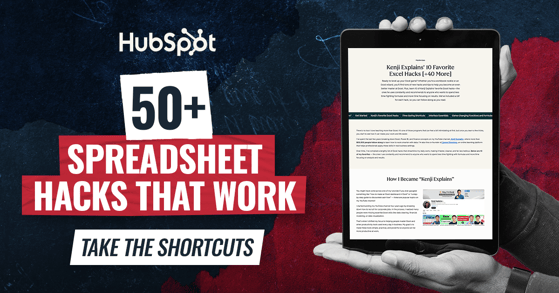
Navigate the nightmare of Excel
Ever found yourself staring at an Excel sheet with 10k rows, feeling your soul slowly leave your body?
You're not alone. The average business professional spends 30% of their workweek (12+ hours) wrestling with spreadsheets.
So this pack of 50 Excel shortcuts helps you model stats, manage operations, and bless clients and colleagues with that clean feeling of gazing at a well-trimmed lawn.
THE BIG IDEA

The economics of mango mania
Every fall, America drowns in pumpkin-flavored everything. But each spring, there’s a lesser-known seasonal frenzy that grips communities around the country, driven by scarcity and the sweet taste of nostalgia: Indian mangoes.
Specifically, varieties like the Kesar, Banganapalli, and the coveted Alphonso, AKA the king of mangoes.
- Grown along India’s western coast, it’s protected by its own Geographical Indication tag (similar to Champagne or Parmesan-Reggiano) and renowned for its rich, buttery flavor and sweet aroma.
- Demand has grown steadily (particularly among South Asian communities) since 2007, when the US lifted an import ban on Indian mangoes, with then-President George W. Bush calling it “a hell of a fruit” and kicking off what’s known as “mango diplomacy.”
So, how do you get your hands on one?
IYKYK…
… and if you don’t, you probably won’t be munching on some of the world’s most delectable fruit this season, which runs from April through June.
Even for the initiated, many of whom place orders through private mango dealers, scoring a crate of these rare varieties can be a challenge.
- For the real fiends, it can require waiting attentively for Whatsapp mango shipment alerts, tracking flights, leaving work meetings, and driving to warehouses and parking lots at odd hours, per The Wall Street Journal.
What makes them so hard to get?
Logistics, mainly: On top of their seasonality, they’re also highly perishable due to their thin skin, making them tricky to import.
That means consumers have about seven days to eat them, and that one supply chain hiccup could spell an expensively rotten time for both importers and devoted mango lovers.
Plus, already ~5x the cost of regular supermarket mangoes, this year they’re even pricier — going for ~$60 a dozen, up from ~$40 in 2025 — due to a weather-related shortage, tariffs, and rising fuel prices.
But none of this, WSJ reports, has tamped down demand for a fleeting fix of the sweet treat.
Meanwhile, in India…
… which produces ~50% of the world’s mangoes but exports just 1%, supply is abundant and, like pumpkin patches in America, the goods can be harvested right from the source.
Kerala-based agricultural startup Rent A Tree lets customers lease a mango tree for a whole season, guaranteeing ~66 pounds of fruit, which they can harvest themselves or have shipped anywhere in the country — starting at less than $100.
HIGHLY RECOMMENDED
A morning routine, deep work, and a ship list: Those are just some of the ways one solopreneur manages to make $77k a month.
NEWSWORTHY NUMBER
%20(1).png?width=600&height=93&name=Noteworthy%20Number%20template%20(23)%20(1).png)
Share of job platforms, like Ziprecruiter and Indeed, that sell its users’ data, according to a recent study by personal data removal company Icogni via Inc. While most people don’t appreciate companies profiting off their personal information, Incogni found that many of the 1k people they surveyed didn’t really care. Why?
Nearly 25% don't consider it a privacy violation since that info (i.e., content from resumes, cover letters, and other documents) is usually posted on LinkedIn, anyway. Plus, in this job market, with some people paying thousands of dollars just to score interviews, sharing your employment history is perhaps a small price to pay to ensure you have a future one.
AROUND THE WEB
📅 On this day: In 1884, the first roller coaster in the US opened at Coney Island.
📺 That’s cool: Free TV channels from around the world.
🧀 That’s interesting: Cheese is the most stolen food in the world.
⌛ Game: Put events in chronological order.
🦚 Aww: She’s unimpressed.
SHOWER THOUGHT
As inflation increases, the "cent" sign will eventually become obsolete. SOURCE
Today's email was brought to you by Juliet Bennett Rylah and Singdhi Sokpo.
Editing by: Sara "The time is ripe" Friedman.
Was this email forwarded to you? Sign up here.
Working on something big?
We've got a whole library of business-building resources for you.
Subscribe to our other newsletters
Grow your business: Starter Story | Stay up-to-date on AI: Mindstream
Expert insights: Marketing Against the Grain | Sell better: The Science of Scaling