

👋 Good morning. Fat Bear Week 2026 is officially underway. It’s the 12th annual competition at Katmai National Park in Alaska, and a new roster of chunky brown bears is competing for the title of fattest bear after loading up on salmon. This year’s bracket is the biggest yet, with 16 bears competing before they go into hibernation. A champion will be crowned Sept. 29, and last year’s winner, 1.2k-pound Chunk, is back to defend his title.
NEWS FLASH
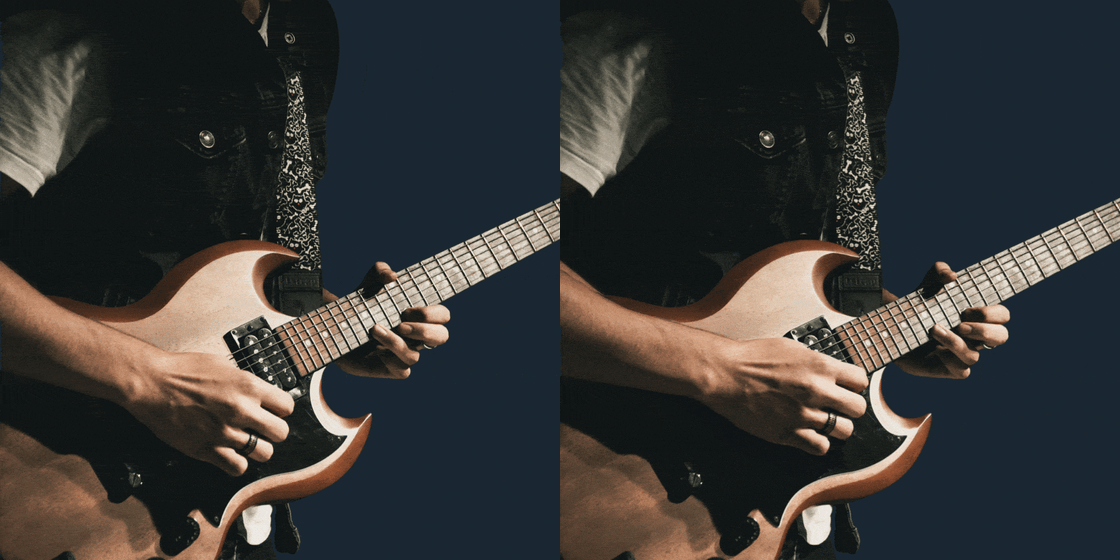
🎸 Raising the dead (maybe someday including the Dead): UK startup Unit1 received a $20m check to bring long-gone musical acts back on tour via “hyper realistic” digital avatars. They want to stage classic shows from any retired and dead artists whose estates are willing to play ball, backed by live accompanying musicians and additional lights and props in service of masking the surreal it-just-being-an-avatar of it all.
🛰 Focusing on the bigger picture: Australian space paparazzo HEO is moving its gaze further up — specifically into geostationary orbit. The startup uses its own satellites to take pictures of other satellites, helping space companies and government agencies better track their equipment. They’ve only taken snapshots of spacecraft in low-Earth orbit so far, but just secured funding to boost their range.
👩🏻💻 Employees turned LinkedInfluencers? That’s the tactic Warp’s chief people officer is using to find real candidates in a sea of AI spam job applications. The “employee-generated content” program pays staff to post on LinkedIn and X — each post earns a raffle entry for a couple hundred dollars. It's working: over one quarter, the company hired 30 people, and nearly every one said they applied because they saw the company on LinkedIn, and about a third of Warp’s employees now post at least 2x a week.
MORE NEWS TO KNOW
-
In AI we don’t trust: Tech firm Saturn tested the accuracy of top chatbots’ financial advice… It didn’t go great. Fed complex scenarios, the bots got things right only 12% of the time.
-
How does this still happen?: Converse stepped into a disaster of its own making, posting then pulling an ad with imagery evoking a KKK hood and a lynching victim. The shoe company apologized but again… how?!
-
Lost and found: DraftKings used AI to identify users that suck most at gambling and serve them with additional promotions and bonuses, per The New York Times. The bet taker refutes the report.
- Heavyweight clash: Want Meta’s personal AI agent Muse to find you great deals on Amazon? Not gonna happen, says Amazon, which has banned the agent from its site.
QUIT WAITING
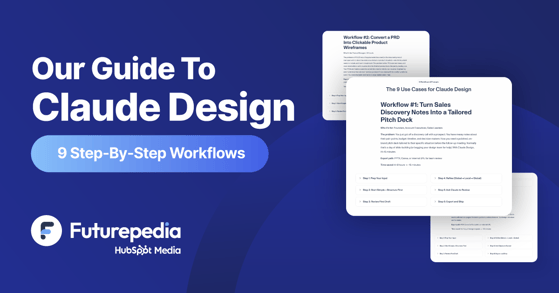
9 ways to actually use Claude for design
Most people type one vague prompt, get a vague result, and call AI useless. The problem isn't Claude — it's the workflow.
HubSpot's free Claude Design guide maps out nine real use cases that marketers and founders are running right now, from motion graphics to full website builds.
What's inside:
- Use cases: 9 mapped scenarios from brief to finished asset
- Prompt frameworks: exactly what to type for publish-ready output
- Starter prompts: copy, paste, and ship faster
- Real workflows: how teams are cutting revision cycles
One guide, nine ways to stop waiting on a designer.
THE BIG IDEA
%20copy%207-1.png?width=600&height=293&name=SF%20TEMPLATES%20TO%20USE%20(2)%20copy%207-1.png)
Does skincare belong in your closet?
The skincare industry is full of buzzy products that you probably don’t need, even if the marketing convinces you otherwise — but some of the newest formulations are different from the rest in that you:
- Won’t find them in the aisles of Sephora…
- Nor would you pack them with your toiletries…
- Or incorporate them into your nightly routine…
- More likely, you’d keep them in your closet.
This is not a riddle, but your introduction to…
… “carewear,” a burgeoning category that combines skincare with fashion by infusing things that belong in a medicine cabinet with things that live in your wardrobe.
Per Business of Fashion, it’s being pioneered by brands like:
- Underdays, which sells underwear made from a probiotic and prebiotic-infused fabric that it claims “supports your microbiome, strengthens your skin barrier,” and “promotes a healthier appearance.”
- UK label Sylva, which makes sensitive-skin-friendly basics like form-fitting dresses and leggings that look like Skims’ merch but cost way more because they’re made of hydrophilic, anti-bacterial, anti-irritation materials that it claims won’t dry out your skin.
- If applying lotion feels like too much work, Italy’s Yaluronica sells a hyaluronic-infused bodysuit that it says is “perfect after an intense sun tanning day.”
The big picture
The emerging category is the latest example of how clothing has evolved beyond the simple purposes of keeping us modest, warm, or fashionable.
In recent years, brands have spun up all types of multifunctional garments fit for a world inundated with technology and obsessed with “wellness” (however you might define it) — from sun-protection tops and cooling tech for athletes, to anti-surveillance pants and sensory-friendly hoodies.
The trend has been aided by a boom in fabric innovations: This year’s Future Fabrics Exposition, for example, showcased 10k+ textiles and material solutions, up from 1.5k a decade ago.
As for carewear brands’ big promises…
… they’re all based on fabric manufacturers’ claims, not independently verified, according to material scientist Amanda Parkes, who told BoF she’s never “seen real testing done to show that you have actually changed somebody’s microbiome.”
But whether they work might be beside the point — at ~$500 for Sylva’s basic black dress that looks like any other, or $75 for Underdays’ three-pack of boring-looking underwear, you might be better off keeping your fashion and your supplements separate for now.
HIGHLY RECOMMENDED
Come along: This solopreneur is taking you behind the scenes while he builds a $20k/month indie app.
NEWSWORTHY NUMBER
.png?width=600&height=93&name=Noteworthy%20Number%20template%20(54).png)
How much venture capitalist (and son of former White House comms director Anthony Scaramucci) AJ Scaramucci thinks a rare Pokemon card he purchased for a record $16.5m this year will one day be worth, per The Hollywood Reporter. It was the first of many “alternative assets” — like comic books and trading cards, which he compared to fine art — that the novice collector plans to buy through his new venture, Treasure Trove.
It might not be a bad bet: The US collectibles market alone is expected to reach $100B+ by 2033, and with new tech millionaires and billionaires being minted every day, there are already more than enough rich nerds with money to blow.
AROUND THE WEB
📅 On this day: In 1994, “Friends,” a sitcom featuring a group of unknown actors, debuted on NBC. On its final episode on May 6, 2004, 50m+ viewers tuned in.
🚤 Game: You’re a cozy fisherman.
🖥️ Nostalgic: Your '90s desktop is back.
🇦🇷 That’s fun: How many flags can you identify?
🐶 Aww: A good boy in a good hiding spot.
SHOWER THOUGHT
It is substantially more suspicious to board an airplane wearing a parachute than to board a boat wearing a life jacket. SOURCE
Today's email was brought to you by Ben Berkley and Singdhi Sokpo.
Editing by: Sara "Skin in the game" Friedman.
Was this email forwarded to you? Sign up here.
Working on something big?
We've got a whole library of business-building resources for you.
Subscribe to our other newsletters
Grow your business: Starter Story
Stay up-to-date on AI: Mindstream
How to use top AI tools: Futurepedia
Expert insights: Marketing Against the Grain
Sell better: The Science of Scaling