

👋 Happy Monday. We know you’ll be browsing sales and adding items to your online carts today ahead of Black Friday. But how did the day get its name? It’s not after the color of that credit card you’re swiping: Black Friday originated in 1869 when two investors caused a financial disaster by driving up the cost of gold. The market crashed 20%, foreign trade froze, and corn and wheat values plunged. In the 1950s, it was revived in Philadelphia to describe the day between Thanksgiving and the Army-Navy football game. Today, it just means 20% off on that blender you wanted.
NEWS FLASH

🩸 A new blood startup… What could go wrong? Y Combinator-backed Helios emerged from stealth last week claiming its AI can predict a person’s risk of developing serious diseases from a single drop of blood. The company’s tech measures 1k+ proteins in blood to identify indicators associated with conditions like heart failure, Alzheimer’s disease, and blood cancers. The founders know you just saw You Can See Everything, and they’re in on the joke — they purchased theranosbutworks.com, which redirects visitors to Helios.
🧊 Cold as ice: Real Ice is tackling the problem of melting sea ice with a seemingly straightforward solution: refreezing it. The UK-based startup added 19.7 inches of thickness to 247 acres of the Canadian Arctic by drilling holes through existing ice and pumping seawater onto the surface to form a new layer. For meaningful impact, however, the trial would need to scale up to 247m acres, requiring 500k underwater drones and an annual budget between $5B and $10B.
🎾 No strings attached: Student-founded startup LET is stretching the lifespan of tennis racket strings by converting them into stylish apparel for the court. Launched by three Boston University tennis players, the company collects discarded polyester strings from tournaments, clubs, and stores across seven countries. After stripping the strings of color and impurities, the company pelletizes them and spins them into fiber and yarn for soft, breathable shirts. The company is partnering with apparel brands, tournaments, and pros, while working to reduce production costs.
MORE NEWS TO KNOW
- The robots are working: Humyn Labs hit $50m ARR in six months and raised $47m to continue recording real people doing real jobs to teach robots IRL tasks.
- Whatever happened to a paper route? At just 16 years old, Henrijs Dandzbergs dropped out of high school to join Y Combinator and grow Polemos Industries, an AI-powered, precision-guided missile startup.
- Hitting the off switch: For the AI-averse, Canva added two new settings to turn off the platform's generative AI tools and filter AI-created content from its template and graphics library. Not every tool is switched off, however, including Background Remover and Magic Grab.
- The Upside Down sandbox: To create a controlled environment to test AI browsing agents, Google Chrome created the "Mirror Dimension," an isolated alternate-universe internet with fully functioning websites that will ideally keep the agents from going rogue in the real world.
COMEBACK STORIES
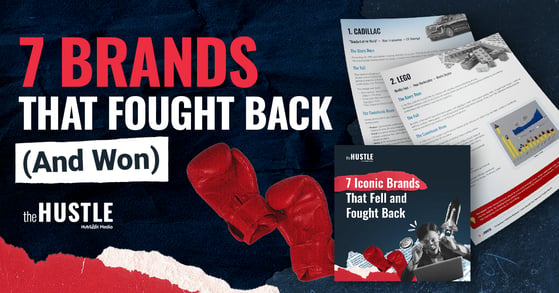
The greatest comebacks in corporate history
For shining examples of phoenix-brands rising from the ashes, look to classics like Cadillac, Lego, Apple, Marvel, and Starbucks.
Because all of them were once down bad… but right now they’re still doing digits. We examined the glory days, the plunges, and the plays that changed everything.
THE BIG IDEA
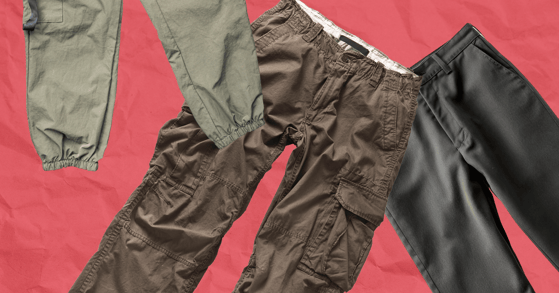
Nothing left over: 3D weaving is the future of fashion
It has been said that the best way to predict the future is to invent it.
For Annika Visser, director of partnerships at unspun, it's sustainable fashion:
“Clothes made where and when they’re actually wanted, from yarn to garment, with nothing left over,” she told The Hustle.
From 1960 to 2018, the amount of clothing sent to landfills grew from 1.3m to 9m+ tons, per the EPA.
Those millions of tons add to significant environmental problems — solutions are becoming a priority. Now, unspun is betting on its OneWeave machine. Visser said if a machine could make a garment straight from yarn, overproduction could be eliminated rather than managed.
First, unspun had to prove that making clothes on demand could work.
How it started
Beth Esponnette incorporated unspun in 2015. Two years later, Walden Lam and Kevin Martin joined, launching a denim brand that used 3D body-scanning technology to make custom-fit jeans.
Along the way, unspun:
- Won the H&M Global Change Award for 3D weaving
- Received a $225k National Science Foundation grant, growing to ~$1.07m across two phases
“When we launched OneWeave in 2023, and brands started asking to use the machine instead of asking us to make them jeans, the answer got obvious," Visser said. “Custom jeans were how we proved the tech… No inventory meant the model could actually work.”
How it’s going
The biggest challenge is speed. A launch needs a brand, manufacturer, and unspun to provide necessities all at once. In 2023, 35%-40% of apparel manufacturing cost still came from manual cut-and-sew labor, and 43% of brands now make long-term commitments with suppliers.
“Getting that triangle from ‘interested’ to ‘garments coming off a line’ takes longer than the technology does,” Visser said.
Unspun paused the denim brand and put everything into its new priority, OneWeave machines — something the new CEO, Chuck Shehadi, has experienced as a former Nike and Apple executive.
Today, unspun has:
- Raised ~$60m, including a $32m Series B
- Installed seven machines in its Emeryville, California, microfactory
- Sold machines to textile manufacturer Arvind, its first paying customer
- Made thousands of garments for commercial runs
- Signed offtake with Walmart, aiming for 350 US machines by 2030
- Reported cutting emissions by 53%, energy by 49%, and water by 39% versus conventional production
“Mostly I feel grateful for the people who kept building with us and believing in this thing when there was no proof yet,” Visser said.
HIGHLY RECOMMENDED
Retail isn’t dying… at least not if you’re Bass Pro Shops. Here’s how a fishing store transformed into a beloved destination.
NEWSWORTHY NUMBER

Share of Anthropic employees, representing ~5.1k of 5.3k staffers, who are now millionaires following the AI company’s historic IPO on Thursday, which briefly valued it at $2T+ — a milestone it achieved in just under six years. Of those 5.1k, ~50% now have equity holdings of $10m+ and 600 are worth $100m+, per CNN.
As for those ~200 employees left out of the millionaires club… Well, hopefully they’ll never have to pick up the happy hour tab again.
AROUND THE WEB
📅 On this day: In 1963, the first episode of “Doctor Who,” the world’s longest-running sci-fi show, aired.
🧠 That’s interesting: Inside Derinkuyu, Turkey’s ancient underground city that once sheltered 20k people (AKA an 8th-century bunker).
🤔 Hmm: How AI literate are you?
🧇 Game: Work the night shift at Waffle House.
🐱 Aww: Not helpful (would still hire him, though).
SHOWER THOUGHT
Collectively, humanity has decided that an icon of a turtle represents slowness. It is used on lawn mowers, electric vehicles, and many software interfaces. The turtles are completely unaware of this fact. SOURCE
Today's email was brought to you by Danny Jensen, Singdhi Sokpo, and Bill Meincke.
Editing by: Sara "Tying up loose threads" Friedman.
Was this email forwarded to you? Sign up here.
Working on something big?
We've got a whole library of business-building resources for you.
Subscribe to HubSpot Media's other newsletters
Grow your business: Starter Story
Stay up-to-date on AI: Mindstream
How to use top AI tools: Futurepedia
Expert insights: Marketing Against the Grain
Sell better: The Science of Scaling