

👋 Good morning. We know that hitting the Xerox machine too many times can make for a blurry printout, and it turns out the same goes for living clones. Japanese biologists spent 20 years serially cloning mice and determined that it can’t — and shouldn’t — go on forever. The scientists said all went well until the 58th generation of mice, at which point it went… very poorly. When genes aren’t mixed up, harmful mutations quickly pile up. Turns out nature was onto something.
NEWS FLASH
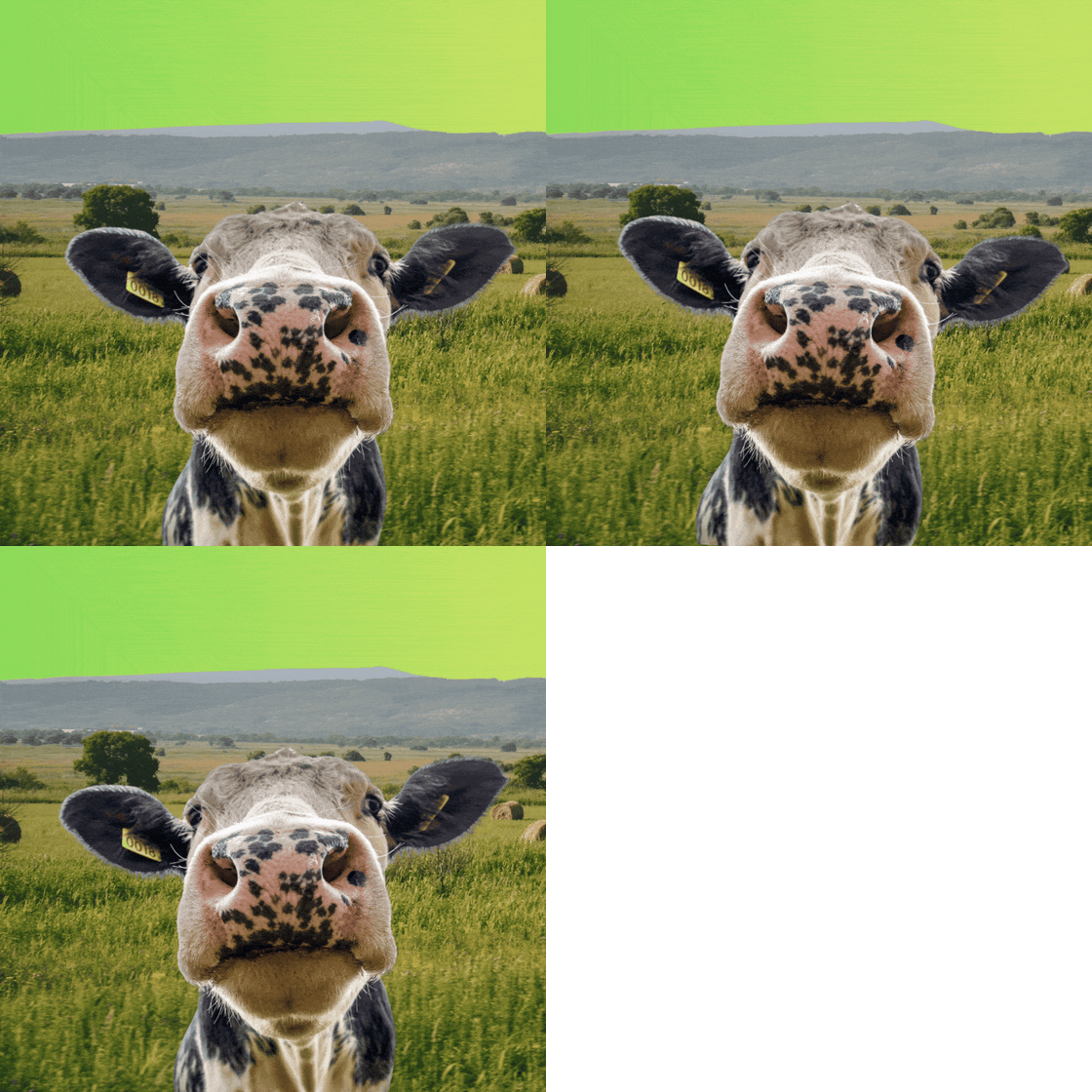
🐄 Making mooves: New Zealand-based startup Halter is trying to help farmers reduce costs with AI-powered cow collars. The collars catch an animal’s illness before it worsens, and lessen the need for human labor by letting farmers track cows’ locations and breeding cycles through a mobile app. The startup — despite an overall decline in agtech investments — just raised $220m to expand into new markets this year and add additional capabilities to its app.
🚑 Lights, sirens, electric: EV trucking startup Harbinger is partnering with 70-year-old emergency vehicle company Frazer to build hybrid ambulances and larger mobile healthcare vehicles. Harbinger’s modular chassis can be customized in size and equipped with both an electric system and a gas range extender. The platform also includes battery-powered auxiliary units to replace traditional generators and let ambulances run medical equipment with quieter, lower-emission power in the field.
🍔 The only review that matters: McDonald’s Big Arch launch was mocked after CEO Chris Kempczinski took only the tiniest bite of the new burger. Now, Donald Gorske — the 72-year-old Wisconsin man who holds a world record for eating ~36k Big Macs — has chimed in. His verdict: “I wasn’t really crazy about it.” He found the Big Arch’s two patties to be too much meat, “like eating a steak or something.” Gorske hadn’t seen Kempczinski’s video because he doesn't use the internet, probably explaining why he’s seemingly healthy despite eating two Big Macs daily.
MORE NEWS TO KNOW
-
Touch grass: North Carolina startup Plantd is raising funds to scale production of building material made out of compressed grasses, offering a sustainable replacement to certain wood panels.
-
That’ll be tricky: The FCC banned new routers made outside the US, citing security risks. Currently, that’s most routers, as even popular US companies — NetGear, Google, etc. — manufacture in Asia.
-
Swish swish: Lucid Bots raised a hefty $20m for a simple mission: cleaning. The company’s drones and autonomous pressure washers bring faster exterior cleaning to businesses around the US.
-
Nice try: A North Carolina man pleaded guilty to using bots to stream his AI-generated songs billions of times, thus defrauding streaming platforms including Spotify out of $8m+. He faces five years, and has to forfeit the money.
FROM OUR FRIENDS AT MINDSTREAM
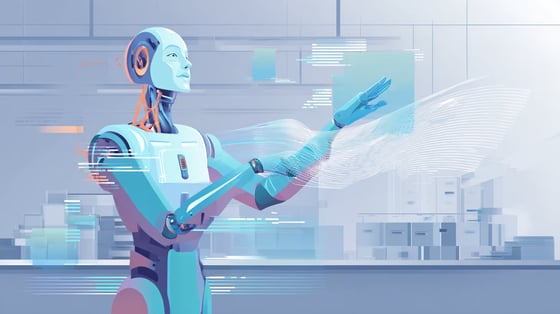
Robotics and AI are partnering up
As AI heats up, robotics companies are increasingly partnering with AI firms to build smarter physical machines.
Agile Robots' recent partnership with Google DeepMind is one of the latest group projects in the space.
The premise is simple: building robots is hard, and companies have different expertise — teaming up is a win-win.
THE BIG IDEA

A nonprofit launched an ‘IMDb for creators’
Any influencer or YouTube creator will tell you that it is a real job, requiring as much skill — both technical and creative — as any other media format.
Yet while creatives who work in film, TV, music videos, and even some podcasts are credited on IMDb, those who contribute the same skills to creator content are not.
That’s why the Creators Guild of America, a nonprofit focused on digital creators founded in 2023, launched Mosaic, a platform billed as “IMDb for creators” that gives them an online resume with verified credentials.
Daniel Abas, CGA president, told The Hollywood Reporter, “Creative work is very granular. It’s project by project, hence the name of Mosaic. When you put this work together, you can see someone’s complete creative arc.”
How it works
Users can create a free profile and submit their credits, which are then third-party verified. CGA also has its own eligibility standards. For example, an influencer must have been paid by a brand, agency, or platform, or have at least 10 paid subscribers.
Brands looking for specific talents — copywriters, UX designers, concept artists, photographers, etc. — can browse profiles when hiring.
Creators also receive an ID they can use across platforms to both differentiate between creators with the same name and protect against scammers.
Scammers?
Celebrities and creators are prime targets for deepfakes, given their influence and the many images and videos available online for AI to scrape.
But Dan Neely, CEO of AI licensing company Vermillio told Rolling Stone that deepfakers shifted from A-listers to creators about two years ago, finding their smaller fan bases lucrative targets. Such fake videos can not only damage a creator’s rep, but also cost them discoverability and income.
YouTube offers an AI deepfake detection tool to public figures including politicians, journalists, and millions of its creators, while companies like Vermillio scan the web on behalf of their clients.
Mosaic will partner with Loti AI, a deepfake detection company, to help take down unauthorized content.
Can you imagine explaining to your ancestors how a YouTube unboxer must protect themselves from deepfakes hawking crypto investment opportunities? Yeah, us neither, but here we are.
HIGHLY RECOMMENDED
MrBeast knows YouTube… and his content strategist knows how to reach an audience. Here’s how to drive big traffic with small, low-budget tweaks.
NEWSWORTHY NUMBER

Estimated number of people who donate blood plasma every day, including a rising share of middle-class Americans. While plasma donation centers have typically operated in lower-income areas, more are appearing in wealthier neighborhoods as more people look to supplement their incomes amid rising living costs, per The New York Times. Each visit earns an average of $70, with most donating 2x a week (the FDA maximum).
Plasma donation is an increasingly common, albeit controversial (and sorta depressing), side gig among Americans but available to few others: The US, which provides roughly 70% of the world’s plasma, is one of just ~12 countries that permit the practice.
AROUND THE WEB
📅 On this day: In 1999, “Melissa” became the first serious email virus, infecting between 100k and 250k computers globally. Its creator, David L. Smith, was sentenced to 20 months in prison and ordered to pay a $5k fine.
🐦 That’s interesting: How people search for birds on the internet. Here’s a fun fact from this project: Hawks are the most searched-for bird in the US.
📰 Newsletter: The Daily Upside makes sense of financial headlines — without the fear.
🧩 Game: Like the NYT’s Connections, but bigger.
🎻 Aww: Classical music fan.
SHOWER THOUGHT
You only have a lap while you’re sitting. SOURCE
Today's email was brought to you by Juliet Bennett Rylah and Singdhi Sokpo.
Editing by: Sara "Extra #2 in that TikTok" Friedman.
Was this email forwarded to you? Sign up here.
Working on something big?
We've got a whole library of business-building resources for you.
Subscribe to our other newsletters
Grow your business: Starter Story | Stay up-to-date on AI: Mindstream
Expert insights: Marketing Against the Grain | Sell better: The Science of Scaling