
The lax regulation of prediction markets reminds many analysts of the late 1920s. You might remember what happened then.

RJ Adams, a freelance photographer in Brooklyn, first heard of Kalshi early this year.
The prediction market platform lets users bet on a wide-ranging catalog of real-world events, from celebrity guest appearances at the Super Bowl to whether the YouTuber MrBeast will say “subscribe” in his next video. He’d already dabbled in sports betting, but Adams was intrigued. He downloaded the app and bet $50 that actor Delroy Lindo would receive an Oscar nomination for his supporting role in Sinners.
His guess paid off — he won $414. Then he discovered the platform’s 15-minute crypto bets, where users wager on currencies like bitcoin and XRP going above or below a certain trading benchmark within an immediate 15-minute market window.
“Those get pretty addictive,” he says with a chuckle. “I’ve lost a fair amount of money doing that.”
Adams admits he’s lost more money on Kalshi than he’s won, though he tries not to bet more than $10 or $20 at a time. He broke his own rule to put $120 on Lindo winning the Oscar; the prize went to Sean Penn and Adams lost every cent. “That kind of soured my night,” he says. “I'll hit a couple of good parlays, but sometimes you go a little too far and you go on a really bad streak.”
It’s telling that Adams speaks in terms of streaks and parlays, not positions and gains. It’s the language of casino gambling, not commodities trading.
But prediction markets aren’t regulated like casinos or sports betting sites, placing them at the center of a legal and legislative firestorm. And some analysts warn that these platforms may be a bellwether for a looming crisis of trust in financial markets — or worse.
Regulatory sidestepping
As far as Adams is concerned, the only difference between Kalshi and any other betting platform is that, on Kalshi, you can wager on virtually anything.
Through yes-or-no questions called “event contracts,” companies like Kalshi and its chief competitor Polymarket let users bet billions every week on politics, pop culture and, especially, sports. (Sports markets account for ~90% of the company’s activity, which has snowballed from 600k to 5.1m+ active monthly users since January 2025.)
This activity looks a whole lot like traditional sportsbook betting and, as its critics point out, raises many of the same risks around addiction, manipulation, and insider advantage.
Olivia Heller/The Hustle
Gambling falls under the jurisdiction of individual states. Kalshi, on the other hand, is federally regulated, overseen by the Commodity Futures Trading Commission (CFTC).
This allows the company to sidestep a host of state gambling restrictions. While most states enforce an age minimum of 21 for sports betting, for example, 18-year-old prediction market users can wager on the same games and outcomes without breaking the law.
And though a number of states — including Arizona, Nevada, and Texas — explicitly bar gambling on election outcomes, it’s perfectly legal to put money on a political race on Kalshi.
Engineered ubiquity
Platforms like Kalshi and Polymarket are just the latest players in a centuries-old pastime of betting on big events.
In 16th-century Italy, Roman merchants reportedly partnered with cardinals’ papal conclave attendants to wager on who would be named the new pope. The winning inside-trader took a cut of the merchant’s payout.
US presidential election markets were wildly popular through the 1910s and ‘20s. The craze reached its apex in 1916, when Wall Street bettors wagered $10m (about $300m today) on the contest between President Woodrow Wilson and Charles Hughes — who, as governor of New York, had signed an anti-gambling law trying to ban the practice.
Event-betting markets flourish in ambiguous or unevenly-enforced legal environments. During regulatory crackdowns, they tend to stall. Which is why prediction markets were effectively illegal in the US for most of the past two decades.
The 2010 Dodd-Frank Act gave the CFTC the authority to regulate event contracts, the first step toward making prediction markets legal.
“There was always some interest in seeing what would happen if there were prediction markets on things like elections,” says Benjamin Schiffrin, director of securities policy for the finance watchdog group Better Markets. But that curiosity was limited to academic experiments and internal government modeling.
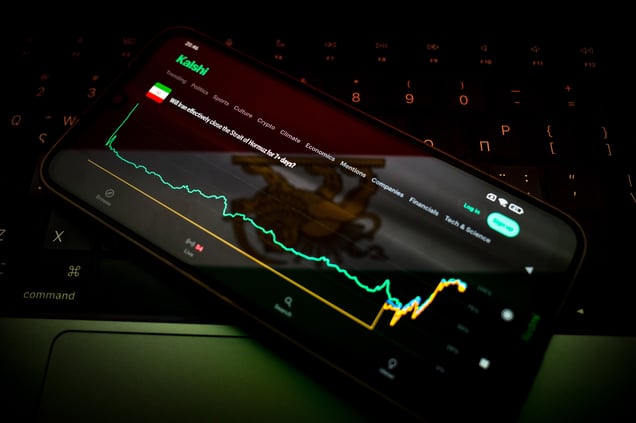
A Kalshi screen featuring a recent prediction market regarding the Strait of Hormuz. (Nikolas Kokovlis/NurPhoto via Getty Images)
On November 4, 2020, things began to change. Kalshi received CFTC approval to operate as commodity traders, just one day after Trump lost his reelection race to Joe Biden. The company’s cofounders Tarek Mansour and Luana Lopes Lara launched the platform the next July.
They believed Kalshi was an opportunity to create a more democratic financial system, where people could trade on their own visions of the future. For much of Biden’s presidency, Mansour and Lopes Lara lobbied the CFTC to certify political event contracts, which would essentially allow betting on election outcomes.
After three years of refusals, Kalshi finally sued the regulatory agency and won — just in time for the 2024 presidential election.
Once Trump took office in January 2025, Kalshi saw an opening. This time, instead of asking the federal regulator for permission to expand to sports event contracts, the company self-certified to make the leap. In doing so, they were taking a calculated risk that the CFTC, under a new presidential administration with a more hands-off approach to financial regulation, wouldn’t push back.
Self-certification is designed to hedge financial risk by letting firms lock in or offset exposure to uncertain future prices or events. The idea is that if a firm is trying to certify an event contract that simply enables speculation — without otherwise serving the public interest — regulators will step in.
“I don't think anybody thought that event contracts on elections or sports betting were what the self-certification process was intended for,” says Schiffrin.
Olivia Heller/The Hustle
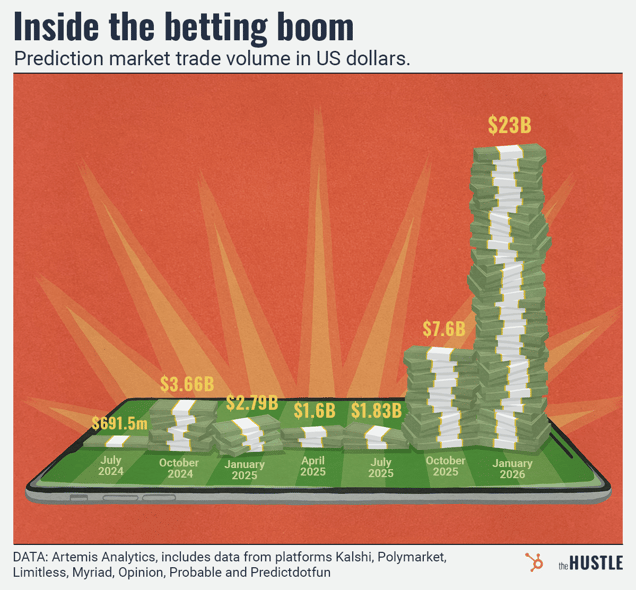
And yet, under an expanded contract purview, Kalshi succeeded in blowing nationwide sports-betting wide open. In March 2025, trading volume on Kalshi was $521m. Last month, it hit $10.4B.
Prediction markets had officially taken off.
The “Eddie Murphy Rule”
Last August, Axios reported that Donald Trump Jr.’s VC firm, 1789 Capital, made an eight-figure investment in Polymarket. Trump Jr. now also serves on the company’s advisory board. By late fall, Truth Social — the social media company majority-owned by the Trumps — had launched Truth Predict, a prediction market platform of its own.
Regardless of whether the Trump family intends to profit from events it can directly influence — like whether the president will say the word “transgender” this week or visit China by the end of June — the situation highlights how easily prediction market participants can exploit insider information.
It’s a problem regulators thought they had solved. After the 2008 financial crisis, the CFTC established a provision in the 2010 Dodd-Frank Wall Street Reform Act that makes it illegal to trade commodities or futures based on misappropriated government information. (Regulators dubbed it the “Eddie Murphy Rule” after a memorable plot point in Murphy’s 1983 film, Trading Places.)
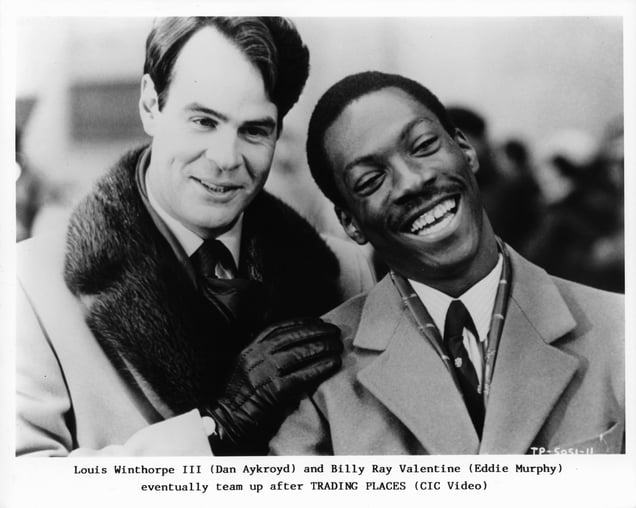
The Eddie Murphy Rule is better equipped for regulating frozen orange juice concentrate and other commodities than prediction markets. (Paramount via Getty Images)
But in practice, prediction markets make the Eddie Murphy Rule a nightmare to enforce.
“The mechanisms to police their activity don’t exist, which creates more opportunities for people with asymmetric information to do unscrupulous things with it,” says Peter Sanchez Guarda, a finance lawyer and former CFTC special counsel.
It’s a regulatory climate that harkens back to the anything-goes atmosphere of the 1920s, in the lead-up to the Great Depression. For Schiffrin, the parallel looks like a warning.
“After the Great Depression we passed the federal securities laws, and then we launched the CFTC in the 1970s,” Schiffrin says.
“By and large, it's those laws that have made our capital markets the envy of the world, because people trust them. People don't think that the stock market is a casino; they think it's a safe place to invest their money. And if we go back to the way things were in the 1920s, you have to worry about history repeating itself.”
Gambling dressed up as finance
Federal regulators are less than thrilled with the backlash. In a recent op-ed for the Wall Street Journal, CFTC chair Michael Selig wrote that prediction markets “aren’t the Wild West, as some critics claim, but self-regulatory organizations that are examined and supervised by experienced CFTC staff.”
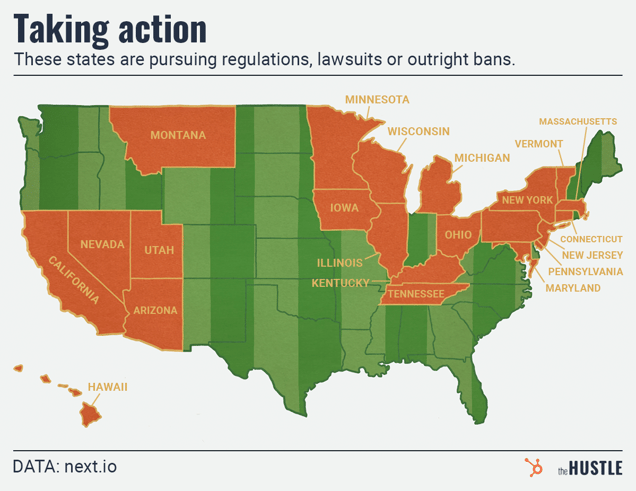
Selig’s message has done little to assuage a growing number of bipartisan lawmakers and state and tribal governments who say prediction markets are gambling platforms dressed up as financial instruments, and are waging legal and legislative battles against the industry’s leading players.
As Schiffrin sees it, the case is simple. “The CFTC — that’s the Commodity Futures Trading Commission — is supposed to be regulating commodities: things like the price of oil, gas and soybeans,” he says. “What role does the CFTC have to play in regulating what is essentially sports betting?”
That question sits at the heart of at least 30 active lawsuits against Kalshi and Polymarket, including from eight states and two tribal governments, charging that the companies are overstepping their regulatory limits.
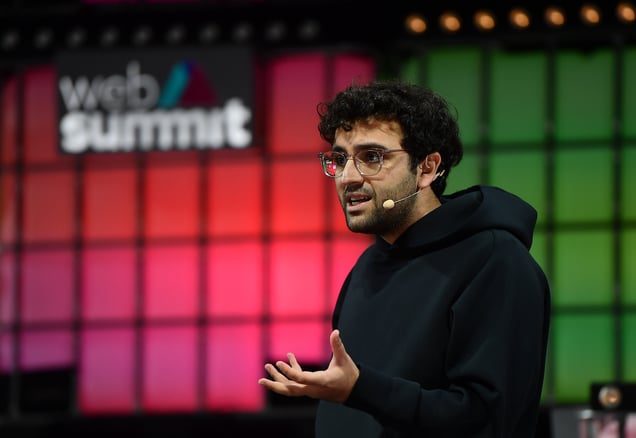
Tarek Mansour, co-founder and CEO of Kalshi. The company says criminal charges against it are meritless. (Diarmuid Greene/Sportsfile for Web Summit via Getty Images)
The battle is heating up.
On March 20, a federal appeals court judge in Nevada signed a temporary restraining order banning Kalshi from operating in the state for at least 14 days. That same week, Arizona became the first state to file criminal charges against Kalshi. A company spokesperson called the charges “gamesmanship” and “meritless.”
“We look forward to fighting them in court,” she told The Hustle.
Arizona Attorney General Kris Mayes said in a statement that although Kalshi “may brand itself as a ‘prediction market’” the company is in fact “running an illegal gambling operation and taking bets on Arizona elections, both of which violate Arizona law.”
“No company,” she added, “gets to decide for itself which laws to follow.”
predictions