
It’s been hundreds of years. How do they do it?
What do candy wafers, paper receipts, and the Old Farmer’s Almanac have in common? They’ve outlasted two world wars, the Great Depression, the internet, and the smartphone.
What do these products have that so many millions of others don’t?
Necco wafers
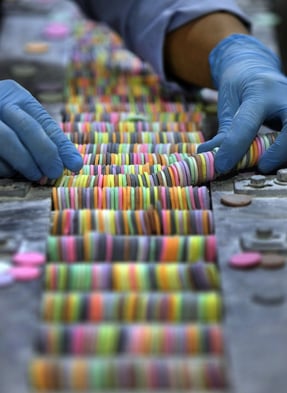
Tropical drywall. Stale Tums. Plaster surprise. They’re all descriptors displeased consumers have used to describe Necco wafers, the colorful chalky discs that come wrapped in crinkly waxed paper and have beckoned sweet-toothed customers for the last 179 years.
Back then, Necco wafers lined the shelves in pharmacies, one of the only places to buy candy. In 1847, pharmacist Oliver Chase invented a lozenge cutter and realized quickly that customers liked the pliable sugar he used to coat his pills and lozenges enough to make it on its own. Necco wafers were born.
By WWII, the US government was shipping them to soldiers overseas: they were strong enough to survive the trip, and didn’t melt.
“How does a company like that even manage to survive?” says Beth Kimmerle, candy historian and founder of Attribute Analytics, a firm that uses sensory science and data to help food and beverage brands build better products.
She credits their enduring success to two things:
- Their equipment meant they were the first US company to produce candy at scale.
- The wafers were stamped with “Necco,” turning each candy into an advertisement for itself.
Back in the 1800s, Necco was novel for the flavors it created: cocoa, peppermint, clove, licorice. Today, they’re novel for keeping them. In 2009, the company tried to update its recipe to appeal to health-conscious moms, switching to all-natural flavors. The results were not good. Customers expressed so much consternation that two years later, the company reinstated the slate of old faithful flavors.
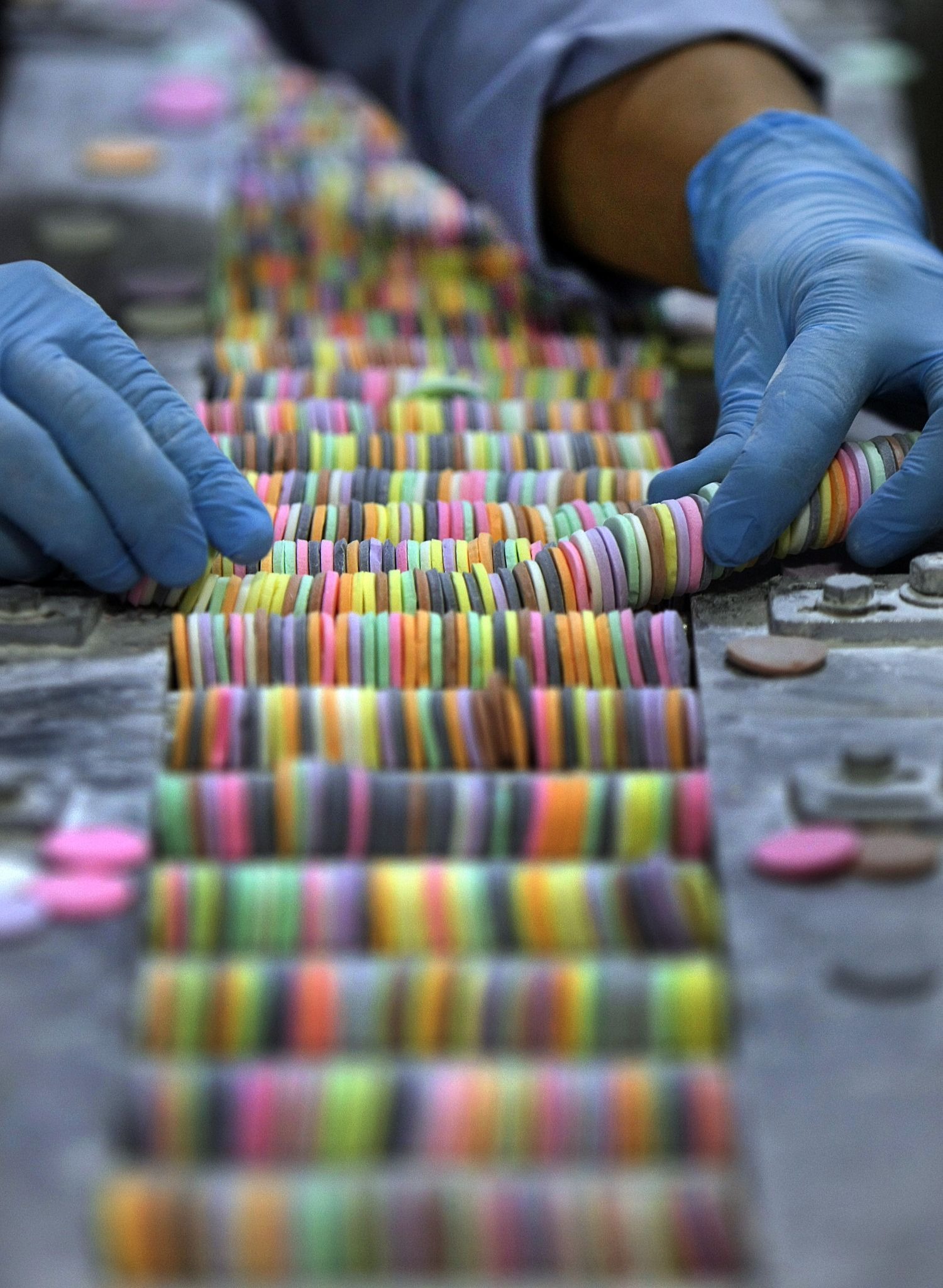
From 1997 until 2018, Necco produced and sold ~4B wafers a year. (Photo by John Tlumacki/The Boston Globe via Getty Images)
When Necco filed for bankruptcy in 2018, Kimmerle watched as prices on rolls of wafers online rose past $1k.
“People went crazy,” she says. “I found myself online trying to outbid people.”
Sales spiked. Candy sellers reported customers crying at the thought of life without Necco wafers. One 23-year-old was so eager she offered her 2003 Honda Accord in exchange for a wholesaler’s entire stockpile of wafers, according to NPR.
Later that year, the Spangler Candy Company put grieving fans out of their misery and bought Necco for $18.83m at a federal bankruptcy auction.
By 2020, the wafers were in production again. “It’s funny, nothing really reveals the emotional value of a product quite like telling people they may never be able to buy it again,” Kimmerle says.
She’s quick to point out that, in the food industry, 80% of new products fail. So once you have one that doesn’t, it’s worth holding onto.
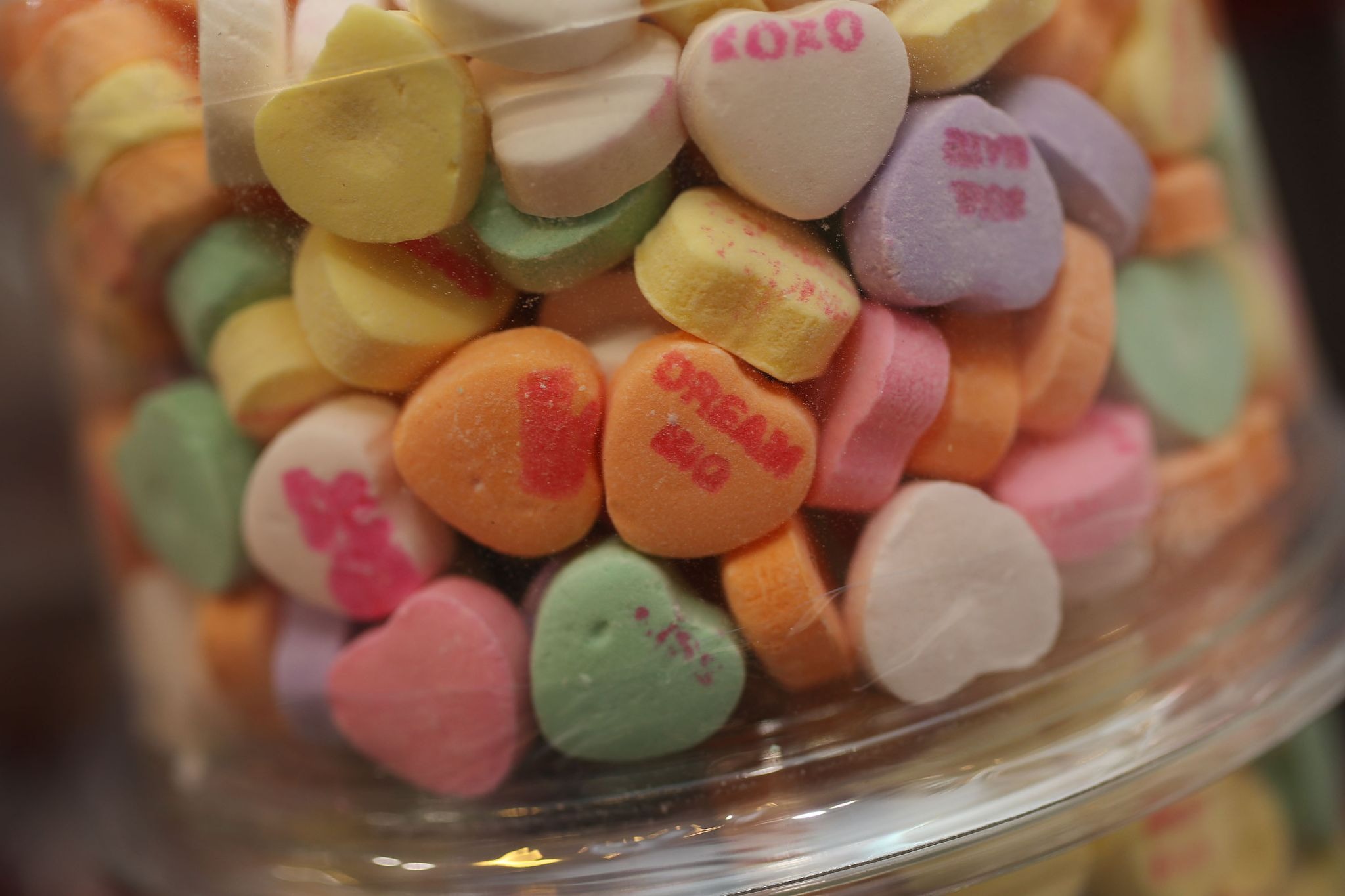
Along with wafers, Spangler resurrected Necco’s popular Valentine’s Day Sweethearts. (Photo by Joe Raedle/Getty Images)
“Everybody in the confectionery industry always says there’s certain candies that are dying with the oldest generation,” she says. “I don’t know how Spangler’s done it, but my dad knows Necco wafers, my child knows Necco wafers. They’re managing to keep it alive, which is pretty incredible.”
Candy, it turns out, is less about how it tastes and more about where it takes you.
“People don’t want a smoother, fruitier blah blah blah. They want the sensory cues that tell their brain, this is the thing I remember,” Kimmerle says.
“Candy is our fastest form of time-travel.”
Paper receipts
When Jane Sancinito thinks about a paper receipt, she doesn’t see a slip of paper in her mind’s eye. The history of receipts, she says, is the entire history of humans at work.
“Our very earliest writing is receipts,” says Sancinito, associate professor of history at University of Massachusetts Lowell.
The Sumerians wrote on cuneiform triangles. The Egyptians wrote on shards of pottery. No papyrus? No problem.
“We have instances in China of records on bones, like they’ll get the shoulder blade of a cow and just write on that because that’s what they’ve got handy,” she says.
Fast forward ~5k years, and long, thin rolls of paper are first attached to cash registers in 1918, making it easy to print a record right after a transaction. The heat-sensitive thermal paper used today arrived around the 1970s. At the time, they seemed radical. Today, they wind up crumpled at the bottom of a bag.
So how, with a smartphone in every pocket, do paper receipts persist?
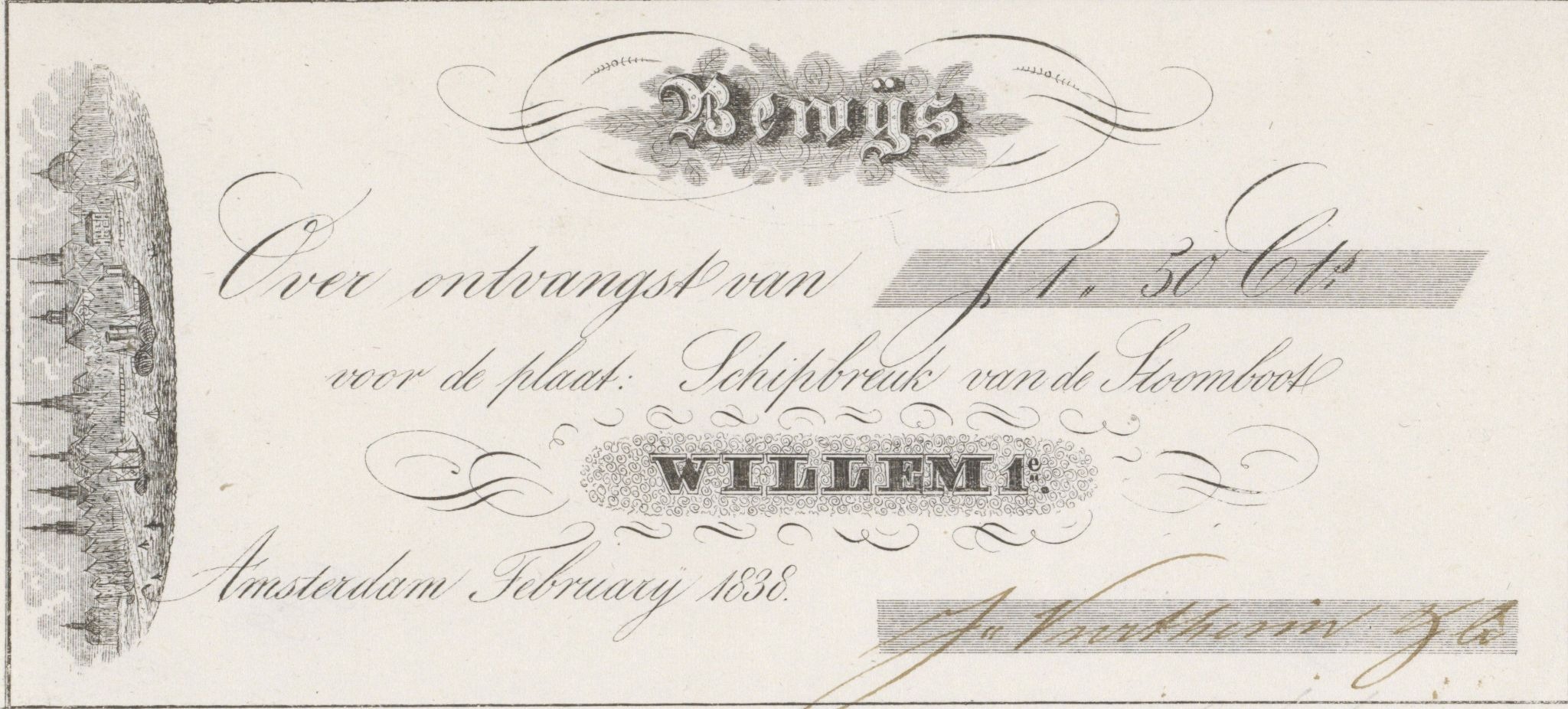
Back in the 1800s, receipts looked a bit fancier. (Photo by Sepia Times/Universal Images Group via Getty Images)
One reason, Sancinito admits, is Boomers. But another is more sinister: A paper receipt in exchange for cash is the last anonymous transaction, so a move away from paper means our data moves along with it.
A credit card linked to an email address gives a seller a ton of information: contact info, knowing what card was used, what was bought, how long it has been since their last visit. “We’re ceding that ground rapidly and, I think, casually,” she says.
There are two other reasons why thermal-paper receipts have endured.
One is a concept called path dependency, the idea that once a technology has integrated into our infrastructure and habits, it endures even when better options exist.
And the other is that paper receipts are a ~$5B business, complete with their own lobby groups and health controversies.
The Paper Receipts Converting Association, a trade group of US manufacturers, pushes back against anti-receipt legislation and advocates for paper receipts as a consumer right, not a relic.
Sancinito draws a parallel to the zinc lobby’s long defense of the penny: an industry protecting the product on which it’s built, even as the case gets harder to make.
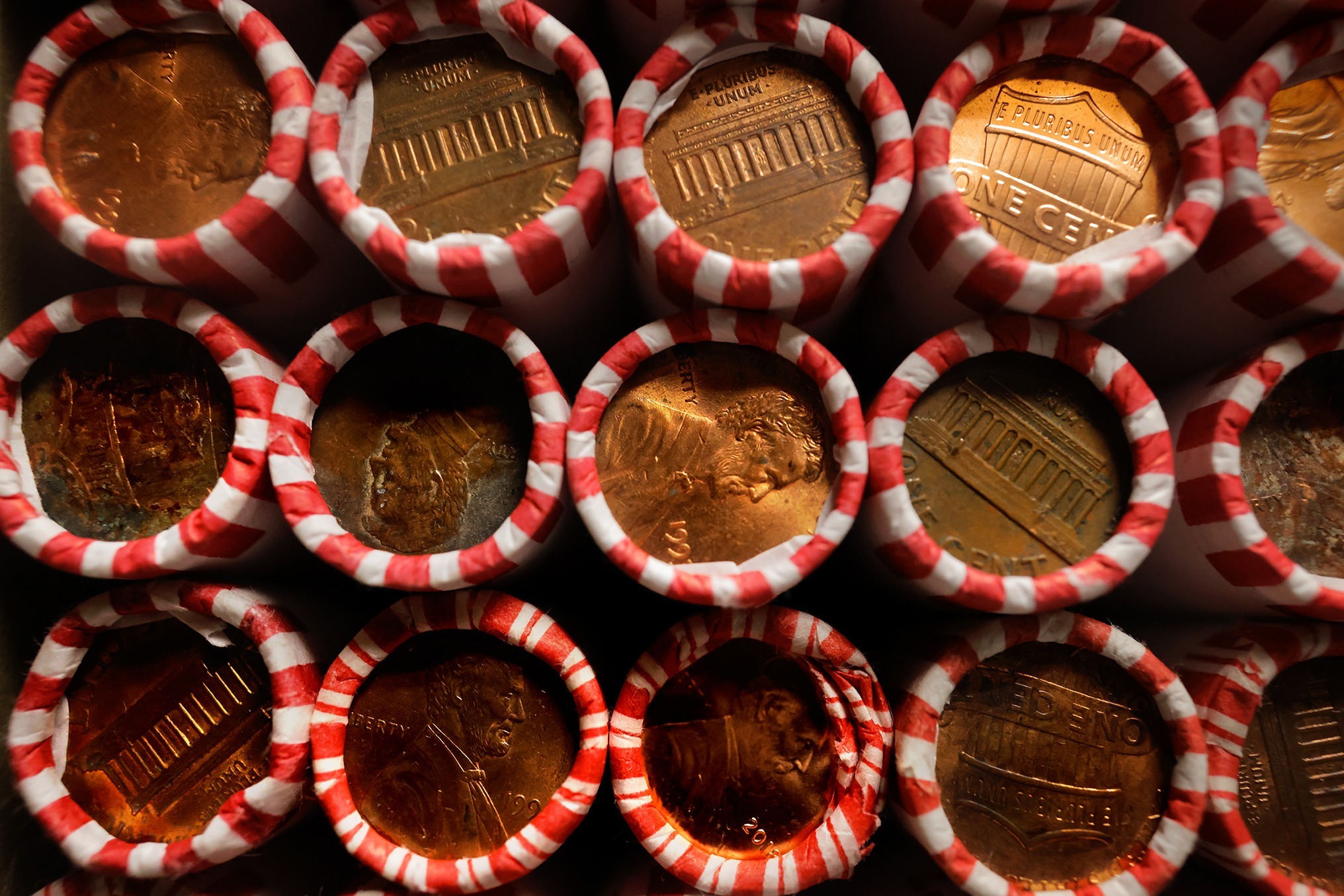
Last year, the case for keeping the penny became too tough to make. (Photo by Lane Turner/The Boston Globe via Getty Images)
Earlier this year, Washington State became the first in the country to outright ban thermal paper made with bisphenols, toxic chemicals that can be transferred to skin by cashiers and consumers handling it.
So what comes next? For years, startups like Slip, Refive, and 1receipt have been trying to digitize the space.
“We need some form of documentation, right? If I need to have the grocery store take back my lettuce because it’s going to kill me, I need a record that says I bought lettuce,” Sancinito says.
“The receipt can’t go away.”
The Old Farmer’s Almanac
Back in the 1790s, almanacs were common. A young astronomer named Robert Bailey Thomas believed he could do better.
He’d grown up on a small family farm in Massachusetts, and thought farmers, gardeners, and ranchers needed better information to plan their seasons. He used sunspots, planetary positions, and tidal patterns to develop a formula to predict weather years in advance. He wanted his almanac to be “useful, with a pleasant degree of humor.” The first edition sold 3k, and the second 9k. It’s now the oldest magazine on the US market.
Today, it costs $10.95 and their print run is ~2.5m, which is a cool $27.3m in revenue from magazines alone. The company also publishes a garden guide, a kids’ edition, and special handbooks on container gardens, vegetables, and herbs. Their run of calendars (355k at $11.99 for another ~$4.3m) sells out every year.
Back in 1792, 90% of working Americans were in agriculture. Today, editor Carol Connare says, that’s closer to 1.6%. So who’s still reading?

The Almanac still predicts celestial events like Supermoons every year. (Photo by Soumyabrata Roy/NurPhoto via Getty Images)
Imagine a 46-year-old Midwesterner who owns their home, makes $76.5k a year, is environmentally conscious and loves to garden, and you’ve got a prototypical Almanac consumer.
The magazine’s modern incarnation covers bird migrations and competitive stone skipping, oversized roadside attractions and how to grow roses. They print tide and moon charts, and astrological predictions. They also do an audit of their forecast accuracy, which they claim continues to hold strong at 80%. (A 1981 study by professors at the University of Illinois puts this at closer to 52%.)
The forecasting formula developed by Thomas is still kept under literal lock and key at the almanac’s headquarters in Dublin, New Hampshire, in an actual black box.
And while today’s almanac uses the spirit of the formula, it can’t keep up with the advancements in technological weather models. It now contracts its long-range forecasting out to AccuWeather, a company whose business arm services half of the Fortune 500.
“We see a real desire to return to some of those basic principles of earth tending,” Connare told NH Business Review. “I think that’s why we’re ever popular.”
Jonathan Jarry, scientist at McGill University’s Office for Science and Society in Montreal, offered a different perspective. “Farmers’ almanacs fill a void that people abhor: uncertainty about the future,” he wrote this summer.
Last year, when the younger (by 26 years) Farmer’s Almanac announced it would fold, the Old Farmer’s Almanac saw their sales also rise. (The competitor has since been bought and continues to publish.)
“We went back on press and reprinted 137k copies,” the Old almanac’s publisher, Sherin Pierce, told Valley News.
Editors took to the web to reassure faithful readers, too: “As sure as the Sun will rise, we will be here,” one wrote. “Useful, with a pleasant degree of wisdom.”