
With humor, surprise, and a decent heap of reality

I first heard the hemorrhoids ad on the radio. I was driving back from playing soccer late one night when the voice of 84-year-old British national treasure Miriam Margolyes came on.
“Bums,” she said. “We don’t tend to talk about them but one in two of them may get piles: itchy, sore pains in the posterior. Sound familiar? Use Anusol, the UK’s number one piles treatment — developed by experts to soothe itching, relieve discomfort, and calm inflammation.”
It immediately made me laugh, given how different it was from the ads on either side of it.
Selling perfume or fast cars can be an advertiser’s dream: hire beautiful people; put them in beautiful clothes; have them do beautiful things. But when it comes to advertising the things that we’re ashamed to buy, the job gets uglier and more complicated.
 Olivia Heller/The Hustle
How do you effectively market the products that no one wants to talk about?
An unseemly brief
When copywriter Prabhu Wignarajah heard that he and art director Jez Tribe had been given the brief to create an advertisement for male incontinence brand Tena Men, he was disappointed.
“In the agency we were working at, there were some big sexy brands like Guinness and Pepsi,” Wignarajah tells The Hustle. “And then we get this brief for male incontinence pads.”
The bar was pretty low, which turned out to be a good thing.
As there had never been a campaign for Tena Men on TV before, Wignarajah didn’t have award-winning campaigns to live up to when his team was hired in 2015. But he and his team at AMV BBDO — one of the largest advertising agencies in the world — saw how intimate products for women were marketed with earnest, life-affirming ads: women rollerblading down Miami Beach, for example.
He, Tribe, and the team decided that a different tack was necessary. The best way to reach a male audience — men who might be set in their ways — was through humor.
 Olivia Heller/The Hustle
The resulting campaign, which ran for several years on TV, radio, and online, revolved around a character called Stirling Gravitas, a gold-sports-car-driving alpha male who is effortlessly, ludicrously in control of every aspect of his life. He juggles chainsaws. He stands unflinching on hot coals. He tells a lion to stay — the lion stays.
“One of the rules we had was we were going to use humor to sell this product,” says Wignarajah.
“But the joke was never at the expense of the affliction. Stirling was a comic character but the joke was never about his urine leakage.”
Toby Allen, who was a creative director for the campaign, says that when the company tested their work on audiences, the pushback wasn’t about the content. It was about people having to think about the products at all.
“And I think it was just because they hadn’t been advertised before,” he says.
Ten years later, a subsequent advertisement for Tena Men took a far more direct route. “Hello. I want to talk to you about my urine leakage,” says a middle-aged man, who turns out to be wearing Tena’s absorbent protectors inside his pants, in a TV spot in 2025.
 A company rep runs a quality test at an Always event in New York City. (Photo by Cindy Ord/Getty Images for Procter & Gamble)
Whereas Stirling Gravitas didn’t say that he himself suffered from incontinence (this was implied through his connection to the product), the brand was now operating in a slightly different landscape — one in which men were able to display more vulnerability.
Medicine for an irritating problem
Incontinence is one thing. What about the stigma around hemorrhoids?
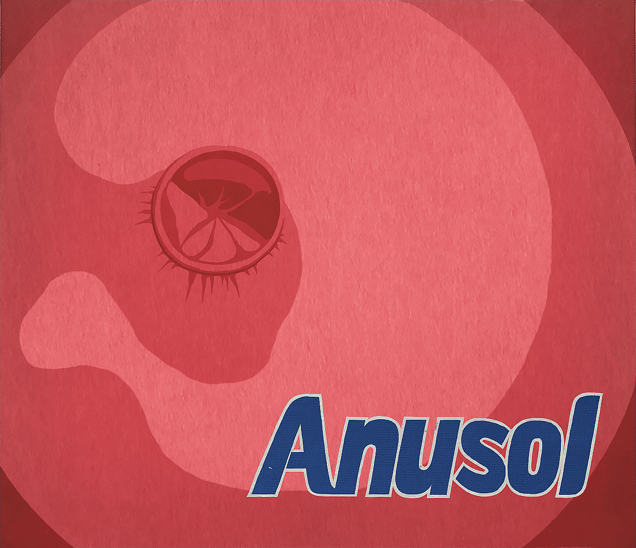
When communications company The Gate was given the challenge of marketing Anusol — a cream that treats hemorrhoids, also known as piles in the UK — they started by reflecting on why people don’t want to talk about anuses.
“We have this really weird relationship with bums, essentially,” says Bruno Carramaschi, the company’s strategy director.
When they looked at the way that rival brands handled similar products, they realized something important. “The whole category treated piles as a dirty secret,” Carramaschi says.
It was an apologetic category, generally appearing in targeted digital advertisements. The Gate helped Anusol go big, creating its first ever TV advertisement in the UK.
Because Anusol is a medicine for an irritating problem, The Gate wondered if there was no room for humor. But what they noticed, says Carramaschi, is that people’s Amazon reviews of the product were hilarious:
- “Stings a bit at first then blessed relief.”
- “Let’s just say I bit off more than I could chew with some extra-spicy tacos, and the aftermath was… memorable.”
- “After my culinary adventure, this ointment was like a soothing oasis in a desert of regret.”
They thought that tone was closer to the truth, and that gave them the license to be cheeky.
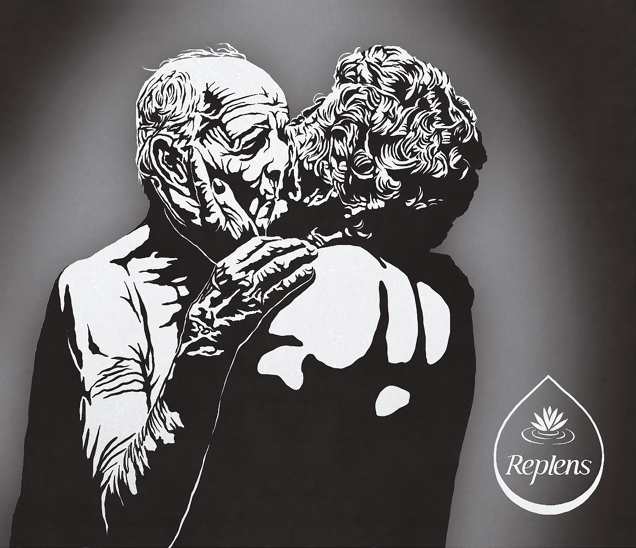
Accompanied by Margolyes’ voiceover, the result featured a range of objects standing in for bums: an apricot, a pear, a tomato, a cactus, and the knot on a pink balloon. The balloon knot in particular was a fan favorite, generating the loudest and most sustained laughter and the example most people remembered first.
 Olivia Heller/The Hustle
When they tested the ad, some people were uncomfortable. This was necessary, says Carramaschi. “Sometimes people feel uncomfortable because you’re really hitting a truth or because you’re telling them something new,” he says.
And, even when they received the feedback that broadcasting these TV ads around dinnertime would be uncomfortable, they interpreted this as a sign that this was what they ought to do.
“If you want to break a taboo and you really want to be disruptive and stand out,” says Carramaschi, “you just have to put it on mainstream channels.”
‘It’s not like they could show periods’
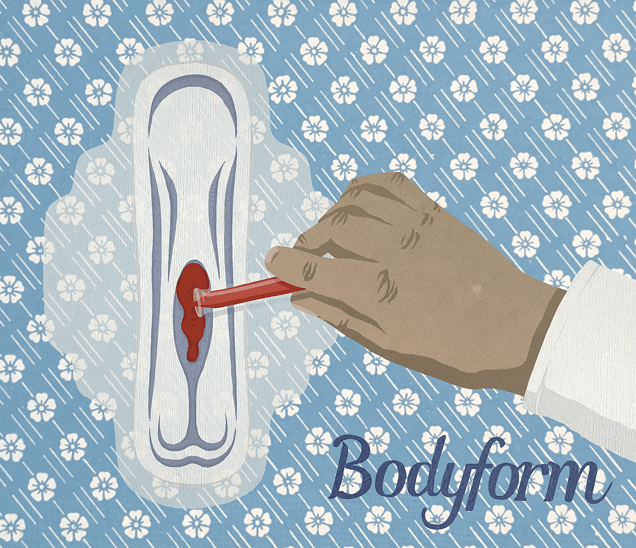
This was especially true when it came to a seminal campaign for Bodyform menstruation products called Blood Normal, spearheaded by Nadja Lossgott and Nick Hulley at AMV BBDO. Before 2017, the blood in period advertising was blue. Red, people argued, would be too upsetting for audiences to see.
Margaux Revol, then the senior strategist for Blood Normal, points to a successful campaign called Like A Girl by Always, a rival brand. In a research paper about the campaign, the company said they wanted to create something that had a good chance of going viral. “What could they do? It’s not like they could show periods,” Revol says. At the time, that felt like a crazy option.
 Olivia Heller/The Hustle
When an ad agency receives a brief from a client, it’s not as though the brief is about customers wanting to feel less ashamed, Revol says. It will be practical; it will be, in the case of period pads, about the absorption of the product.
“It’s assumed that you’re going to be tasteful about it,” Revol says. “And that’s when you realize, well, what do you mean by ‘tasteful’?” As Stirling Gravitas creative director Toby Allen says, it’s not in a brand’s commercial interest to change unless their research demonstrates that their audience is prepared to stomach the change.
But the research demonstrated that there was a problem, says Revol. People either saw no representation or negative representation of periods on their screens. Lossgott and her team proposed a simple change: making the blood red. “Contrary to popular belief, women don’t bleed blue liquid, they bleed blood,” went some of the ad language.
“What happens if we just pretend it is normal and we show periods the way that they are and don’t make a big deal out of it?” says Lossgott.
“You’re portraying a reality that should exist and, by portraying it the way that it should exist, you’re making it reality.”
This normalization of an ordinary, daily occurrence made headlines. It was, as some journalists put it, a bloodshed moment.
“Blood Normal has basically become a recipe for a lot of other brands,” says Revol.
Prior to the campaign, she argues, taboo-busting wasn’t an obvious path to success in advertising. Now it is par for the course.
The upper limits of disgust
Research suggests that after people feel a level of physical disgust they may feel some loss of power, making them more likely to try to restore that power by consuming conspicuously — i.e. by buying a luxury product like a leather briefcase.
Anti-smoking ads that elicited the greatest feelings of disgust were found to be the most effective. But what are the limits to how much an advertiser might want to make their audience feel uncomfortable or disgusted?
“When Blood Normal launched, someone said, ‘This is disgusting — what’s next? Anuses and poo?’” Revol recalls.
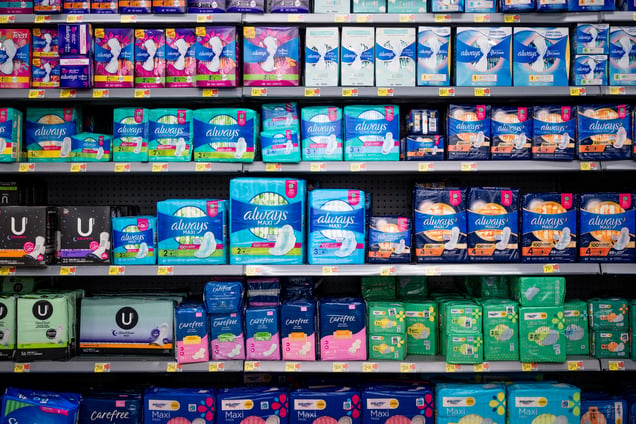 A fully stocked women’s hygiene aisle at Walmart in Austin, Texas. (Photo by Brandon Bell/Getty Images)
The creative minds behind the campaigns need to consider the nature of the taboo in question, she says.
“In some cases, confronting things head-on might not always put people out of their discomfort. In some cases they are so deeply ashamed that you are sort of reminding them of it. That’s when you need creativity, to be lateral.”
Even if advertisers are always flogging a product — “We’re providing business solutions, we’re not making Succession,” says Wignarajah — their ads are shaped by a wider cultural conversation, and a conversation they in turn continue to shape.
When it’s your turn to need Anusol, you might think of pink balloons and Miriam Margolyes. And that can’t be that bad, can it?
sales