
SendCutSend accidentally built the Amazon of sheet metal
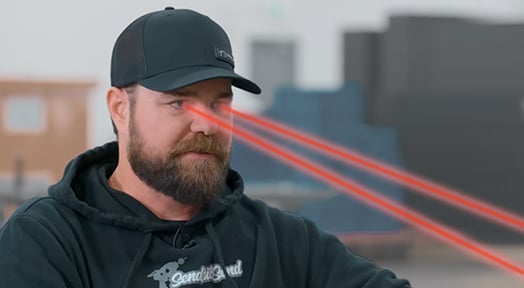
Jim Belosic walks the factory floor in Reno, Nevada, surrounded by laser beams. He turns a piece of steel over in his hands, a homemade fidget toy that accompanies him as he takes in the mountains of metal before him.
Belosic is the co-founder and CEO of SendCutSend, a company that makes bespoke parts and that’s earned a reputation as the Etsy of steel.
“Sometimes we get mistaken for a Chinese company,” he says. “People are like, you’re so cheap and you’re so fast, how are you doing this in the US?”
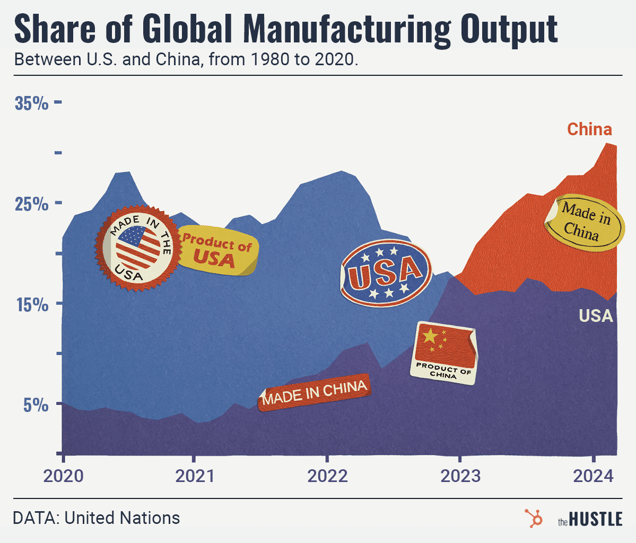
For much of the 20th century, the US led global manufacturing handily. In 2010, though, China caught up, and kept pace at $2.373T to the US’s $2.365T for only a year before surging ahead by 23%. Today, China owns 28% of the world’s manufacturing output, and the US is trailing at 17%.
Companies like SendCutSend are working to get it back.
The tinkerer’s dilemma
Belosic has been an entrepreneur since he was a teenager aiming for block domination with his lawn-mowing business in rural Nevada.
After he graduated from high school, the World Wide Web was starting to take off, and he taught himself how to code. He started out as a web designer, and before long he was running a B2B SaaS software company.
He’d always been into cars, and began to tinker with some of his coworkers in the garage next door over lunch, turning regular cars like his friend’s DeLorean or his Teslonda (a 1981 Honda Accord with a Tesla motor) into electric vehicles. Before long, his needs outpaced what he could find at the local auto shops. He was looking for brackets and pieces that didn’t exist. But he was having trouble placing an order.
“No one wanted to shut their line down for just one guy,” he says.
“If I needed a thousand units, no problem, but to get one, manufacturing wasn’t set up to do that.”
 Olivia Heller/The Hustle
He began tinkering with software that would help smaller shops accommodate requests like his, but no one was interested. Still, he persisted. In 2018, he took a risk and financed a $750k laser machine (with his wife’s blessing). He figured if other hobbyists wanted to DIY their own parts, he’d be able to rent out the machine to at least cover his costs.
At first, he was making parts for what he calls “guys in their garages.” It turns out those hobbyists also had day jobs. Word of mouth began to spread and, today, the company works with ~60% of Fortune 500 companies. Nine out of ten private rocket launch companies have used SendCutSend, too.
Belosic describes the company as a job shop on steroids. They operate their three factories (in Paris, Kentucky; Arlington, Texas; and Reno, Nevada) on a 24/7 schedule and each of their machines’ backups have backups to ensure they’re able to keep up with demand.
 Olivia Heller/The Hustle
The way it works is this:
- A customer submits a design.
- SendCutSend selects the right material, or returns the design to the customer with suggested alterations.
- A laser cuts the metal to the specs provided.
- Then it heads to the production floor for tapping (poking holes, or threads, for screws) or bending.
- From there, it’s powder-coated and packed for delivery.
From your head to your hands in 48 hours
SendCutSend operates on a high mix, low volume model, which means they’ve created 30m+ pieces for 300k customers. The company cut 8m pieces last year alone. It still takes them a while to fill up their scrap heap, because they’re able to lay out their cuts efficiently – think cookie cutters, but with sheet metal. They can do hundreds of pieces in one sheet of aluminum, copper, or steel.
Today, SendCutSend has parts at the bottom of the ocean, parts in orbit, parts on mountain peaks, and parts in garages across the country. And they’re still growing. They recently expanded into CNC metal cutting, using computers to guide lathes, mills, and drills, and are scouting for a fourth factory location.
 Olivia Heller/The Hustle
He knows it’s a good day when he sees the FedEx truck sagging under the weight of the orders they’ve loaded inside.
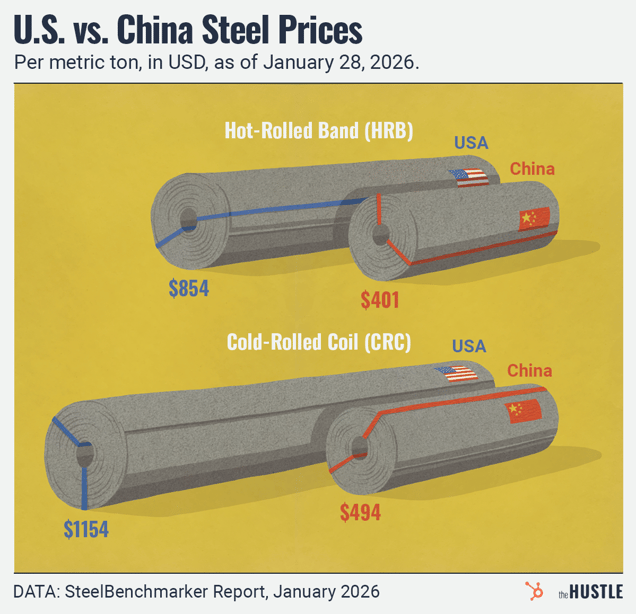
While they can’t compete with China as easily on price — steel can cost twice as much in the US as in China — they’re the clear winners when it comes to speed, where Chinese manufacturers are looking at lead times of two to three weeks. All in, the SendCutSend process takes 48 hours, but they’ve done it in as little as 32 minutes before. And the software Belosic developed years ago that no one wanted? It’s now the blueprint for SendCutSend’s factories.
“We’re taking something that only existed in your head yesterday, making it from scratch and then putting it into a box and getting it there,” he says.
Industrial superpower status? “There has never been a better day to start making something in the US than today,” Belosic says.
See you in the garage.
manufacturing