Windfalls for winning reality shows and game shows have been decimated by inflation.
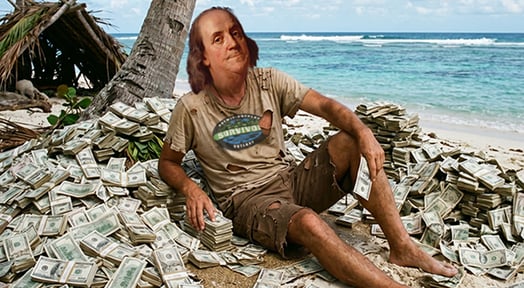
Savannah Louie sat on a log, surrounded by tiki torches and silent camera crew members, holding hands with her cast-mates, one on either side. She’d made it to Fiji, to the end of 26 days on “Survivor.”
She’d walked into Tribal Council with a strong intuition she would win. But as host Jeff Probst read out “Sage” and “Sophi” — votes for the other finalists — that feeling began to slip away.
Then, she started to hear her name. When Probst announced Louie had won her season of “Survivor,” she dissolved in tears.
Louie grew up on the show, which debuted on CBS in 2000, and was now taking home the top prize for the late 2025 season. But just like past winners, her winnings were the exact same amount: $1m.
To Louie, it was still “life-changing money,” although she was well aware of how inflation had decreased its value.
“When the show first premiered, $1m, that is crazy, life-changing money,” she says. “In 2026, it doesn’t quite hit as hard.”
Shouldn’t it be time for “Survivor” winners to get a raise?
A trophy by Cartier
When Louie was born, in Walnut Creek, California, her mom was a student and her dad collected welfare. She grew up with an unrelenting financial anxiety in the pit of her stomach, and two childhood dreams: become a broadcast journalist (check), and appear on “Survivor” (check).
The first time she applied, she says, she was 17. It took two more tries, but she finally got the call and joined the cast of “Survivor” 49 last year. She spent a month on an island in Fiji with 17 cast-mates, left to fend for themselves with no shelter, little food and a whole lot of strategic gameplay. Less than 24 hours after the finale aired in December 2025, a million-dollar wire transfer landed in Louie’s bank account.
She took a screenshot and splurged on a trip to Thailand and a Cartier watch.
“You don’t get a trophy after ‘Survivor.’ So I bought my own trophy,” she says. “It’s a reminder to myself that I did something really hard, and I can literally do anything.”

Back from the island, the cast of “Survivor” 50 gathers in New York. (Photo by Roy Rochlin/Getty Images for CBS Broadcasting Inc.)
Then the reality set in. She knew ~$380k would go to taxes. On top of that, she knew the total prize wouldn’t make her as rich as past winners.
When “Survivor” launched in 2000, the median household income in the US was ~$42k; the median home value was ~$120k. It was a different time.
In 2000 dollars, the real value of Louie’s $1m prize is just ~$519k today. Had “Survivor” kept up with inflation, the payout would’ve been closer to $1.9m. (Today’s median home value? $405k.)
It’s not just the winners who earn money from the show — and who’ve dealt with declining real value of their earnings. Past contestants have said:
- The first person eliminated makes $2.5k. (But in value relative to dollars when the show premiered in 2000, that’s now $1.3k.)
- The second-place contestant receives $100k. ($52k of value, compared to pay in 2000.)
- Third place gets $75k, fourth gets $65k, fifth gets $55k, until each member of the jury is paid.
- To appear at the now-defunct reunion, participants made an extra $10k.
Not a bad payday for a month or so of work, minus any pre-game fitness or survival regimen, until you consider that on other reality shows contestants are making:
- $125k for rehearsals and the first two weeks on “Dancing with the Stars,” to a ceiling of $295k the further you last on the show.
- Anywhere from $25k to $1m+ for a “Real Housewives” gig.
- “Celebrity Big Brother” pays its participants $100k, plus $250k if you win.
CBS, the network that airs “Survivor,” didn’t respond to The Hustle’s request for comment on why the pot hasn’t gone up in the decades since the show’s inception. “The Amazing Race,” another early-aughts reality TV hit from CBS, has also held its prize money steady at $1m.
Cautionary tales
Even though $1m isn’t what it used to be, a large infusion of cash can still be daunting for winners.
Maryanne Oketch says she went into “Survivor” 42 virtually financially illiterate. Fair enough — she was only 23. She came out $1m richer and determined to be smart about it.
“I heard of so many stories: I won the million dollars, and within two years I had none of it,” she told The Hustle. She’d been steeped in cautionary tales:
- Richard Hatch, who won the series’ first season, was infamously sentenced to 51 months in jail for tax evasion on $1.4m, his proceeds from the show and a few other sources.
- Brian Heidik, winner of “Survivor: Thailand,” burned through much of his winnings on sports cars.
Oketch was terrified. What was investing? How could she be smart about this? The show offered her the choice between a wire transfer and a check.
“When am I ever going to get a check that says $1m? I said, ‘check, please!’”
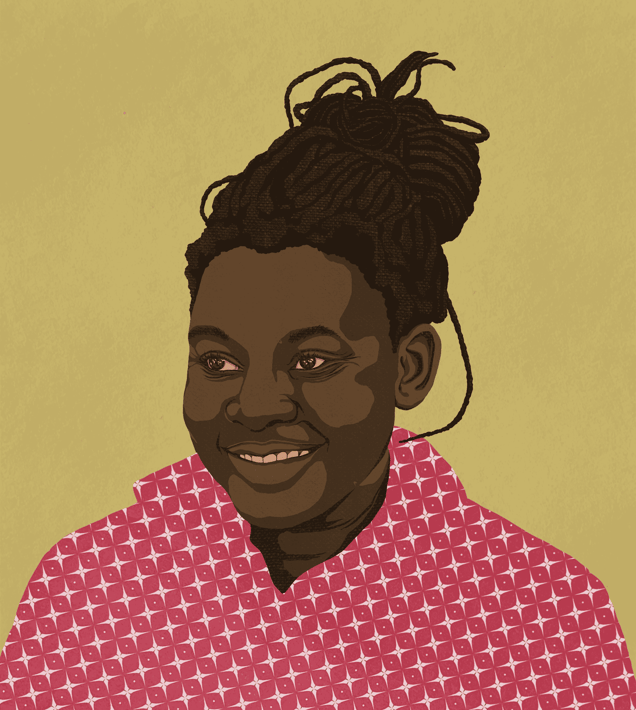 Maryanne Oketch, winner of “Survivor” 42. (Olivia Heller/The Hustle)
She and her family took photos with it, before she carried it to the bank to deposit in-person. Because Oketch is Canadian, that meant her $1m prize was worth even more — ~$1.29m in Canadian dollars.
She went to see a pay-per-visit financial advisor. “I was like, this is the scariest thing in the world,” she says. “They were like, oh, this is easy.”
She knew she wanted to donate some of her winnings to her church, use a bit to pay for her wedding, and buy her parents a trip to the Bahamas for their 30th anniversary.
“$1m when you’re 23 isn’t, oh, you-stop-working-forever money,” she says.
But when she decided to enroll in medical school, she still took out student loans to pay for her tuition.
“The federal loans have no interest,” she says. “It makes more sense to take the loan, let my money increase in savings, and pay it back after the increase.”
Her newfound financial literacy came from a stack of books a former winner recommended to her.
A million buys freedom
Louie learned from past winners too, a kind of “Survivor” whisper-network for responsible investing.
 Savannah Louie, winner of “Survivor” 49 and contestant on “Survivor” 50. (Olivia Heller/The Hustle)
When she got home to Atlanta, it took her a while to feel normal again. She spent some time sleeping without a pillow, like she had in Fiji, and gorging on cake to fill the ravenous void the wild had left in her stomach.
Even with two-thirds of $1m after taxes, Louie knew her win was the kind of payday that, with smart decisions, can set someone up for success. “I know this is not a very sexy answer, but I’ve invested most of it.”
Winning the money, to her, feels like the best thing money can buy: freedom.
“The biggest thing for me is just that feeling of security, of feeling like I can breathe,” she says.
entertainment