How a childhood obsession became an online phenomenon and a full-time career for claw-machine enthusiasts.
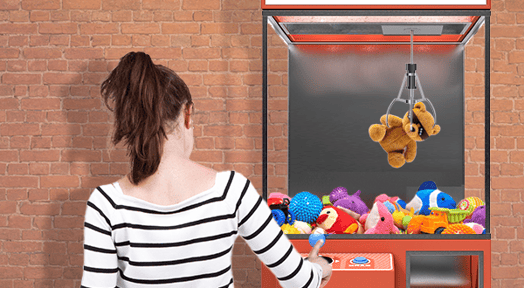
Walk into almost any American mall, bowling alley, or family restaurant and you’ll see it: a glowing box of plush toys and blinking LEDs waiting for someone to drop a few dollars to try to grab a prize.
Claw machines could have been relics, lost to the ‘90s alongside spitball shooters and mall photobooths. Instead, they’ve amassed billions of views on social media and have proved to be a viable small business for local operators.
Their popularity isn’t from winning expensive prizes, or because competitions pay big. Claw machines are still difficult to win and many believe they’re rigged by operators. It’s because claw machines — in their own way, nostalgia personified — have become an unlikely and effective modern vehicle for monetizable content.
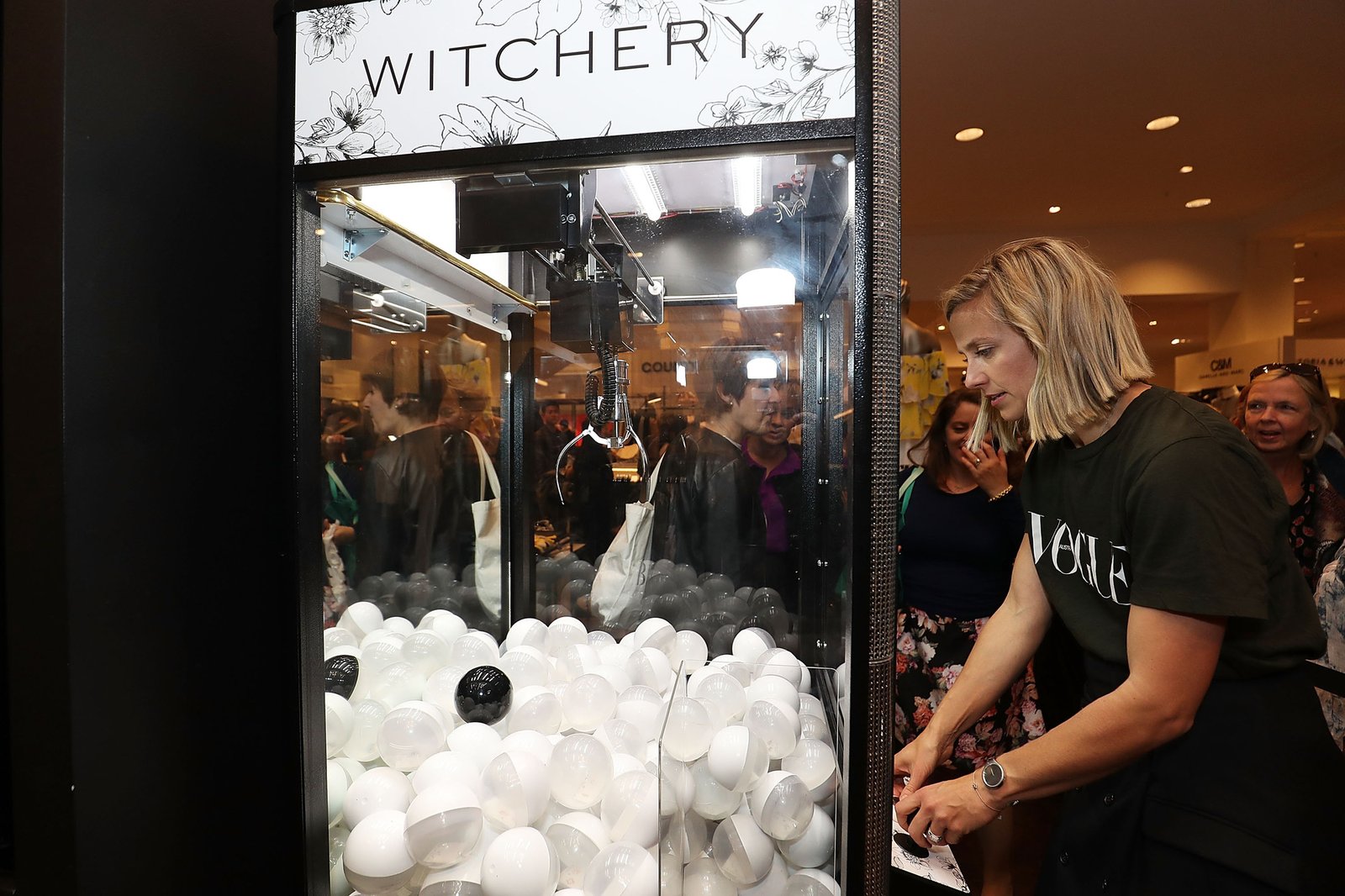 A Vogue editor plays on a claw machine at a fashion event in Sydney, Australia. (Photo by Mark Metcalfe/Getty Images for Vaefno)
And in the center of this unexpected industry is a generation of players and operators who treat claw machines not as games, but as engines for making money.
The kids who never grew out of it
Before claw machines were content, before they were side hustles, before they were tropes in TikTok videos, they were everywhere and irresistible to Erik Kane.
“I remember always seeing them in the early 2000s growing up,” says Kane, the 26-year-old creator behind the YouTube account Arcade Warrior. “There was always one in a grocery store, restaurant, mall. They were very prevalent. The marquee sign would light up next to flashing lights, plus the claw itself. I was always drawn to it.”
As a kid in Rochester, New York, Kane begged his parents for a dollar to play. "If it was not for them giving me a dollar to play whenever I would see one, I probably never would have gotten fully invested in them," he says. Eventually, he started filming. Today, his channel has 2m+ subscribers.
“Around the time I was 12 or 13, I started to film some clips of me just playing,” he says. “Me and my brother would go around and film but wouldn’t upload anything. It was just something we did for fun.”
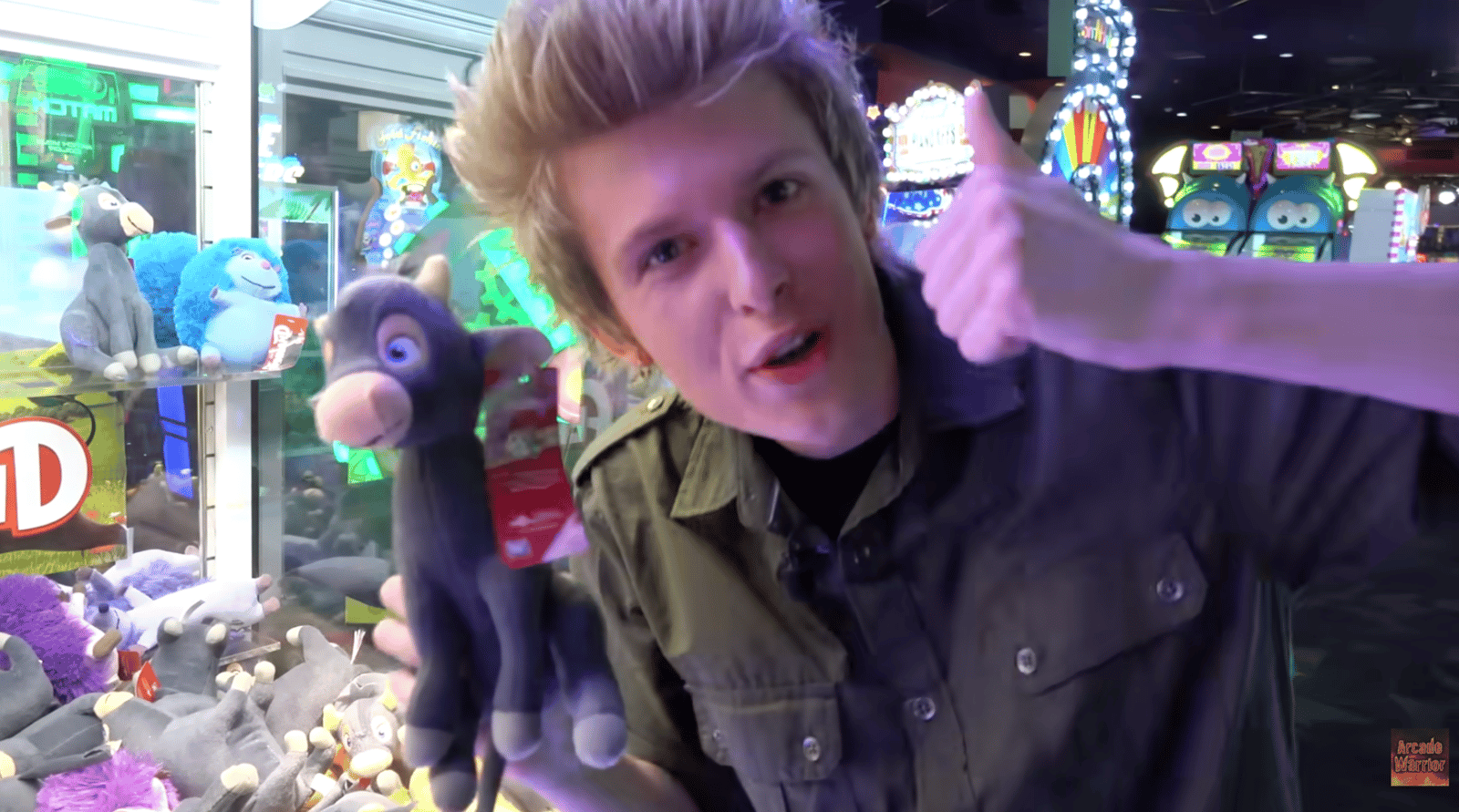 Erik Kane shows off his latest plushie prize. (YouTube)
In Pennsylvania, future YouTuber Matt Magnone, known online as Arcade Matt, was doing the same thing.
“Ever since I was a little kid, it was the one game at the arcade that you could win an instant gift with,” says the 38-year-old. “Instant gratification—millennials love that. I didn’t care what the prize was. It was just the fact that I could win something.”
At 17, he bought a full-size claw machine for $500, which he stored in his mom’s basement and practiced on daily.
“My first job was a cashier at a neighborhood pharmacy and I only made $5 an hour so I had to save up for months and months and months in my pretzel jar until I finally had enough money to buy it,” he says.
He now has 1.83m YouTube subscribers, who he fondly refers to as goobers.
Alongside the channels, the competitive claw machine community has grown. Aspiring clawmasters share tips and tricks online. Clawcades host tournaments for local players. The cost to play depends on location and prizes, but on average is still between a quarter and $2 per play. They’re especially popular in Japan, where a woman named Yuka Nakajima holds the Guinness World Record for most claw-machine wins at 3.5k.
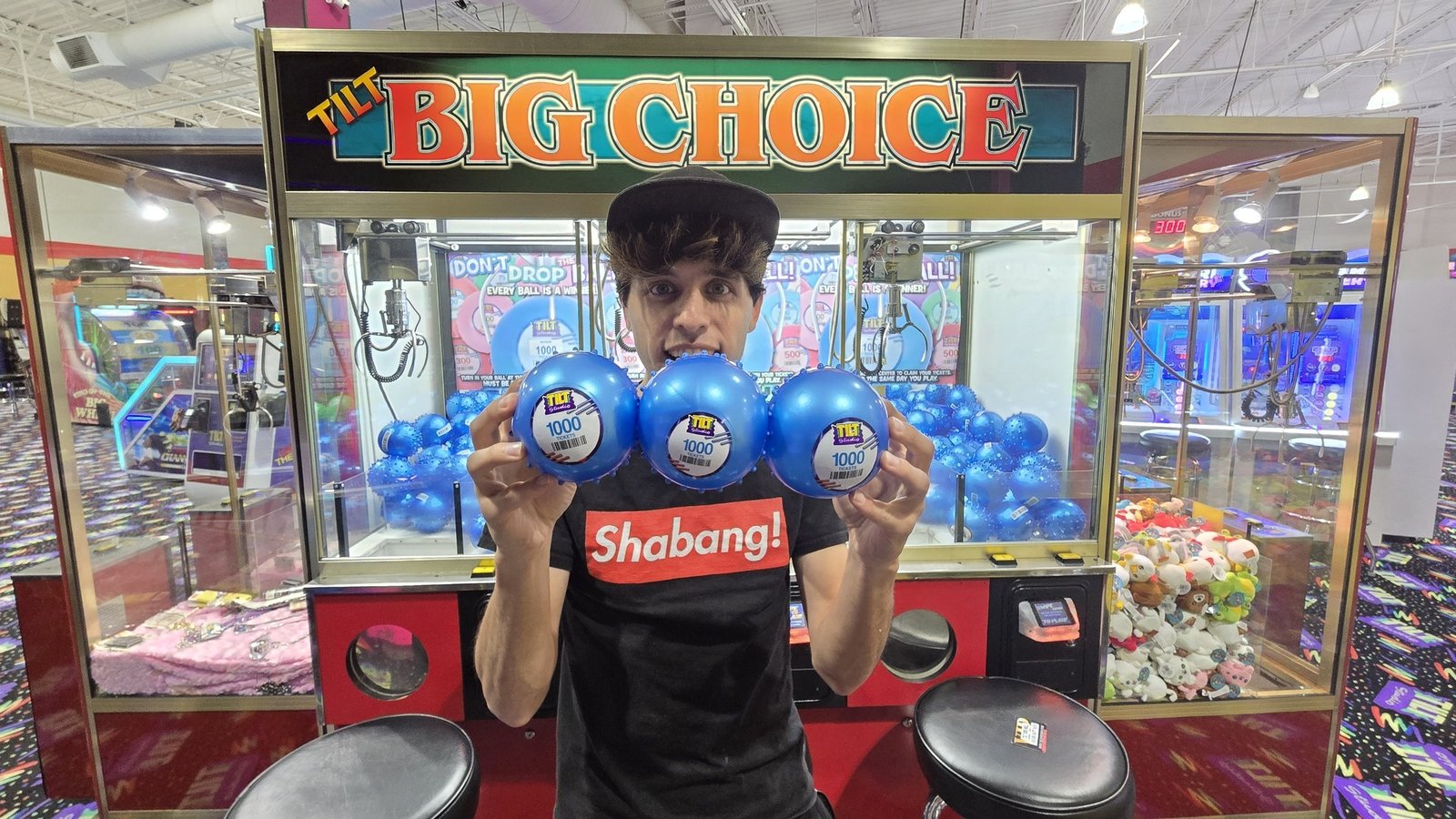 Matt Magnone says winning claw tournaments isn’t where the revenue is – it’s in videos of him playing the game. (Courtesy of Matt Magnone)
And like any community, it has its own drama. Magnone explains he’s called out members online who “give false information on hacks” to gather views.
“That ruins it for us content creators because the arcades see us walking in with a camera and think we want to try to hack the system,” he says.
He’s called out arcades, too, for allegedly rigging their games or keeping payout levels low. (Anecdotally, machines will pay out between 10%-30% of the time, but it depends on how the owner has set the game.)
Videos cost Magnone between $50-$100, and throughout his career he’s amassed a wide range of prizes: from mp4 players (“they were very valuable then”) to licensed items like Minecraft-related products, giant Squishable plushies and more. Once, he turned $20 into 33 prizes at Dave & Busters.
“I don’t really do any kind of training,” he says. “Claw machines are one of those things that, once you get the feel for it, you just have to catch the machine at the right time and the prize in the right position.”
The jackpot behind the jackpot
Neither Kane nor Magnone make money winning tournament jackpots. The real opportunity, the thing that birthed what could be described as the claw economy, is that claw machines translate perfectly into content.
What makes claw-machine content so sticky online is that it’s built on the same psychological loop as the gameplay itself: set up, suspense, and then payoff.
The viewer experiences the “almost win” on screen, without paying for the next attempt, watching the claw strains to latch onto the prize. It creates a kind of low-grade high: the thrill of almost.
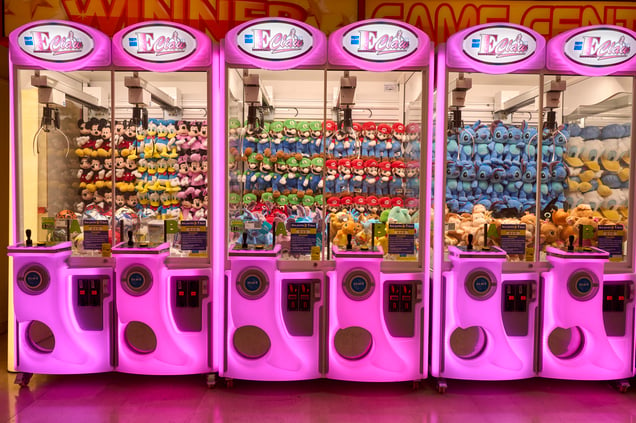 Plushies based on licensed characters, like the ones above in an arcade in Italy, can help drive traffic to a machine. (Photo by Matteo Della Torre/NurPhoto via Getty Images)
It’s no surprise, then, that, when the audience is in the millions, a $1 plush toy — or the mere chance of clawing a $1 toy from a machine — can generate thousands in ad revenue.
One thing that Magnone and Kane do have to keep in mind, though, is the risk of being repetitive.
“I honestly feel like my content is very repetitive,” says Magnone.
He tries to stay on top of trends to skirt around an algorithm that rewards him for constantly posting similar content. “When fidget spinners were hot, that’s what propelled me to over a million subscribers because there was a claw machine with one in it and I won it,” he remembers.
“But it’s hard to always find machines filled with items that are trending so you just have to go with the flow.”
The evolution of the machines
Part of the enduring appeal is that claw machines still invite debate about fairness, skill, and rigging. In reality, the technology has evolved in ways that make the entire system both more sophisticated and more predictable.
“It’s not a myth but a common misconception,” Magnone says. “Certain machines are 100% skill-based.”
Machines in the ‘80s and ‘90s had knobs inside them that allowed owners to set the strength of a claw’s grip or the number of times a claw would drop a prize before it delivered it to its winner.
More modern versions of the tool are different.
“Nowadays, the machines are filled with very expensive prizes: video games, handbags,” Kane says. “Those machines are usually set on a payout rate. If an item costs $20, until $20 or more is put into the machine, it’s not going to pay out.”
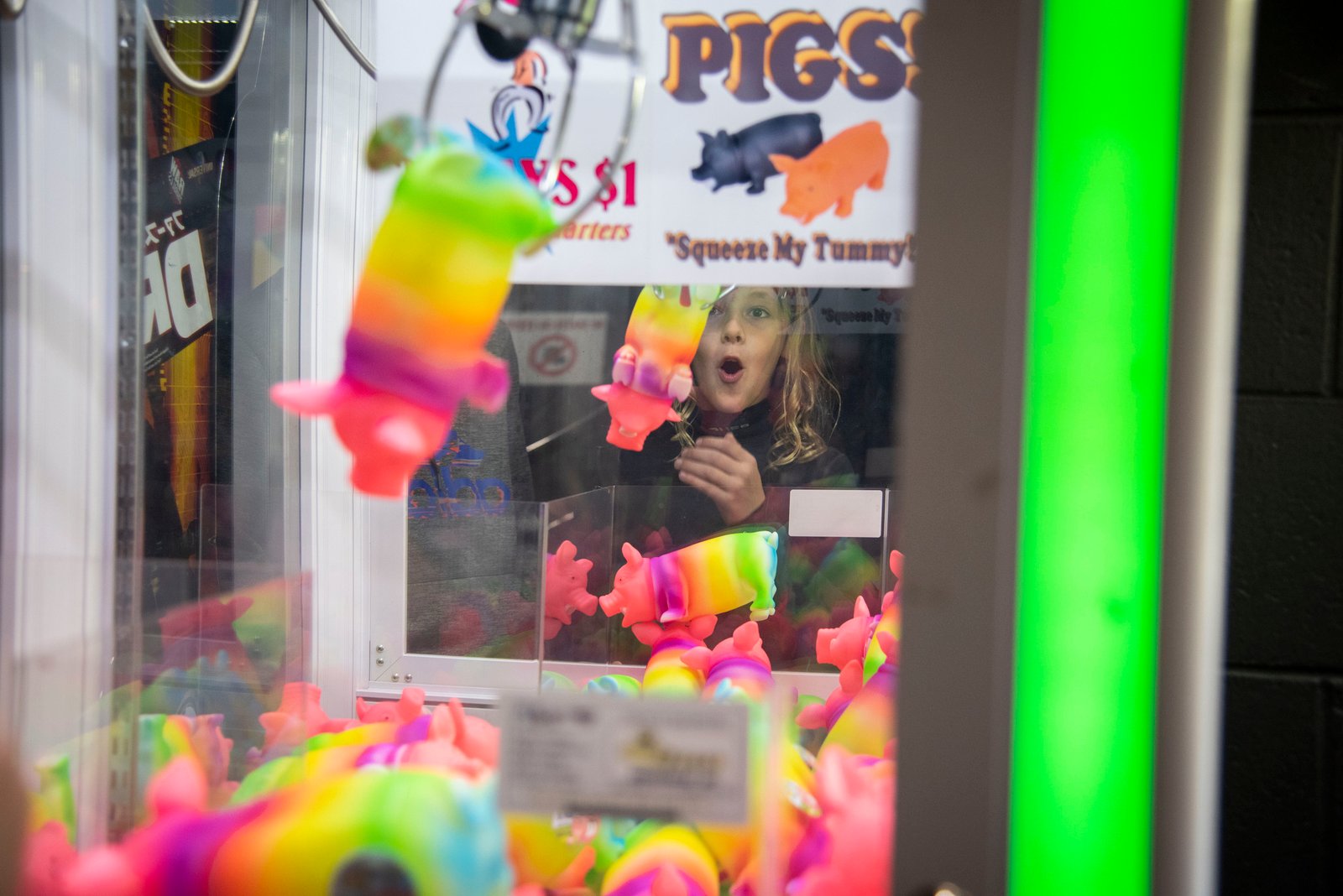 The thrill of the almost-win keeps players (and viewers) coming back. (Photo by Calla Kessler/The Washington Post via Getty Images)
According to Magnone, older claw machines were largely skill-based, with a fixed claw strength that stayed consistent from play to play and allowed experienced players to win through good positioning and technique.
Newer machines, by contrast, often use payout systems that tie claw strength to how much money has been fed into the game, meaning the claw only reaches full strength after the operator’s preset threshold is met. They’re usually flashier, featuring LED lights, loud music and sleeker designs, and they make it much harder for the average player to tell when a prize is actually winnable.
Magnone can detect the difference on sight. “Look for the credit display, the way the joystick moves,” he suggests. “The older machines that let you only go forward once and then right, those were all skill. They don’t make those anymore.”
“Now that I’m on the other side, I play less”
Based in Melbourne, Australia, Jack Ennis owns and operates ~40 claw machines across trampoline parks, kids’ play centers, malls and restaurants. He started as a player and eventually became an operator because he realized the business was shockingly profitable.
“It’s funny because I have been a player for so long and then transitioned to owning and operating the claw machines,” he says. “There is a lot of psychology behind the playing. It triggers reward pathways. When you’re about to win something, you want to play again.”
But becoming the operator ruined the magic. “Now that I am on the other side, I know the machine is telling you when you’re going to win. I don’t really play them anymore. It ruined the experience a little bit.”
Still, he believes in the product.
“We know we are providing a service: entertainment and fun. Even if people don’t win, they have fun,” he says.
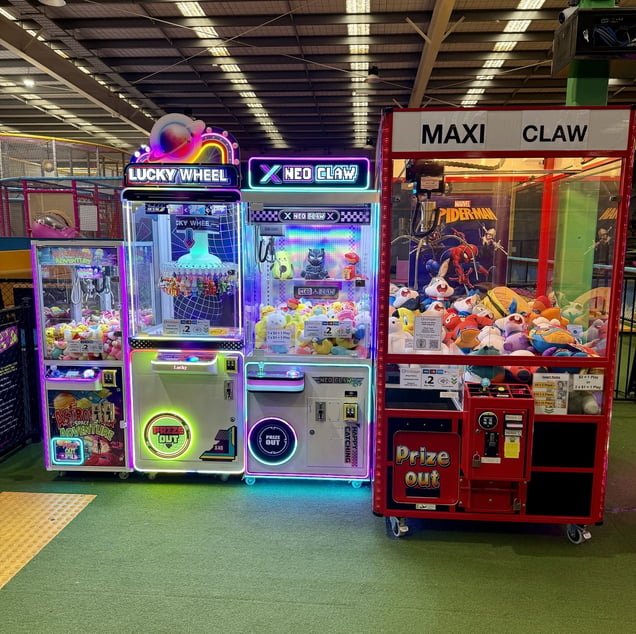 A single machine can earn up to $400/week for Jack Ennis, who owns about 40 like these. (Courtesy of Jack Ennis)
Ennis’ business model is simple. According to him, machines cost between $500 and $1,000 and he believes that the return on the initial investment can likely be made in four to six months. After that, it’s pure profit. Ennis says a single machine can earn him between $200 and $400/week.
Credit card readers exploded revenue (“People lose track of spending with Apple Pay,” Ennis says) while colorful prizes and pop-culture-themed toys keep engagement high. Add to it all locations with high foot traffic, and the potential for revenue keeps multiplying.
“It’s very scalable and profitable,” says Ennis. “A perfect side hustle.”
But even here, the money isn’t about a single play. It’s the ecosystem: nostalgia, psychology, social play, and the sheer volume of attempts.
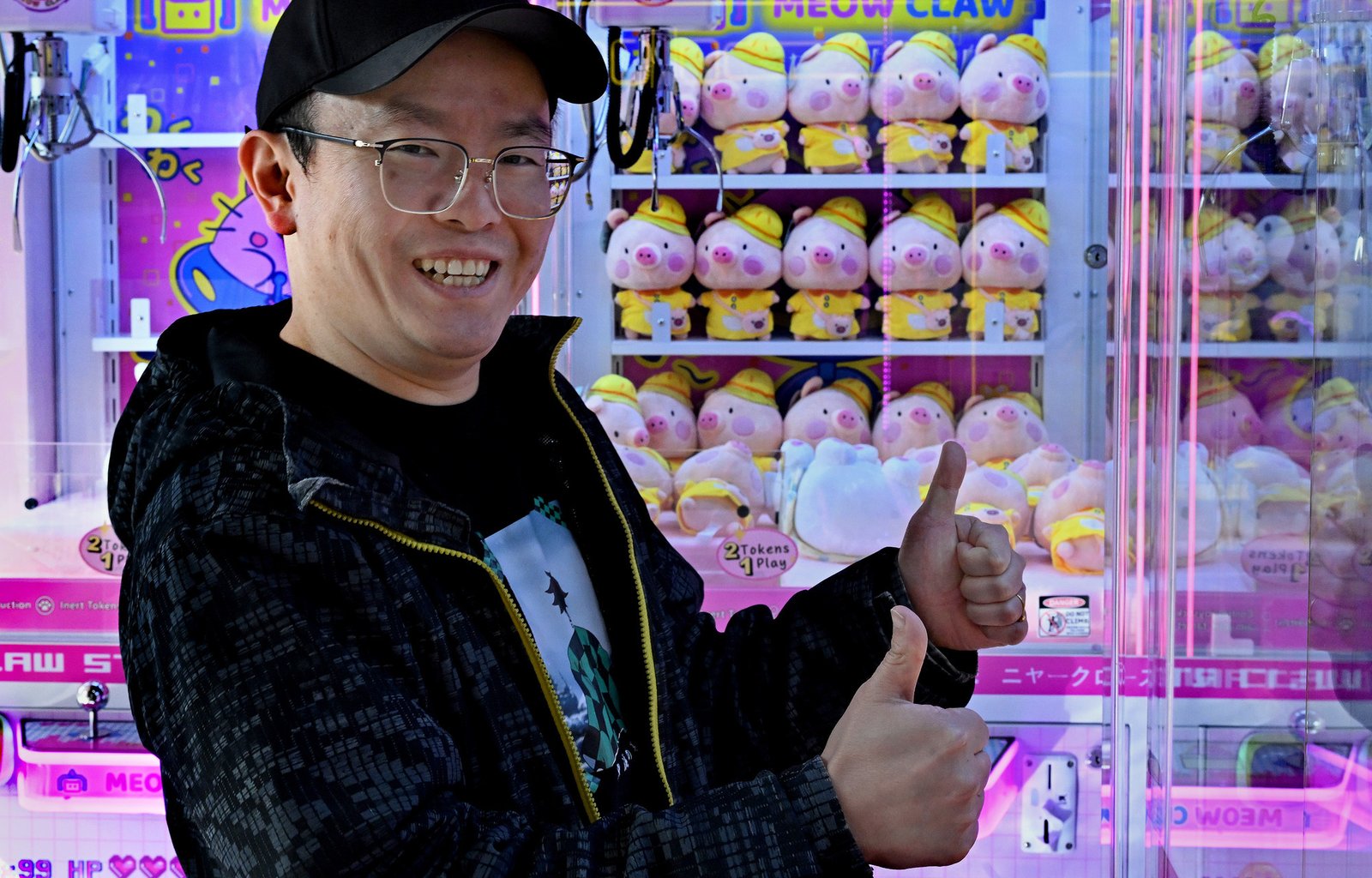 Meow Claw, a claw-machine arcade in Rockville, Maryland, is inspired by Japan’s arcades, where the machines are called UFO catchers. (Photo by Michael S. Williamson/The Washington Post via Getty Images)
And increasingly, content creators drive foot traffic as much as casual players.
Content pays
There’s a misconception that claw-machine pros earn money the way gamers or athletes do: through competitions, high-stakes events, prize winnings. Both Kane and Magnone shut that down quickly.
There are small competitions popping up at dedicated “clawcades,” they say, but nobody’s paying rent off a trophy.
The creators make money because they film themselves playing and sell ad inventory against the millions of views that those clips generate.
Kane and Magnone also mention sponsorships, selling merchandise or the prizes that they won which, according to both, doesn’t actually amount to much.
To put it simply: the claw machine is the stage. The content is the product.
What started as a coin-eating arcade sideshow is now a full-blown ecosystem powered by social media, nostalgia and the most consistent human impulse of all: the desire to win. Or, at the very least, watch somebody else win.
entertainment