
For decades, its inventor has watched others take credit. That’s starting to change
Margaret Crane stood nervously in a room, surrounded by men in suits. A meeting was about to begin. She hadn’t been invited.
It was 1967, and she was 26, a product designer at pharmaceutical powerhouse Organon.
Her boss watched her enter the conference room, eyes narrowing.
“I was scared to death,” Crane says. “I just thought they would fire me immediately when the meeting was over.”
But she was determined to be part of the conversation. After all, it was her idea that brought them there.
She slid a prototype onto the end of the table, and returned to her post on the room’s perimeter by the radiator. She’d fallen down in the snow on her way to the boardroom, and was covertly drying off her dress with the heat.
That prototype, and Crane’s insistence on it, would go on to spark a million-dollar industry and change women’s reproductive health forever — but didn’t earn her a penny.
‘It had to happen’
Crane started her career as an artist. She studied at Parsons before dropping out because the cost of tuition was too high and setting out on her own as a freelancer. Her first big break came in the form of a frog: AT&T needed line drawings of the amphibian to appear in their catalogues, and she was hired to do them.
 Margaret, or Meg, Crane, the original inventor of the at-home pregnancy test. (Olivia Heller/The Hustle)
When she was brought on as a freelancer to design lipstick and ointment packaging for Organon, it was the first time she’d seen a lab in real life. She walked behind her supervisor, taking in the rows of test tubes. A glint of light hitting a mirror caught her eye. What’s that, she asked him.
She was pointing to a row of test tubes beneath a slanted mirror. They’re pregnancy tests, he told her.
A portion of Organon’s business at the time meant women sent in samples to a lab to be tested so a doctor could inform them whether or not they were pregnant.
Surely, she mused, that was something women could do on their own? Her boss was aghast. “There’s no way,” he told her. For one, they’d lose their business with the doctors. And two, women couldn’t possibly handle that.
Crane disagreed. “I became absolutely obsessed with this whole thing,” she says. “It had to happen.”
She’d always been a tinkerer, but had no scientific background. She put her artistic skills to use, scouring New York City for the perfect little plastic box she could retrofit to hold the shelf, test tube, dropper, and mirror required to make the test.
Her test included:
- A lid to collect urine for the sample
- An eyedropper to move the sample to the test tube
- A test tube, to which users would add the sample and water
- A mirror, through which you could see your results
After shaking the test tube to mix the liquids with chemicals the test supplied, users would leave it perfectly still for two hours. If the pregnancy hormone hCG was detected, brown-red sediment would start to form in the test tube. With the mirror, you could see your results.
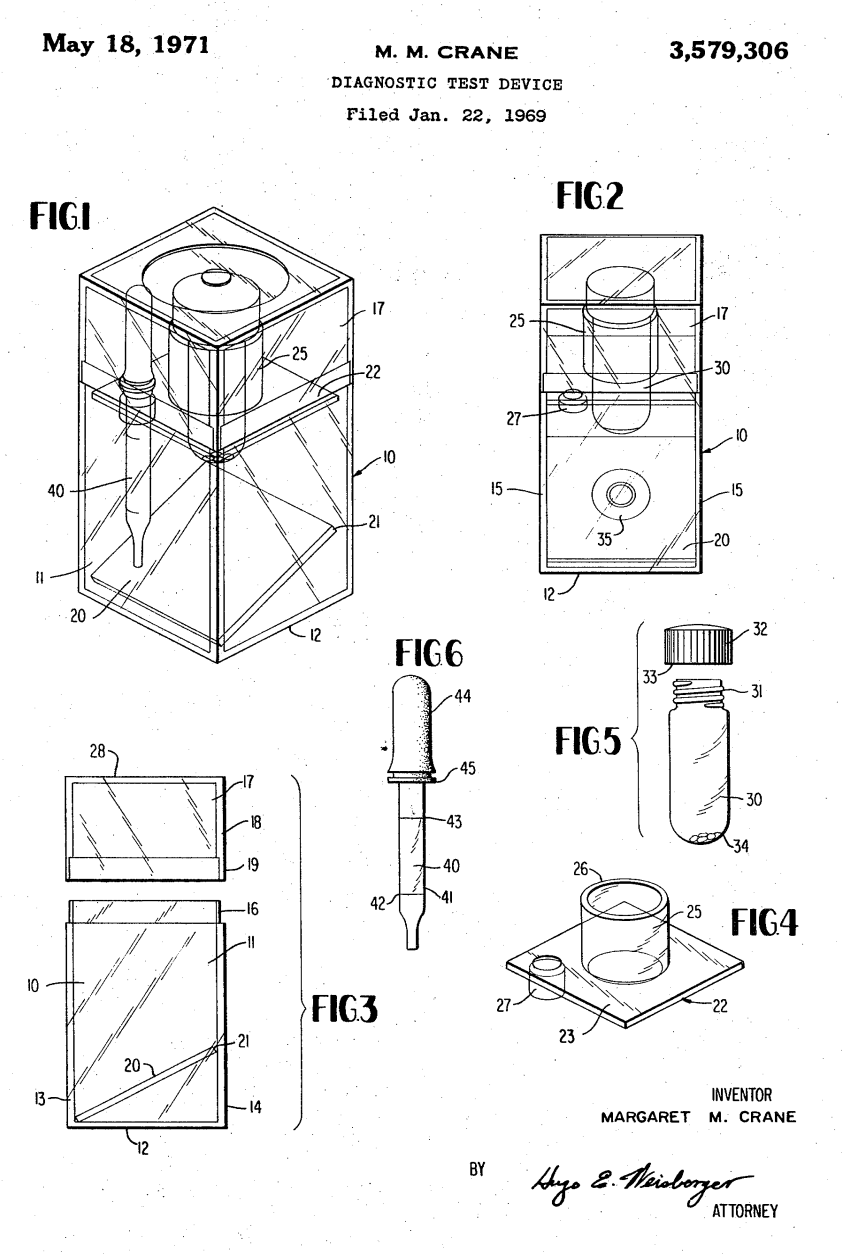
Crane’s original patent for the Predictor. (United States Patent Office)
Even with a prototype, her boss was unmoved. But the Netherlands-based parent company was intrigued. They’d gotten word of Margaret’s idea when someone joked about how silly an idea it was. They decided it was worth funding.
No one told Crane, though. And it was by luck and sexism that she happened to be seated next to the office’s only other female employee, a secretary, and overheard when someone wandered over to ask about the pregnancy test meeting.
For talking purposes
Crane slid her prototype onto a table holding a number of others, and retreated to the radiator. She was validated when one of the ad men the company hired picked hers out of the lineup and complimented it.
“This is the one we’re using, right?” he asked her boss. “Oh no, that’s just something Meg did for talking purposes,” he replied. That line, especially, is burned into her memory.
After the meeting, her boss dismissed her again, saying her design was too expensive, which sent Crane on another mission across New York, looking for plastics companies who could make the materials for less.
“So then they had to use mine, because it was less expensive than the others,” she says, a Cheshire-cat smile spreading across her face.
Organon decided they should patent the design, and this time called a meeting to which Crane was invited.
Surrounded by lawyers, none of them hers, she signed a document that gave her the patent in name only, granting Organon the proceeds in exchange for a dollar she never received.
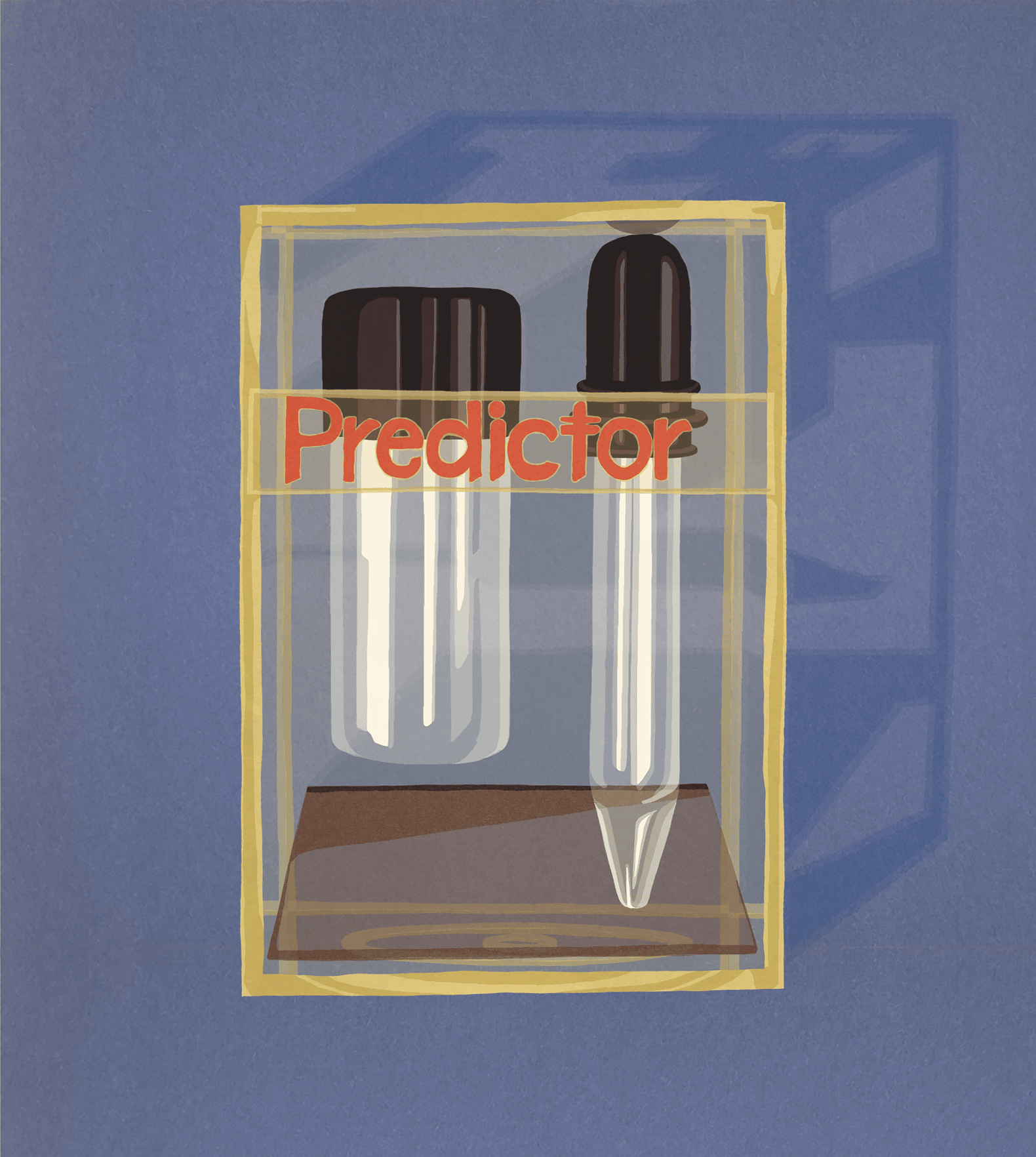 Crane’s early prototype design. (Olivia Heller/The Hustle)
That ad man who complimented her work at the first meeting? It turned out to be a man named Ira Sturtevant, an executive who would go on to become Crane’s partner in business and in life.
The pair started a consulting business, and Organon hired them to help market their new product.
DIY health gadgets
In the late ’60s, Crane’s invention was part of an emerging culture of DIY health gadgets. Blood pressure monitors were being sold and used at home. A do-it-yourself pap smear kit was marketed but never really caught on.
But, even in the midst of the sexual revolution, the political climate around women’s health remained restrictive. Abortions were still illegal. It was unusual back then for women to have family doctors.
You couldn’t get a pregnancy test at a pharmacy — laws dictated that pharmacists couldn’t deal with bodily fluids. But in Canada you could, and so it seemed like an ideal place for a test market. In 1971, the “Predictor” went on sale for the first time in Montreal. Crane was there to see her product on the shelves.
“It was transformative,” says Karen Weingarten, professor and director of women and gender studies at Queens College, City University of New York, and author of Pregnancy Test.
“All of a sudden, you could find out in secret. You could make a decision without the mediating gaze of a medical professional.”
In 1976, the FDA approved it for sale in the US, and it hit stores in 1977.
Still, it didn’t sell — at least not right away. For one, it was expensive, about $40 (adjusted for inflation). Two, it was finicky to use, akin to doing a science experiment in your bedroom. And three, a slew of pharma companies were advertising in magazines like Redbook and Cosmopolitan encouraging women not to use it.
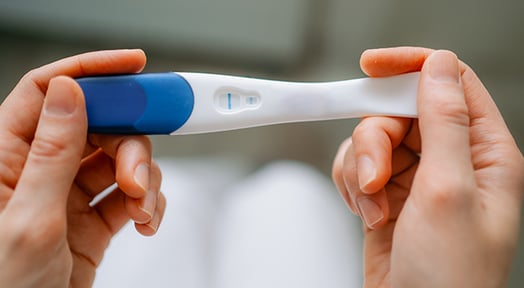
[stick pregnancy test photo]
In 1988, Clearblue brought the stick pregnancy test to market, and that’s when the industry took off. Today, it’s worth an estimated $769m.
To the auction block
Before long, Crane and Sturtevant were living together in a one-room apartment in midtown Manhattan. They started a consulting company, which they ran out of that room, and would go on to spend 41 years together before his death in 2008.
In 2012, The New York Times ran a story about the history of the at-home pregnancy test, and didn’t include Crane. “My family and some friends said, you better step up,” she says. (They’ve since corrected the record, and her role in the test's invention has garnered more attention.)
A few years later, a playwright asked if she could adapt her story for the stage.
Crane still lives in midtown Manhattan, though in a slightly bigger apartment they’d shared in their later years. Surrounded by rickety bookshelves and wearing glasses that give her an owlish air, she’s still working, at 87, partly for clients she enjoys and partly for the money.
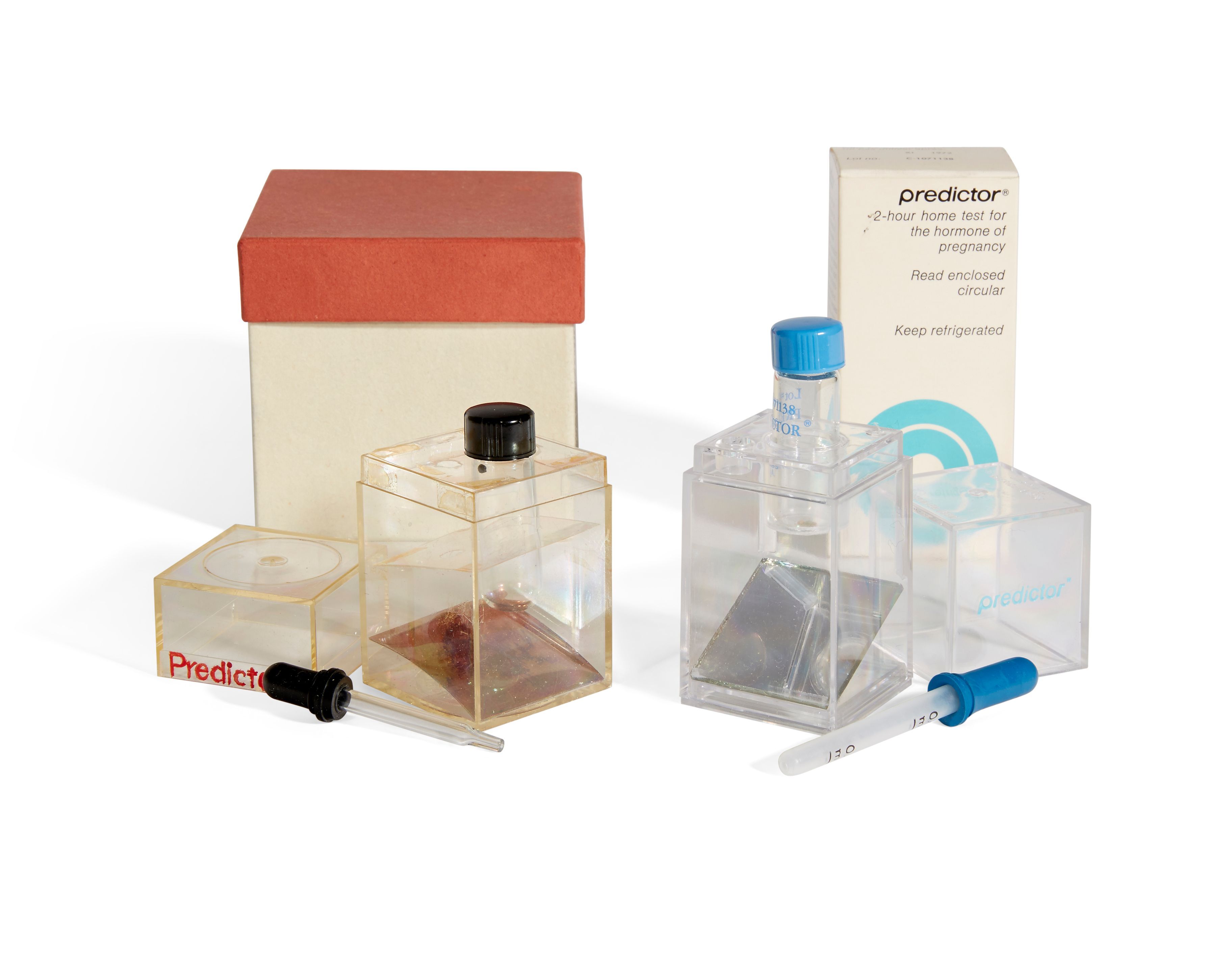 Crane’s original prototype and the first version of the test brought to market. (Bonhams)
For years, she kept her original prototype in a shoebox, tucked away. When the Smithsonian came knocking, and asked her to donate it for free, she demurred. “I wasn’t doing so financially well,” she says. “And they said, well, the man who did the compact for the birth control pill gave us his design for nothing. And I said, well, look, I can’t.”
But it gave her another idea. She took the prototype to Bonhams auction house. The next year, the Smithsonian bought it from her at auction for $11.8k.
healthcare