
In Wisconsin, a team of millennials is working to sell you your childhood
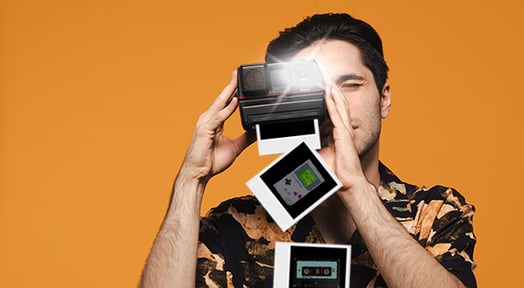
As a child, Kori Fuerst was brimming with business ideas. She recorded radio shows on cassette tapes, and charged her neighbors admission prices to listen to them. She ground up leaves in the woods near her house, bottled up the juice, called it insect repellent, and put it up for sale.
“Really, just any way we could shake down our parents and neighbors for money,” she says, laughing.
These days, she’s still making money off cassette tapes, though now she owns the business and the revenue is in the millions.
Like many millennials, Fuerst is riding a wave of nostalgia. She yearns for the days of Pokémon cards and spends weekends searching for Pixar’s “Cars” on VHS — a rarity in the vintage collectibles world. And, alongside her husband Adam, she’s built Retrospekt, a retro-tech empire in Milwaukee, turning a fascination for yesteryear and Polaroid cameras into a career.
The Apple of its time
When Kori and Adam Fuerst first met in 2007, they were both big fans of Polaroid.
Once called “the Apple of its time,” the company controlled nearly two-thirds of the instant-camera market in the US at its peak in the 1970s.
Digital cameras forced the company, which relied on film sales, into bankruptcy for the first time in 2001.
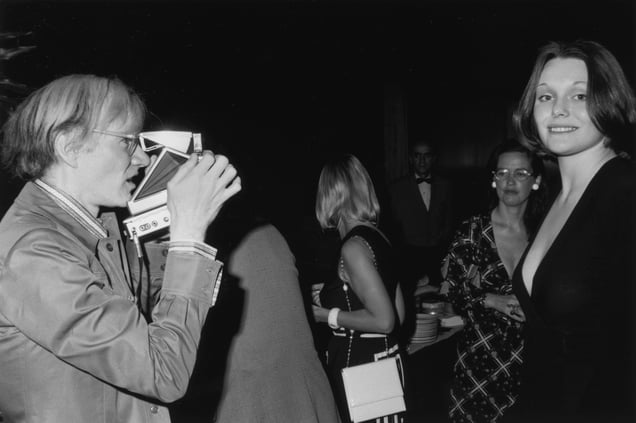 Artist Andy Warhol snaps author and model Tessa Dahl at a party in 1973. (Photo by Tim Boxer/Hulton Archive/Getty Images)
When the company declared bankruptcy a second time, right around when the Fuersts started dating, Polaroid stopped making film, and the price of 10-shot packs shot up to $30-$40 on eBay. The Fuersts thought the cameras, which were selling for a few bucks at antique shops, were likely to be donated with unused film sitting inside, so many of their early dates were spent trawling Goodwill.
That left them with a surplus of ~100 Polaroids, minus the film, and when a company called the Impossible Project resurrected the brand, post-bankruptcy, the Fuersts became pickers for the company. They’d sell their findings to the Netherlands-based company, which would then restore the old cameras to like-new condition.
“When I think back to the early days, I remember feeling almost euphoric that this hobby that we had was suddenly profitable,” Kori says. “That felt amazing.”
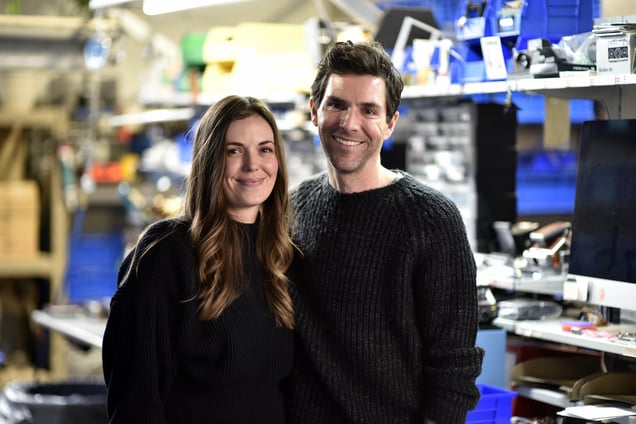 Kori and Adam Fuerst have collaborated with Sanrio, Mattel and Pepsi, among others, issuing Polaroids with a range of familiar colors and characters. (Courtesy of Retrospekt)
The next year, the Fuersts began to manage a team of pickers across the country, still supplying stock to the Impossible Project.
Alongside their thrifting pursuits, they were in grad school working toward degrees in occupational therapy (Adam) and speech pathology (Kori). Two years into his career at the hospital, Adam realized that he’d make more money if he stayed home and worked on Retrospekt.
“When we started it, it was like, ‘can we pay our utilities bill? Can we pay for some groceries? Can we pay for books?’” Adam says. “We just moved the goalpost a little bit, and at one point I was like, ‘Oh, can we buy a car?’”
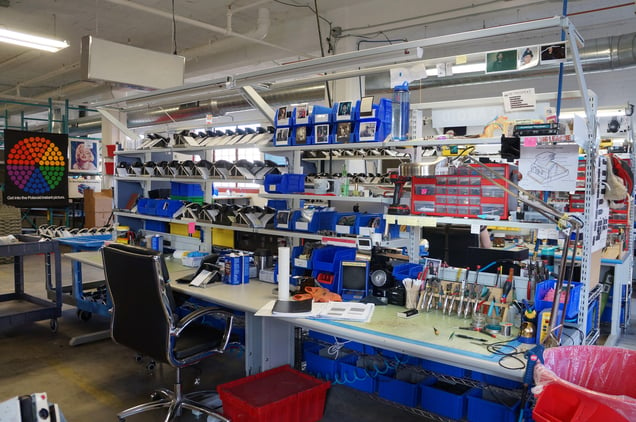 The Milwaukee workshop where 500k items have been refurbished. (Courtesy of Retrospekt)
In 2014, the Impossible Project asked if they could learn how to refurbish the cameras themselves. They had no technical or business expertise. They said yes.
The Impossible Project sent over a trainer from the Netherlands who’d repaired cameras for Polaroid for more than 30 years. He didn’t speak English, but he did speak Polaroid. He left behind a set of tools that Retrospekt replicated.
They’ve since refurbished 300k cameras.
Beyond Polaroid
Retrospekt, with headquarters in an airy warehouse in Milwaukee, hired its first staffers using posters and pull-tabs. Today, they employ ~40 people, who clean and repair every one of the 500k+ items that has come through their doors.
In recent years, they’ve expanded into other kinds of retro tech: cassette tapes, CDs, Tamagotchis. They also manufacture their own Polaroid cameras, wholesale, and have collaborated with Sanrio on Hello Kitty cameras and Mattel on Barbie editions. They sell on their website, or to major retailers like Urban Outfitters and Nordstrom.
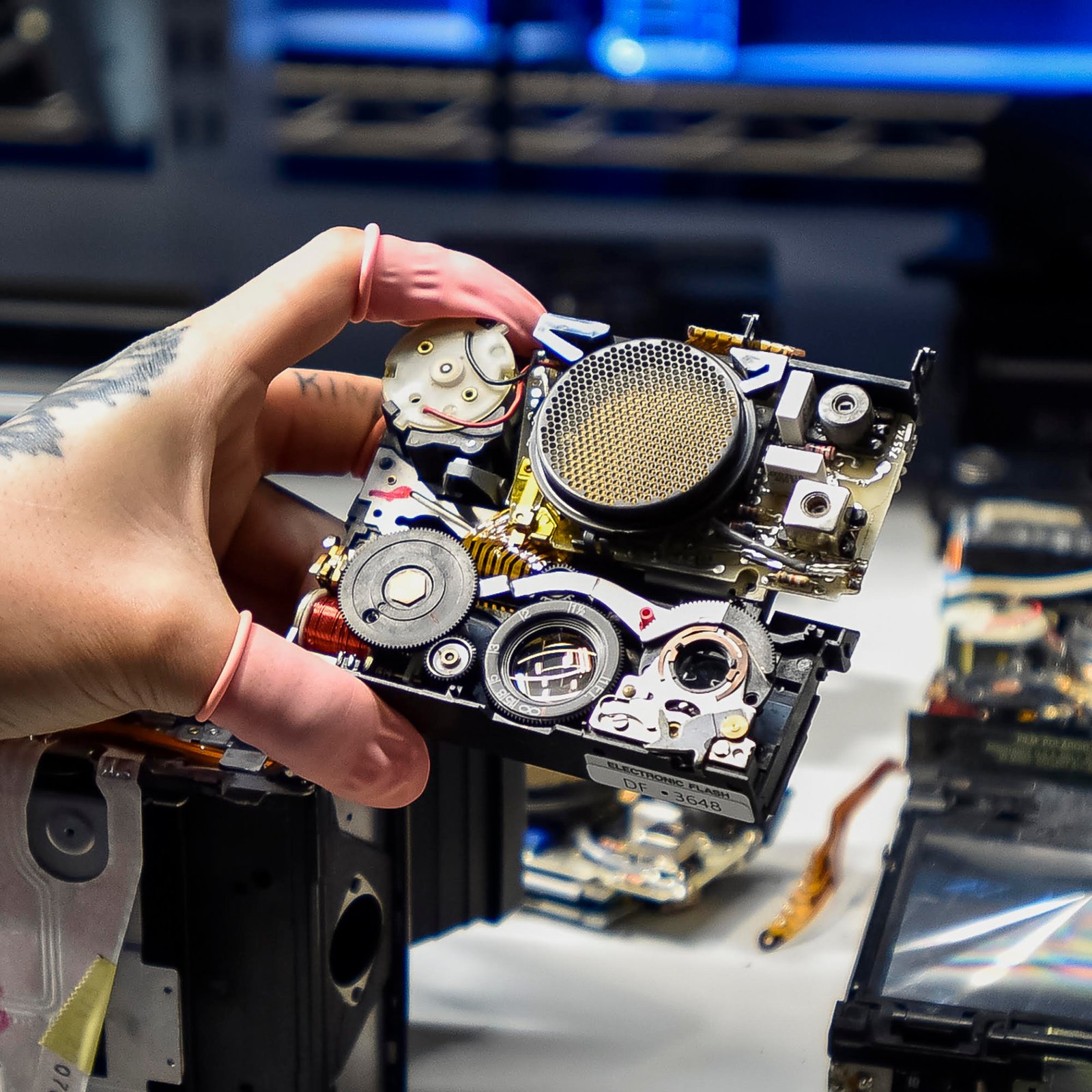 A technician restores an old Polaroid in Retrospekt’s workshop. (Courtesy of Retrospekt)
We’ve been in an era of the reboot for what feels like years. Everywhere, companies are making what’s old cool again. Hollywood’s top-grossing films last year, like most years, were all sequels or remakes. Motorola produced a line of flip phones last year, calling back to their popular ‘00s Razrs. In 2023, Hasbro even launched a reissued Furby doll.
Retro tech has been on the rise for years, too. In 2010, 2.8m vinyl records were sold in the US By 2024, that number reached 43.6m.
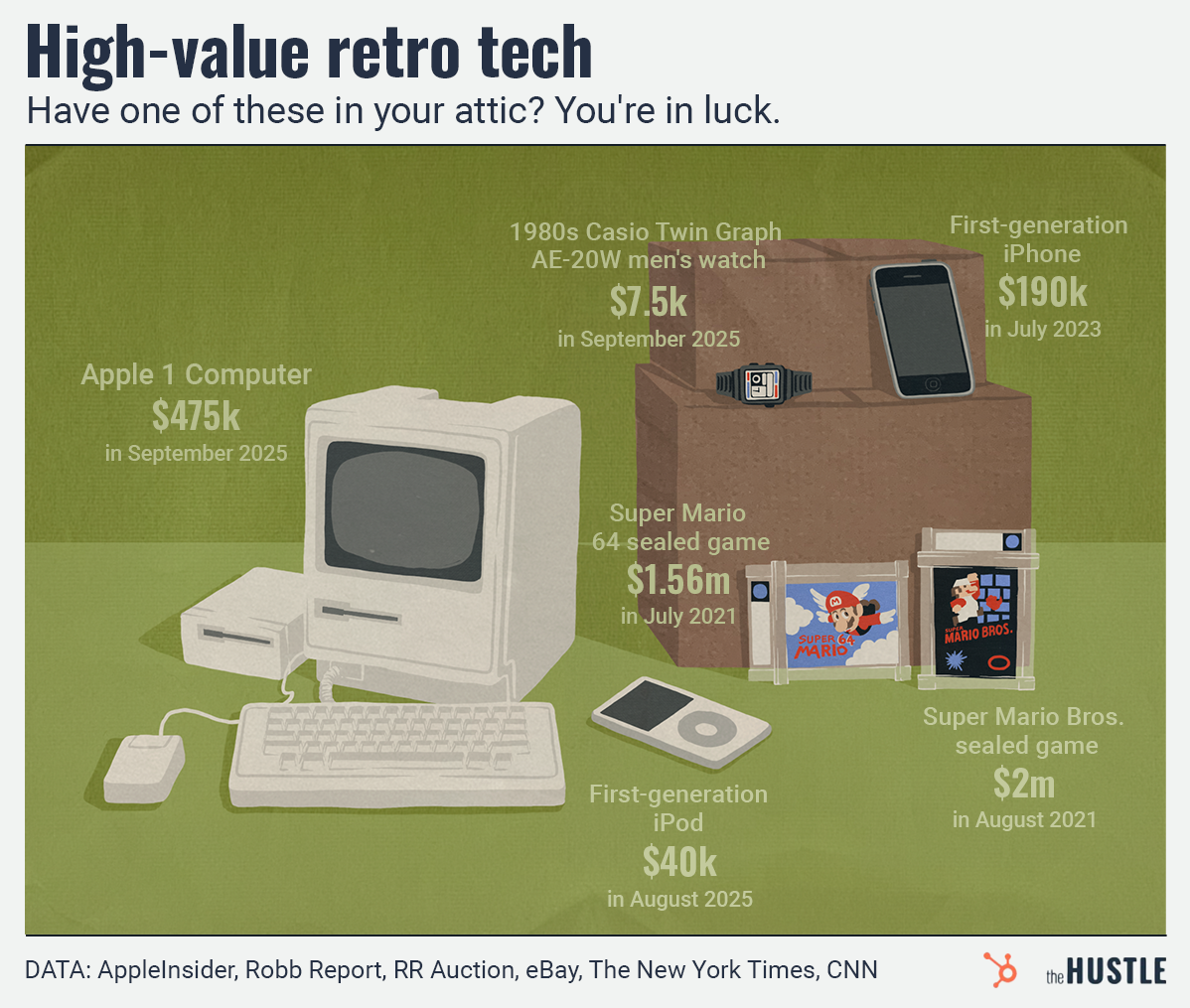
Still, it’s a huge leap to go from spending $100 on a Smiths cassette tape that reminds you of riding shotgun on trips to the hardware store with your dad to $2m on a sealed Super Mario Bros. video game. And yet.
In 2021, an anonymous buyer spent $2m on a still-sealed 1985 Super Mario Bros. game, breaking the previous record of $1.56m for the highest price paid for a video game.
The transaction happened on a platform called Rally, a stock market for collectibles. Rally, which started ~10 years ago, was created on the belief that even if investors couldn’t afford to buy a museum-quality car or watch, they’d spend money to buy a part of one.
 Olivia Heller/The Hustle
Essentially, Rally runs tiny IPOs on collectibles, allowing the market to decide how much they’re worth after investors have bought a portion of the assets. Imagine a real estate portfolio, but for classic cars, watches, baseball cards and, of course, video games.
The company had spent $140k to acquire the video game just a year and a half before.
When Rob Petrozzo and his co-founders started Rally, their first purchase was a 1977 Lotus Esprit. “Any boy growing up, you think of the poster on the wall of the Lamborghini or Ferrari. It becomes a part of our personality,” he says. “To us, the Esprit was an untapped gem. That car is what Elon based Tesla on. It just looks and feels very futuristic for its time.”
They brought the car to the platform in a $46k IPO. It “exited” to its new owner for $80k.
“When we bring something new to market now, we want to make sure it’s extremely relevant but tells a story our users have never heard before,” he says.
A quick perusal of Rally’s current offerings includes:
- A Pokemon first edition booster box (suggested market cap $23k)
- An ‘18 Shohei Ohtani rookie card (suggested market cap $78.7k)
- A ‘94 Lamborghini Diablo (sold for $975k)
- An ‘89 Nintendo Game Boy (suggested market cap $5.6k)
The high of nostalgia
Nostalgia, it turns out, is a hell of a drug. Research shows it can make us more inclined to spend money, and more likely to donate to charity.
Beyond that, it has a whole host of other social benefits, according to Evan Weingarten, assistant professor of marketing at the University of Southern California’s Marshall School of Business.
“For many hundreds of years, nostalgia was seen as bad. You’re stuck in the past,” he says. “Over the last 20 years, researchers have said, nostalgia’s actually pretty good for you.”
People who feel more nostalgic see their social connectedness go up — they feel more loved, have a stronger sense of self, and are more optimistic and hopeful. Nostalgic advertisements tend to perform better.
And there’s something else at play here. In an increasingly uncertain world, as the cost of living goes up and up, we use nostalgia to anchor us to simpler times.
 Olivia Heller/The Hustle
Weingarten himself isn’t immune to nostalgia’s charms. When he browsed Retrospekt’s website, he says, he hovered over a Nintendo 64.
“For a brief moment, I was like, is this too much to spend?” he says. “I had to stop myself.”
In Retrospekt
From “Stranger Things” to Y2K fashion, Kori and Adam Fuerst have had a front-row seat to pop culture’s continued glorification of all things bygone. For Kori, 2025 was the year of the cassette, and the couple has watched sales of Kate Bush’s “Hounds of Love” tape spike thanks to “Stranger Things’” new (and final) season.
And while they’ve had interest from outside investors, Adam Fuerst has no interest in watching private equity or venture capital dilute what they’ve managed to deliver to customers across the globe so far.
“I think our goals are different than traditional investment,” he says.
“We want to create moments of magic for our customers and have fun with what we do and enjoy going to work and be able to pivot as we need to to things that are interesting and compelling and relevant to what we do and relevant to what’s happening in the world.”
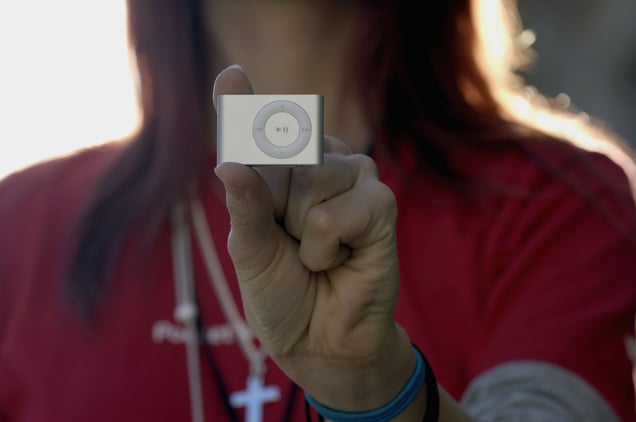 First launched in 2006, 20 years later you can still buy an iPod shuffle from Retrospekt for ~$100. (Photo by Sebastien Meyer/Getty Images)
In the age of subscriptions, owning physical things is new again. Flipping a record isn’t inconvenient; it’s an experience.
“It’s hard to know anytime you’re on the internet anymore if you’re experiencing reality or if something’s been altered,” Adam says.
“And I think it’s just a quick and easy way to go and touch grass.”
photography