A small company in Southern California popularized tandems in the US and outlasted Trek, Specialized, and other giants. But can bicycles built for two survive an anti-social age?
Bill McCready pulls open a heavy gray door at the entrance to the Santana Cycles factory. Besides employees, nobody else has ever been inside. “You’re the first,” he tells me.
To say the building is nondescript would be an understatement. Just off a freeway in California’s Inland Empire — 30 miles east of downtown Los Angeles — the brick exterior is a mind-numbing shade of beige. It’s not even part of a strip mall, and there’s no Santana logo. Only a four-digit address.
As the bell of a commuter train rings outside, McCready, wearing a polo shirt with a tropical teal pattern, tells me about materials like double-butted tubes and scandium aluminum. Lathes, cutters, and milling equipment line the shop floor. He likens the whole thing to a muffler shop.
But the modest environment belies its importance as a pioneer in one of America’s most whimsical, niche industries: tandem bicycles. If you’ve ever seen someone riding a tandem, odds are it was made here by Santana Cycles, or by a company influenced by Santana.
McCready founded Santana Cycles in 1976. Trek, Specialized, Cannondale, and other corporate players jumped into the tandem market in the ensuing decades, but they all gave up, unable to perform the necessary craftsmanship at a profitable scale.
Today, tandem bicycling is the rare industry controlled almost entirely by small businesses.
The industry is tiny — representing less than 1% of overall bike sales (not unlike waterbeds as a share of total beds). But tandem makers and consumers, mostly married couples, are devout. They see the bikes as magical tools for strengthening relationships and improving communication.
Which is also a reason why some enthusiasts are concerned. In a world where romance, socializing, and partnering are on the decline, who’s going to buy a tandem bicycle?
Popularizing quality US tandems
Bill McCready started out as a tandem rider for one reason: speed.
He was a teenage cycling obsessive who pedaled the roads below California’s San Gabriel mountains on rides up to 200 miles — double centuries in cycling lingo. Two friends, whom he usually outpaced, borrowed a tandem one day and left him in the dust. So McCready bought one.
It was the late 1960s. Tandem racing was mainstream enough that it had been an event at every summer Olympics since 1920, but the bike’s primary purpose had always been romance and coupling. Tandems burst on the scene at the height of a late 19th-century cycling boom as “courting bikes,” on which young people pedaled away from strict Victorian parents.
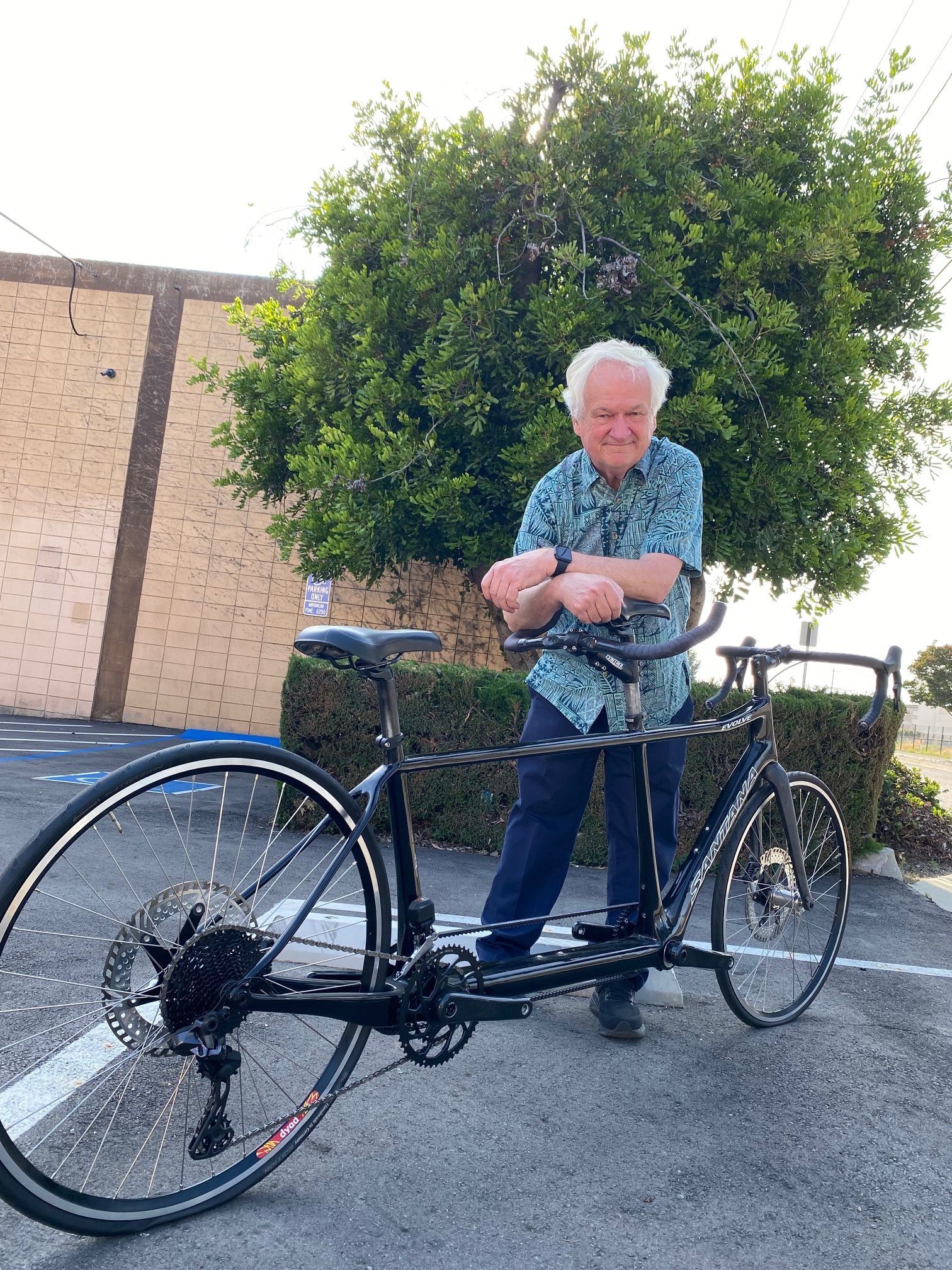
Bill McCready poses with a Santana Evolve tandem in the parking lot outside the Santana Cycles factory. (Mark Dent/The Hustle)
After a couple of years of racing his friends, McCready, then about 18, employed a similar strategy when he’d show up alone to community rides in the Inland Empire, the tandem fastened to the top of his father’s Dodge.
“I’d walk around and say, ‘I’d really like to ride today, but all I’ve got is this tandem’,” he says.
“And by the way [I] always found somebody to ride with. Never, ever, ever struck out.”
But he didn’t always convince his first choice. Jan, a talented cyclist who’d finished a double century in under 11 hours, turned him down several times. She finally accepted McCready’s invitation in order to avoid an ex who’d followed her to a ride.
It was her first time on a tandem. They rode 50 miles over hills, and her shorts got caught on the hooks on the backseat. “I was scared to death,” she says.
They kept riding and married a couple years later, in 1972.
McCready had his partner. He soon purchased a bicycle shop. But he wanted a better tandem bike.
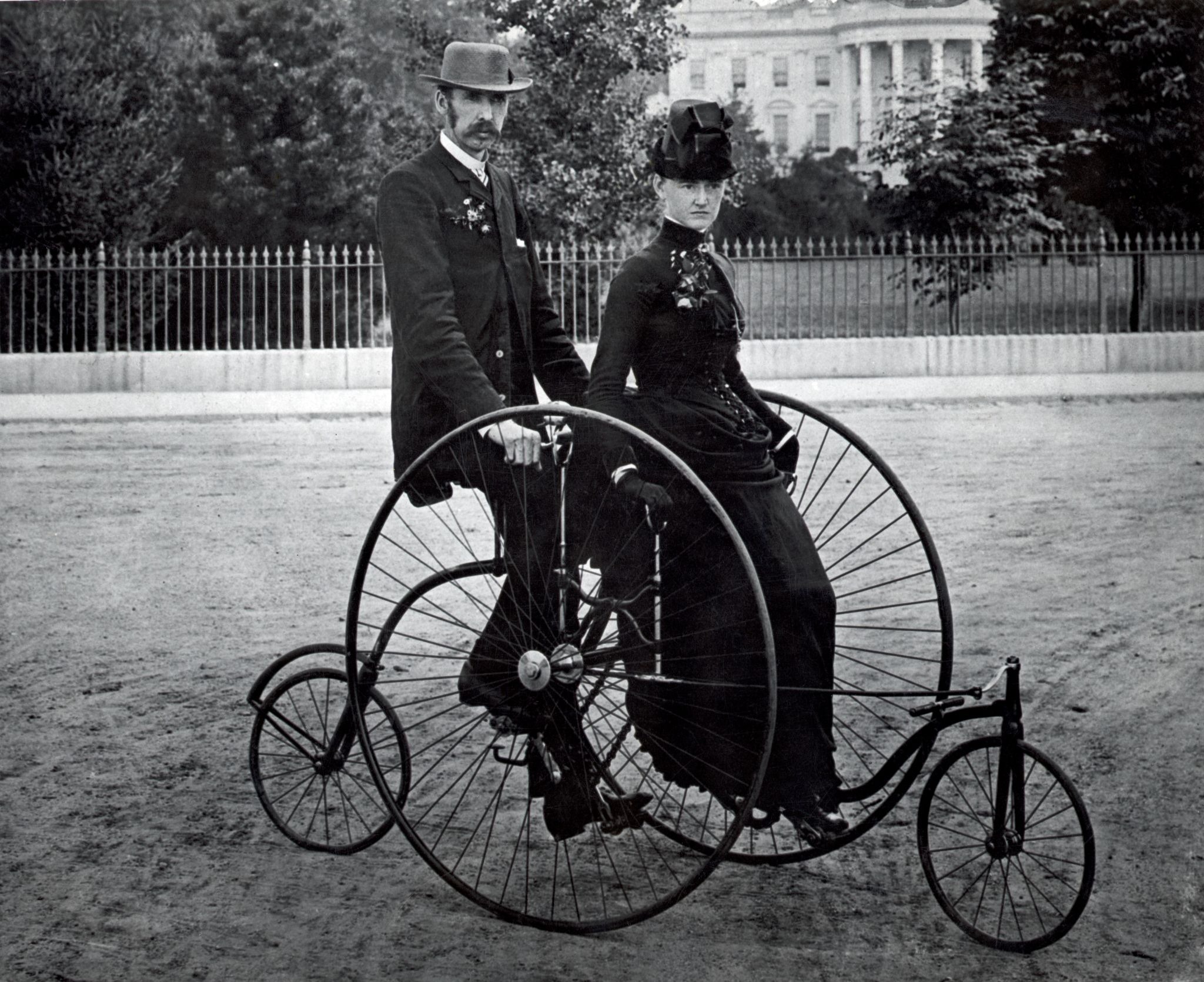
A bicycle “built for two” in the late 19th century. (Bettmann/Getty Images)
The best-known tandem, the Jack Taylor, was on a year-long back order, and the company’s England-based manufacturers were nearing retirement. The alternatives weren’t great: McCready had been reviewing them for Bicycling magazine and found them too flimsy.
So he started Santana to develop a reliable, fast tandem.
The key would be double-butted tubes, which are thick on both ends and thin in the middle. They allow for a bicycle frame to be sturdy and lightweight.
Double-butted tubes were common for high-quality single bikes, and Jack Taylor and earlier European tandems used them. But manufacturers had largely ceased making tandem-sized double-butted tube sets, leading to virtually all tandem bikes being made with tubes that had the same thickness throughout and, therefore, a flimsy ride.
McCready found a double-butted tube manufacturer in Japan. After he hired a couple frame builders, they worked on 14 prototypes over the next year. The first Santana tandem was sold in 1978.
The McCreadys pulled out all the stops to sell tandems and introduce them to skeptical solo riders:
- Distributing instructions for best sales practices to bicycle dealers across the country.
- Printing a tandeming magazine.
- Exhibiting Santanas at bicycle rallies, expos, and trade shows.
One year, at a rally in New Jersey, they strapped several Santanas atop a limousine — and sold them all.
A basic Santana cost ~$1.8k in the early 1980s (~$6k today), going against an assortment of cheap models. But small business craftsmanship won out, even as competition picked up.
The little guys win
By the late 1980s and 1990s, sales of quality US tandems boomed to ~7k-10k bikes per year, up from almost none before Santana got started.
Despite the relatively small market size, cycling giants wanted a piece:
- Cannondale started selling tandems in the mid-1980s.
- Trek launched the T200 in 1991.
- Specialized dabbled in tandems around the same time.
The US business landscape is rife with examples of large brands swooping in after smaller entrants succeed in a new market. They acquire the little guys or squeeze them out with more efficient production and lower price points, often driving down the quality.
The opposite happened with tandems.
Those big names offered good tandems, typically at lower prices than Santana, but McCready says they over-produced without realizing tandems were harder to sell than single bikes, failing to achieve a successful scale.
Trek and Specialized quickly discontinued their tandem lines. Cannondale lasted longer, offering ~$3k tandems until the early 2010s.
Instead of becoming mass-produced, the market got more bespoke. New mom-and-pop brands joined Santana and flourished.
In 1988, Dwan Shepard and Dan Vrijmoet founded Co-Motion cycles in Eugene, Oregon. Shepard knew they’d never be able to drive the market like a large manufacturer, so Co-Motion’s goal was to simply listen to what riders wanted and make tandems designed for those specific uses: everything from road to gravel biking.
“We got niches within niches,” Shepard says.
Co-Motion is regarded today as the top-selling brand in tandems.
Other well-regarded brands include Landshark, da Vinci, and Hawthorne. Calfee Design, based in Santa Cruz, California, started making tandems in 2000. Calfee tandems are custom-built, with consumers specifying nearly all components, at an average price of $20k. Santanas and Co-Motions have their best tandems priced at ~$20k and less-expensive options at ~$4k-$7k.
Calfee Design produces 25 to 75 tandems per year, putting the company's revenues at ~$1m — a fine number for owner Craig Calfee but a rounding error for a global conglomerate.
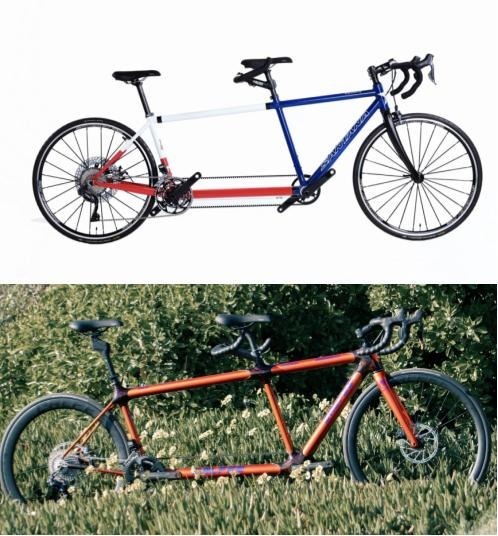
A Santana Escape (above) and a Calfee Dragonfly Pro Tandem. (Santana/Calfee)
In the end, tandems aren’t like other bicycles or, really, any other product. Couples see them as an acceptable splurge for two people and a relationship-enhancing tool that’s worth a premium.
Mel and Barbara Kornbluh have owned nine tandems since the 1970s. Their second was a Santana purchased directly from McCready in California.
On a tandem, the couple have talked about life, kids, and work, 18 inches from each other with the wind in their faces. “Some of our best times of our life,” Mel says.
They opened a store, Tandems East, in 1988, and operate it out of their house in southern New Jersey — displaying ~100 tandems in four garages — as a side hustle to their full-time jobs. In the early years, Barbara cooked homemade pasta and blueberry bread for customers who bought tandems.
Lately, sales aren’t as brisk.
The anti-social age vs the tandem bicycle
Over the last generation, America has experienced startling shifts in social behavior and just about all of them clash with an exercise that requires togetherness.
- The average American is spending more time alone than at any point since the 1980s, with the increase most pronounced among people ages 15-to-29.
- In 1990, 55% of American adults had sex weekly; that number has fallen to 37%.
- The share of married adults dipped from 59% in 1990 to 51% in 2023 (although it’s slightly up since 2021).
Young people who exercise have recently favored gyms or running groups. On top of that, tandem bicycling has long stopped appearing in popular culture, dropped from the Olympics in 1972 and rarely showing up in movies or TV shows. And the bicycling industry, in general, has faced declining sales and layoffs.
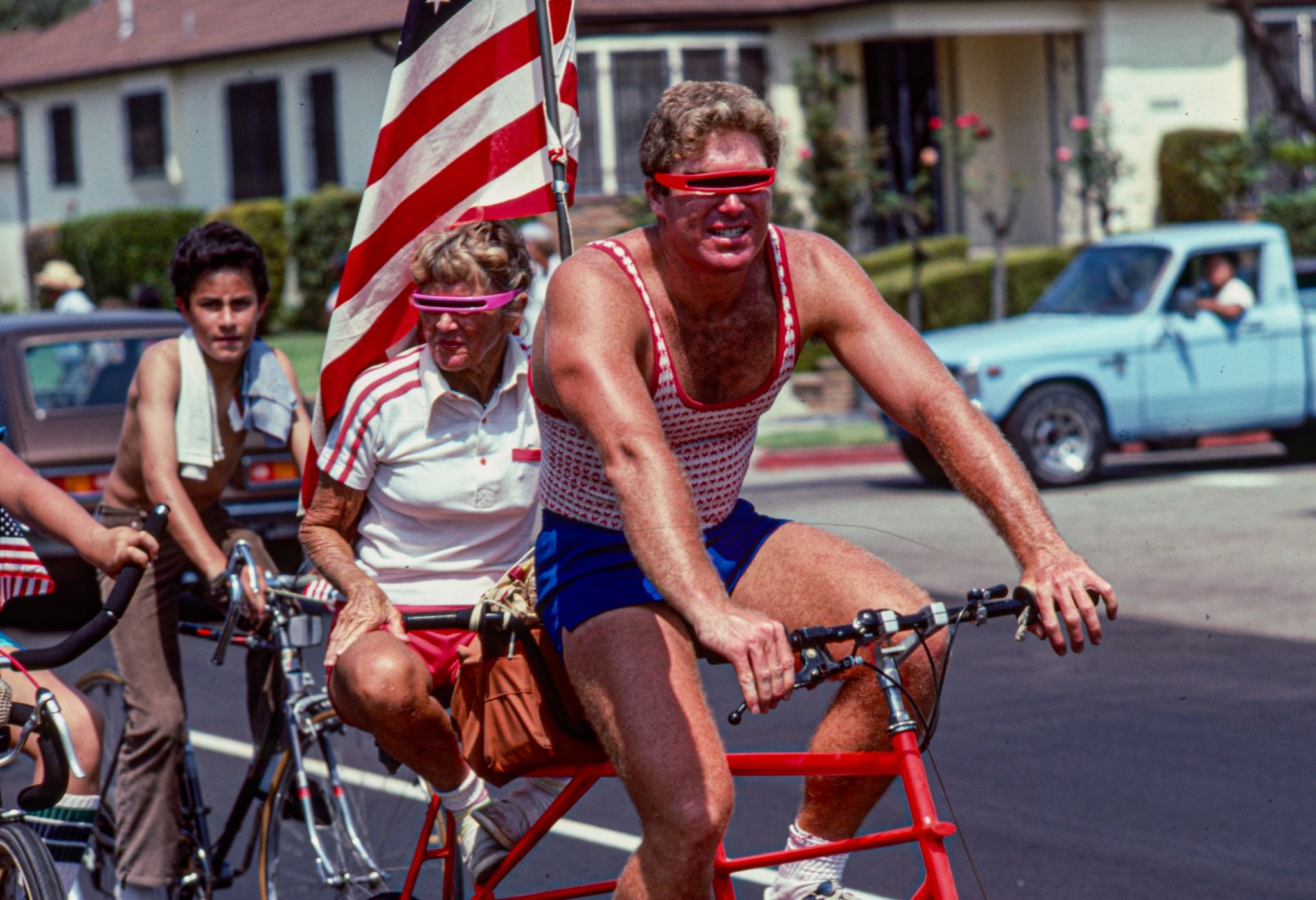
The 1980s, when people still did stuff together. (Howard Ruffner/Getty Images)
One of the only bright spots for cycling, e-bikes, poses a threat to the tandem industry. That’s because tandems are a good fit for spouses who have differing fitness levels and can’t keep the same pace on two single bikes, and e-bikes nullify that difference.
“Instead of getting a tandem, the spouse gets an e-bike and keeps up just fine,” says tandem rider Caren Bianco. “I think e-bikes might be replacing tandems.”
Bianco and her husband, Mike, have run a tandem tour company for nine years, and the average age of a customer, Mike jokes, is “nine years older than when we started.”
In recent years, several tandem-specific bike shops have closed as proprietors retired or struggled with sales. Longtime riding groups have disbanded.
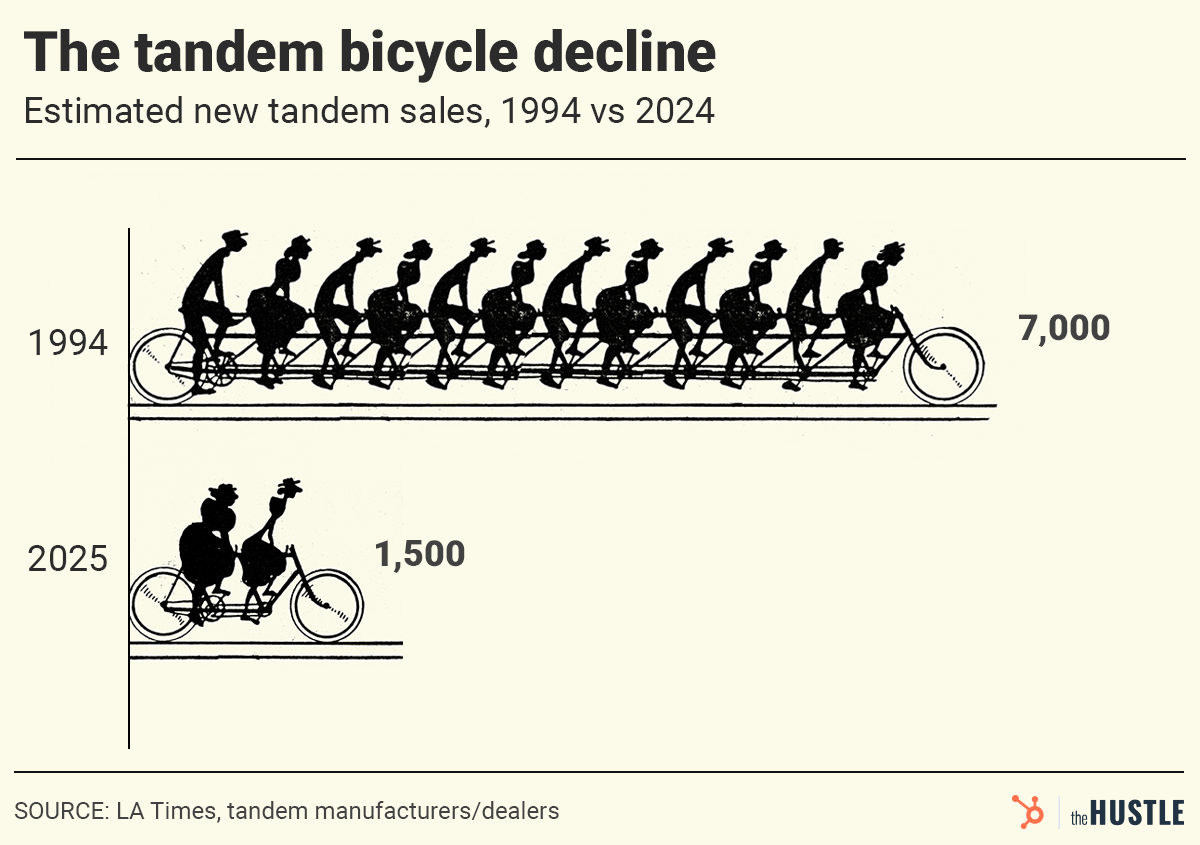
Altogether, tandem insiders like Kornbluh, Shepard, and McCready estimate annual US sales of tandem bicycles at ~1.5k. That’s down from 7k-10k in the mid-1990s.
The Hustle
Ironically, part of the decline may also stem from the success of artisanal manufacturers over big brands. With high-end bikes that cost $5k-$20k dominating the market, it’s hard to entice entry-level buyers who might’ve purchased a Trek or Cannondale for $2k-$3k.
Craig Calfee would actually prefer if those companies — and their marketing budgets — returned to the tandem market.
“It’s a bummer that there’s no good option for a low-cost tandem,” he says.
To inject life into the industry, tandem enthusiasts launched the North American Tandem Bicycle Association this spring. Many regional groups organized rides the first weekend of May.
In Los Angeles, the SoCal Tandem Riders saw 30 couples come out, the most of any group in the country. Susan Gans, who leads SoCal Tandem Riders, was excited that, among a gathering of seniors and middle-aged folks, a young couple joined.
Fifty years in
At the Santana Cycles factory, McCready displays an old double-butted bicycle tube set on the wall below a Santana logo. He took that tube set to a New York City trade show in 1977.
“As a young entrepreneur,” McCready says, “I had always thought that, ‘I’m going to start this. Somebody’s going to look at it, see that I’m successful, and they’re going to have more money and more whatever than I do. And they’re going to push me out.’”
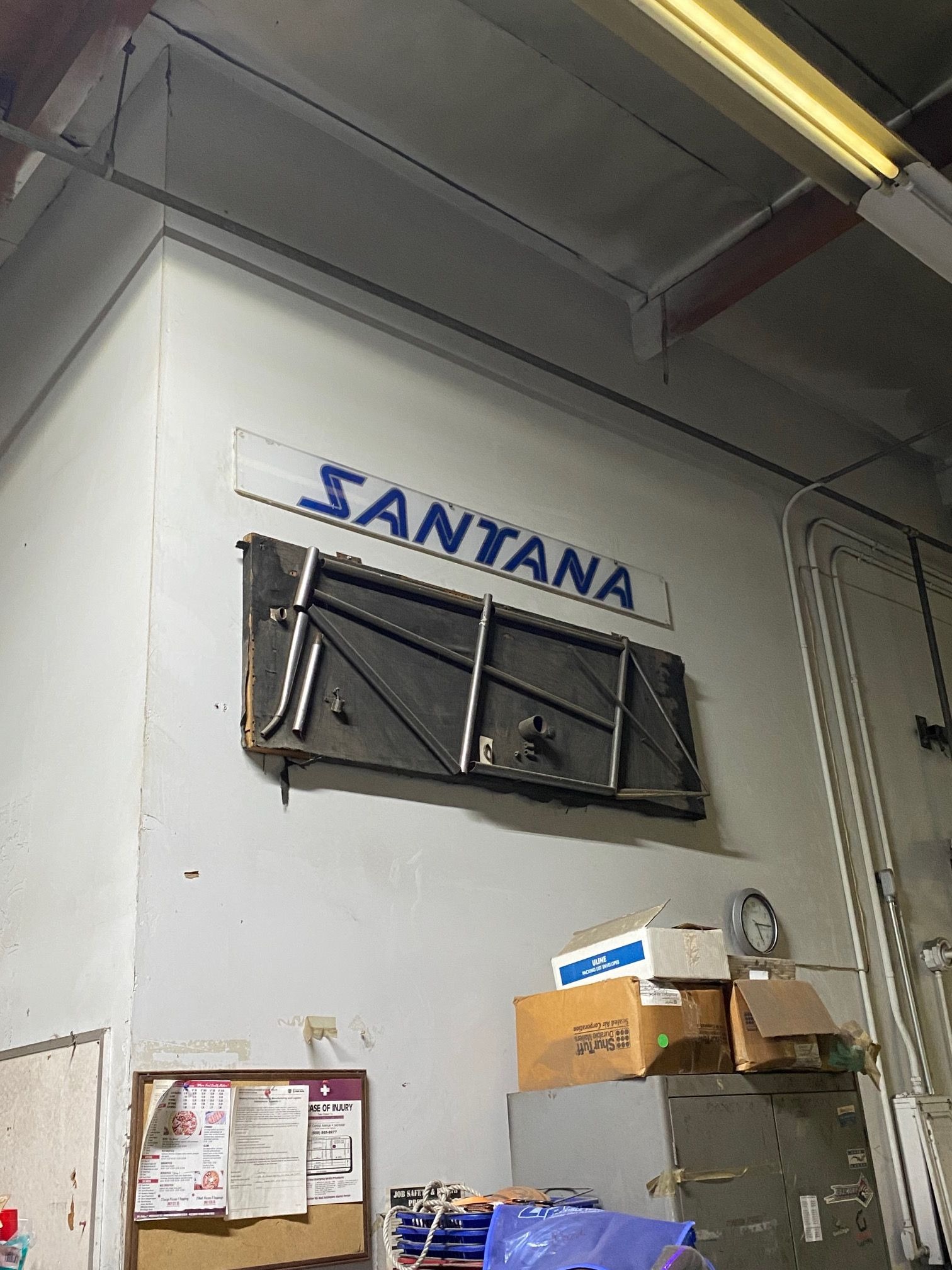
A double-butted tube set for a Santana tandem from the late 1970s. (Mark Dent/The Hustle)
Fifty years later, almost everyone in the tandem industry knows Santana and McCready: They know him for his ability to sell, for being insistent on doing things his way, and for innovation — building bikes with steel, aluminum, titanium, and carbon fiber as customers expressed new desires.
McCready has been “a powerful evangelist for tandems and a tandem lifestyle,” says Shepard, the Co-Motion president. He and Jan “were the beginning of tandems in the US,” says Barbara Kornbluh.
Santana claims on its website to have sold ~50k bikes over the last 50 years. But McCready couldn’t even tell you how many he’s sold lately. Part of that is because he’s getting close to retirement. He’s also prioritized a cycling travel business that takes riders on excursions across the world.
Last month, he and Jan pedaled 50 miles on a tandem with a travel group through the Netherlands, Belgium, Germany, and back to the Netherlands in a single day.
He can’t see tandems going away, despite the pressures.
“People that have them love them, value them,” says McCready, wiping down a frame with a shop rag. “Even to some degree [they know their] relationships work better.
“The bike has made that difference.”