
Your gadgets are entering a safety arms race.
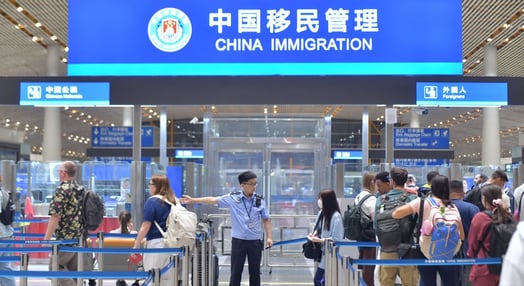
Luke Stafford wasn’t worried when he entered airport security in Beijing.
Even though his phone battery was dwindling and he had three more hours of travel before reaching Chengdu, in Sichuan province, the experienced business traveler was prepared: He’d packed his trusty Belkin power bank.
But then a dour security officer took him aside and gave the back of his power bank the stink eye. “He said it didn’t have the right mark,” Stafford recalls.
He’d appreciate the irony later: His job is to assess small hallmarks and engravings — but on pre-owned luxury watches for UK jewelry retailer Charles Fish, not on electronics.
This was the first he’d heard of China’s “3C” safety certification mark. He also hadn’t noticed the marks his device did have, which showed it had been tested to US safety standards. Until recently, those were the global benchmark.
It was also the last he’d see of his power bank. “He confiscated it right there, no discussion, nothing,” Stafford says.
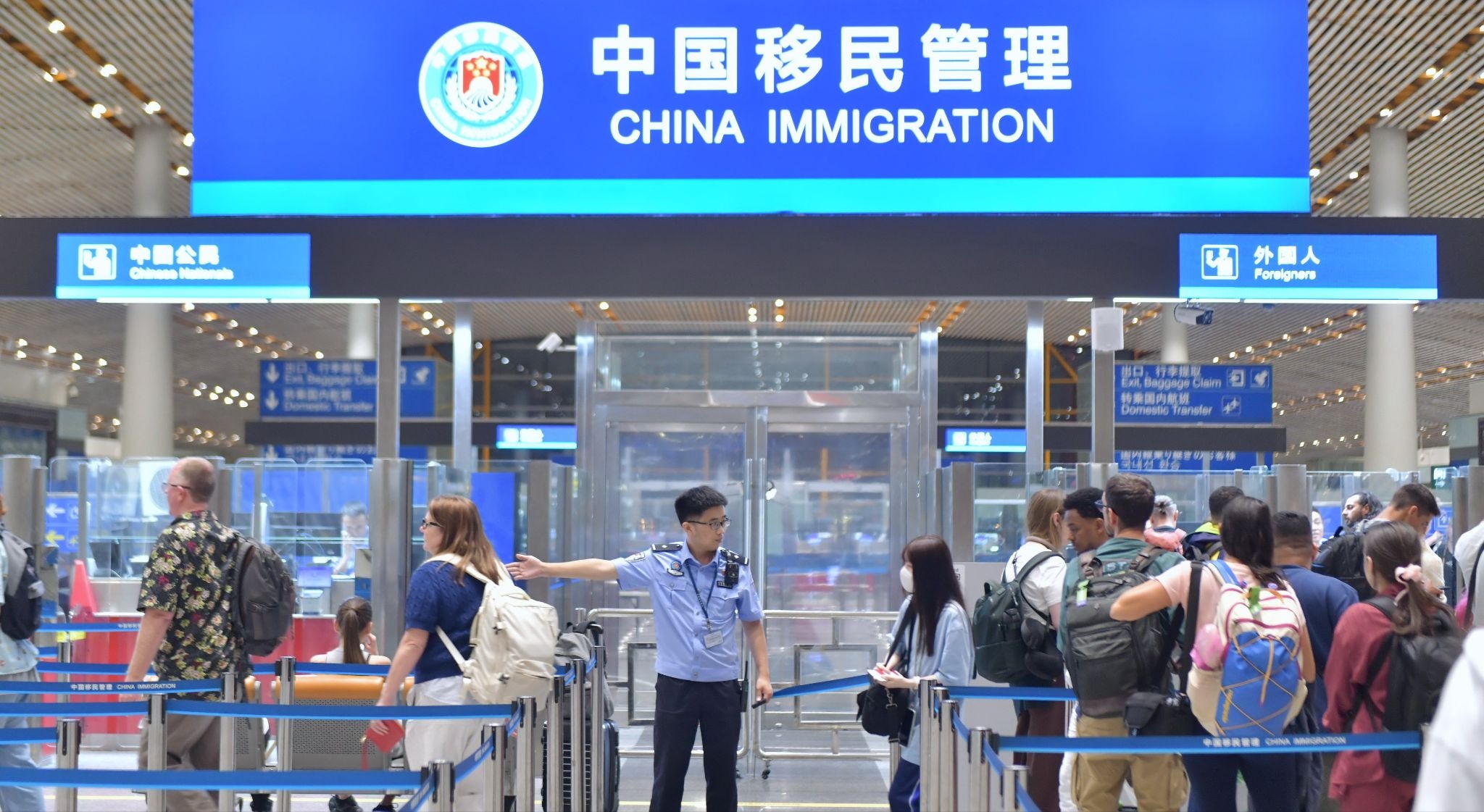
Agents in China seized non-compliant power banks from unsuspecting travelers as safety requirements changed. (Photo by Li Xin/Xinhua via Getty Images)
On March 31, 2026, just before Stafford’s trip, China issued the world’s toughest new safety requirements for lithium-ion power banks. Travelers in China shared images on social media of overflowing security bins heaped with confiscated devices.
Most people barely notice marks like CCC or UL — even on devices they use every day.
But the tiny logos don’t just represent a promise that a product won’t cause harm. They also embody the legal systems and geopolitical power of the countries that recognize them.
So how do safety marks get onto products? And is it a problem if US safety standards are no longer the toughest in the world?
A strange new force
In 1893, the fire insurance industry was on the verge of collapse. Every few years, devastating fires in major cities left underwriters paying damages that would run into the billions today.
“You are nearer the edge of the precipice than you ever were before,” the president of the National Board of Fire Underwriters warned his colleagues. “It will require only one more disaster.”
The just-opened Chicago World’s Fair sure looked like it could be the one.
The fair, officially called the World’s Columbian Exposition, aimed to showcase American ingenuity. A strange new force called electricity was a major attraction. Besides the world’s first Ferris wheel, the grounds included 200 gleaming white buildings illuminated at night by 160k lightbulbs.

Buildings strewn with strings of lightbulbs at the World’s Fair in 1893. (Photo by Museum of Science and Industry, Chicago/Getty Images)
But while the buildings appeared to be marble, they were actually made of extremely flammable plaster, pine, hemp and jute — all haphazardly draped with live electrical wires. If the wind blew unfavorably, it could take out the entire fairground and its 100k+ expected daily visitors.
To calm their fears, underwriters engaged William Henry Merrill, a newly minted MIT engineer, to conduct immediate electrical safety inspections.
It paid off. The Fair ended without electrical disaster, and Merrill founded the company that became Underwriters Laboratories, or UL.
UL wasn’t the first safety-testing and certification outfit. But it quickly set itself apart by conducting its own research. Its reports became known as standards, technical guides to safely design and construct a product.
The first, in 1903, was for tin-clad fire doors designed to slow the spread of fire, specifying details like the type and treatment of the lumber and the precise thickness of the metal to use. Other testing companies adopted that standard to run their own tests, and purchased many of the standards that followed. Eventually, many of UL’s standards were incorporated into US law. They’re still widely used today.
In 2022, UL restructured as three separate but closely related organizations. Two are nonprofit: the UL Research Institutes and UL Standards & Engagement (ULSE), which develops UL safety standards.
ULSE owns a majority stake in the for-profit UL Solutions, the only company in the world that can issue the UL mark. (Other testing labs are allowed only to say they test to UL standards; they can’t use the mark.)
When UL Solutions went public in 2024, it was North America’s largest testing, inspection and certification company. It ended its first day of trading valued at $7B.
The “flaming rocket” in your pocket
Last year, an Air China flight en route to Seoul caught fire. Bright flames shot out of an overhead compartment as flight attendants ran down the smoky aisle with fire extinguishers. The plane diverted to Shanghai and landed safely.
The culprit was “thermal runaway,” when a lithium-ion battery overheats and sets itself on fire. These batteries power anything that can be recharged, from e-cigarettes to electric vehicles. And these incidents are increasing by at least 10% a year among consumer products, according to a federal National Institute of Standards and Technology analysis.
On passenger airplanes alone, the Federal Aviation Administration has tracked nearly 200 thermal-runaway incidents since 2024. The most common cause was power banks, followed by e-cigarettes or vapes. The particular shape and design of a vape can turn it into a “flaming rocket,” according to the U.S. Fire Administration.
You don’t need to tell Mitchell Chubb, a personal-injury attorney in Florida. He represented a construction worker who thought he was taking a normal lunch break. As the deli’s surveillance video rolled, his client went from calmly standing at the counter with a bottle of Gatorade to staggering to the floor, clutching his leg and tearing at his pants.
“His e-cigarette literally exploded in his pocket and caught fire,” Chubb told The Hustle.
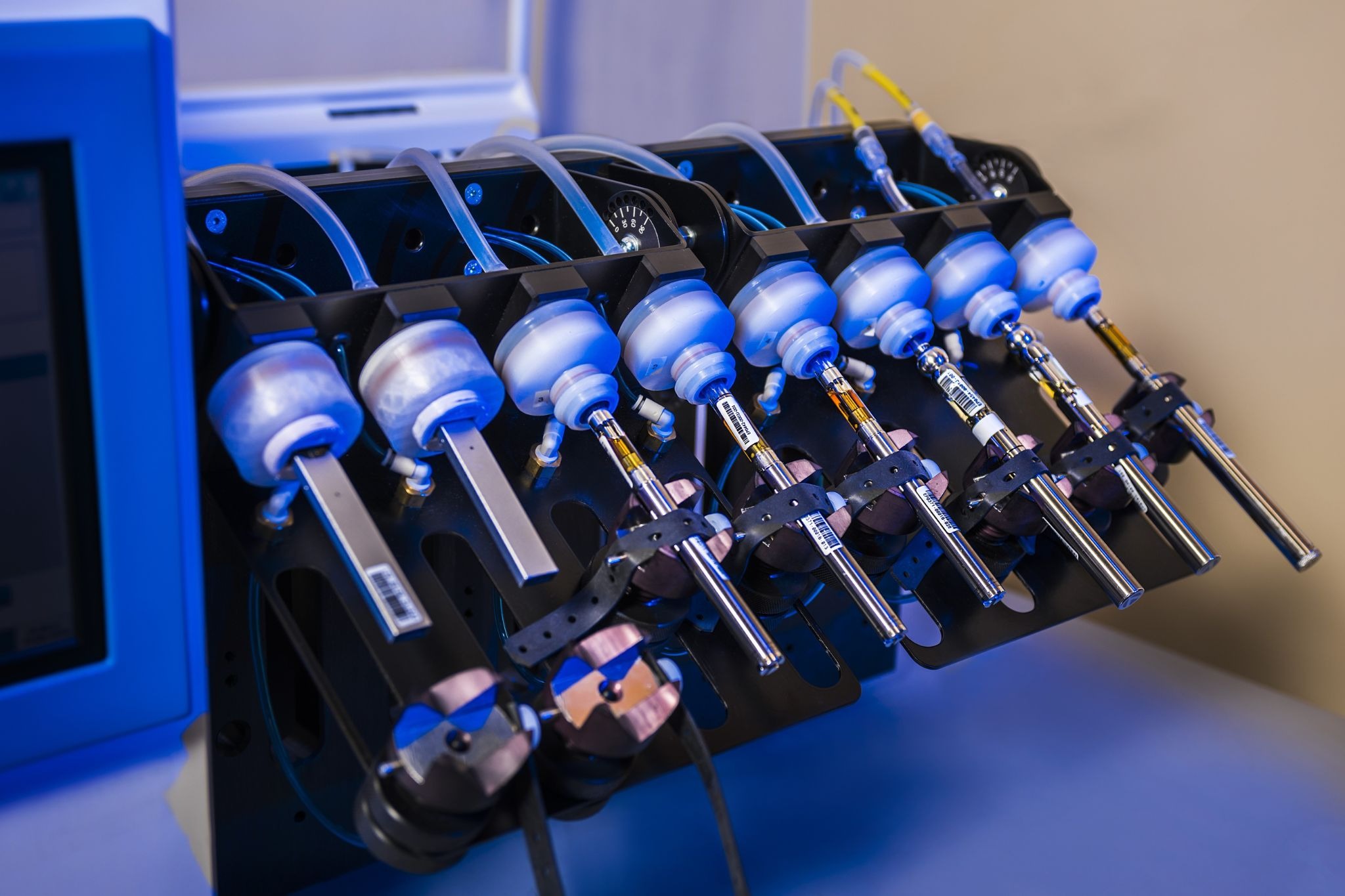
Vapes undergo their own testing, too, like these at the Center for Disease Control and Prevention. (Photo by Smith Collection/Gado/Getty Images)
It’s situations like these that safety testing exists to prevent. So how does that work?
Serious slapstick for safety
Here’s the simple version. Think about the clumsiest, least competent, most forgetful or most curious person you know. Then:
- Imagine all the ways they might mistreat a product.
- Add anything else that could go wrong that isn’t human error.
- Do those things to a product sample (called “abuse testing”) and track the results.
- Make unannounced factory visits to ensure you haven’t tested a “golden sample” — one made to a higher standard just to pass the test.
For lithium-ion batteries and power banks, abuse tests recreate conditions that could cause fire or explosion. Some are electrical, triggering short circuits and other mishaps. Others would be at home in a kid’s cartoon:
- Drop a 20-pound weight on it from two feet!
- Drop it onto a concrete floor from a height of one meter!
- Do it again from different angles!
- Crush it in other ways!
- Shake it!
- Bake it!
The tester isn’t just improvising mayhem; a safety standard details the tests a product must pass, and a UL mark is shorthand for surviving.
“It’s important for people to know that there are different requirements for different standard systems around the world,” says Dr. Robert Slone, chief scientist at UL Solutions.
China’s CCC mark, for example, means a product survived the particular gauntlet specified in that country’s standards. Likewise, GS applies to Germany and PSE to Japanese electronics.
This variability gets at philosophical questions: What does “safe” actually mean? Should we push every product until it fails, regardless of how unlikely or extreme a scenario? Or determine whether a product can withstand the extremes it’s more likely to face?
UL’s testing doesn’t include tug-of-war, but that didn’t stop these fellows in the 1950s. (Photo by Debrocke/ClassicStock/Getty Images)
Those questions are often resolved by practicalities. Safety testing can delay a product’s arrival on the market, and an initial inspection can cost hundreds of thousands of dollars. (UL won’t say exactly how much.) So a manufacturer’s willingness to tolerate those costs is often determined by what the law requires.
The United States of buyer beware
In the United States, the law requires much less than people often assume, says Gabe Knight, a senior policy analyst at Consumer Reports.
“Most product-safety standards in the United States are voluntary.”
She’s used to people reacting to that with something like, “Wait, what?”
Consumer Reports research finds that 99% of people expect manufacturers to test products for safety before they're sold. But that’s only legally required if a product is subject to explicit testing requirements. And those are applied on a product-by-product basis, usually after people have been injured or killed.
There are some exceptions to this “wait for bad things to happen” system:
- Products for children always have mandatory safety standards.
- The federal Occupational Safety and Health Administration regulates products used in the workplace.
- States and local governments can make safety standards mandatory in their jurisdictions.
There are also incentives for manufacturers to voluntarily test products. Retailers and insurers often require it; product recalls are an expensive bad look; and there are major civil or criminal penalties if a product causes harm.
Even so, you can’t assume that everything you’ve put in a shopping cart has been safety-tested, Knight says.
“There is no premarket approval.”
In other words, there’s no comprehensive process that verifies safety certification before sale.
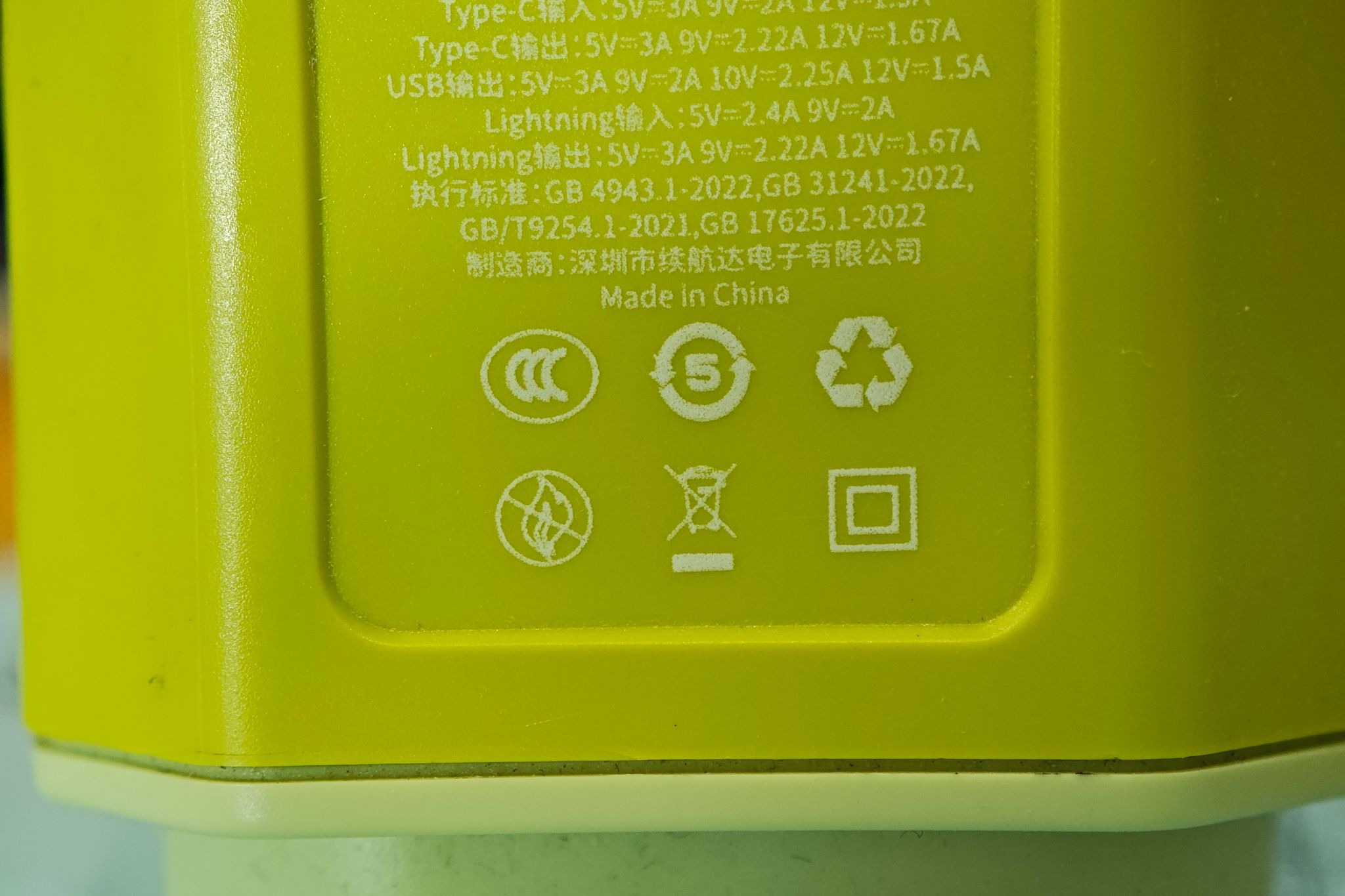
Voluntary safety testing leads to an international patchwork of policy. (Photo by VCG/VCG via Getty Images)
Safety in the US is basically an honor system, with plenty of dishonorable actors. Manufacturers of untested products are most likely to get caught only when there’s a customer casualty count.
UL’s standards focus on what it deems realistic situations.
“We don’t just do any and every test,” says Slone. “If we make these tests too expensive, we fail our mission, because safety’s not a luxury item. We have to stay concentrated on known failure modes where there are lives hanging in the balance.”
The Everest of safety tests
Meanwhile China, already the world’s largest manufacturing economy, announced its new power-bank safety standards earlier this year, and sent travelers and supply chains scrambling. Companies that want to sell a product to the Chinese market must pay for any test the government mandates, earning the 3C, which stands for “China Compulsory Certification.”
“Their ability to implement industrial policy is a lot more straightforward than in the US,” says Madeline Craig-Scheckman, a research associate at the Second Cold War Observatory who studies geopolitical issues related to critical minerals, including lithium-ion batteries.
Standards have been a focus of the Chinese government’s stated technology strategy for decades, introducing the first of its regulatory overhauls in the early 2000s. “High-quality development” is one of its core goals.
Its new power-bank standards include UL’s testing categories and then some. Among the additional requirements is the so-called “Everest of safety tests”: a nail-penetration test. This is what it sounds like: a rig calibrates the nail strike and contains any fumes and fire.
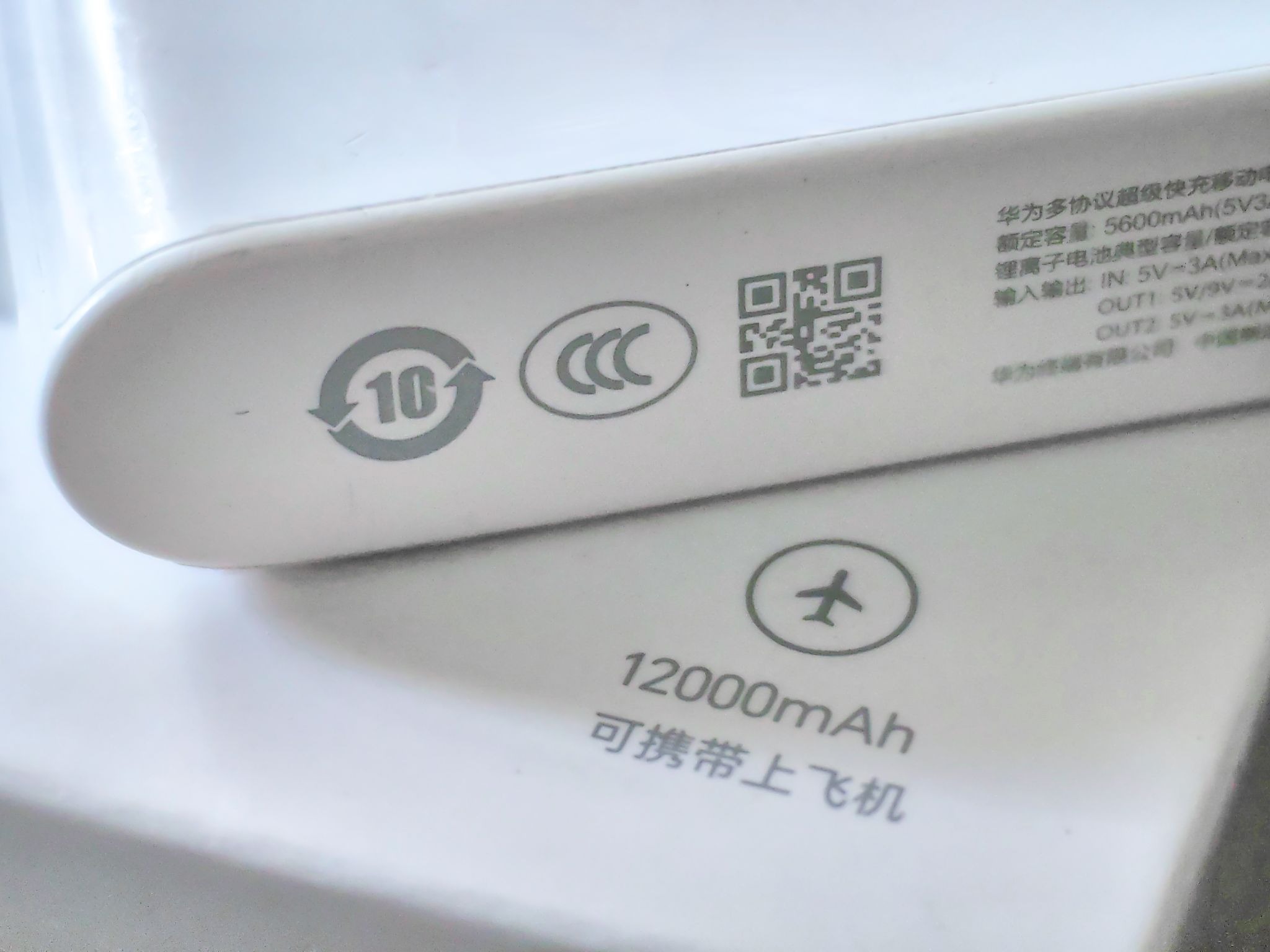
The power-bank rules are the latest in China’s yearslong effort to improve its safety standards. (Photo by CFOTO/Future Publishing via Getty Images)
Other requirements take a harder look than before at long-term use and aging, and set tougher requirements on the software that can shut the battery down if it detects trouble. The standards also mandate a QR-code mark, so anyone can check the certification's details.
International Harmony?
So should UL standards come up to China’s standards for power banks, making the US the most rigorous in the world again?
The answer isn’t straightforward.
ULSE updates its standards not by government fiat but through a vote of a global volunteer technical committee, including people from industry, academia, health and consumer groups. The power-bank committee has US representatives as well as voting members from China, Japan, Singapore and elsewhere. (UL Solutions also sits on the committee, but it gets one vote like anyone else.)
“There are active debates,” says Slone. “Each country, each company and each business segment has its own perspective that it’s trying to advocate for.”
Consensus is unpredictable, but possible.
“In the long term, it’s quite common for there to be what’s called ‘harmonization,’” Slone says.
Disharmony creates headaches for consumers, who can face limited choices, higher prices and frantic airport shopping to replace seized electronics. It’s also a pain for manufacturers trying to keep up.
Companies in this space routinely warn investors that this is an unpredictable source of business risk, since selling a consumer product globally means keeping up with an ever-shifting global safety regulation patchwork.
Belkin, the electrical company that manufactured Stafford’s power bank, holds safety certifications in every market where it sells, and marks accordingly. It’s now updating production lines to meet China’s new marking requirements.
Setting technical standards that the rest of the world follows has long been understood as a soft-power flex.
“In the United States, we’re used to an American-centric narrative; things kind of revolve around us. But now China has a lot of power and influence in other countries that are more willing to comply with its regulations,” says Craig-Scheckman.
“For the United States, this could be a wake up call.”