
He got into pathology for the medicine. Now he’s helping writers.
When a single mother named Marianne vanished into the blistered, soot-stricken lava fields outside Reykjavik in 2019, it was unusual. Iceland isn’t a place where people just disappear.
When, seven months later, two boys stumbled across her body, weathered from the frost and lying in a cave, it was utterly shocking. She’d been brutally murdered, and Icelandic police needed to know why.
There was only one problem. The murder wasn’t real.
The disappearance is the premise of bestselling novel Girls Who Lie, and the details included by author Eva Bjorg Aegisdottir on how months out on the frozen lava fields would affect human remains came straight from the country’s singular expert on such matters.
These days, Petur Gudmann Gudmannsson, Iceland’s only full-time forensic pathologist, contends with as many fictional murders as real ones.
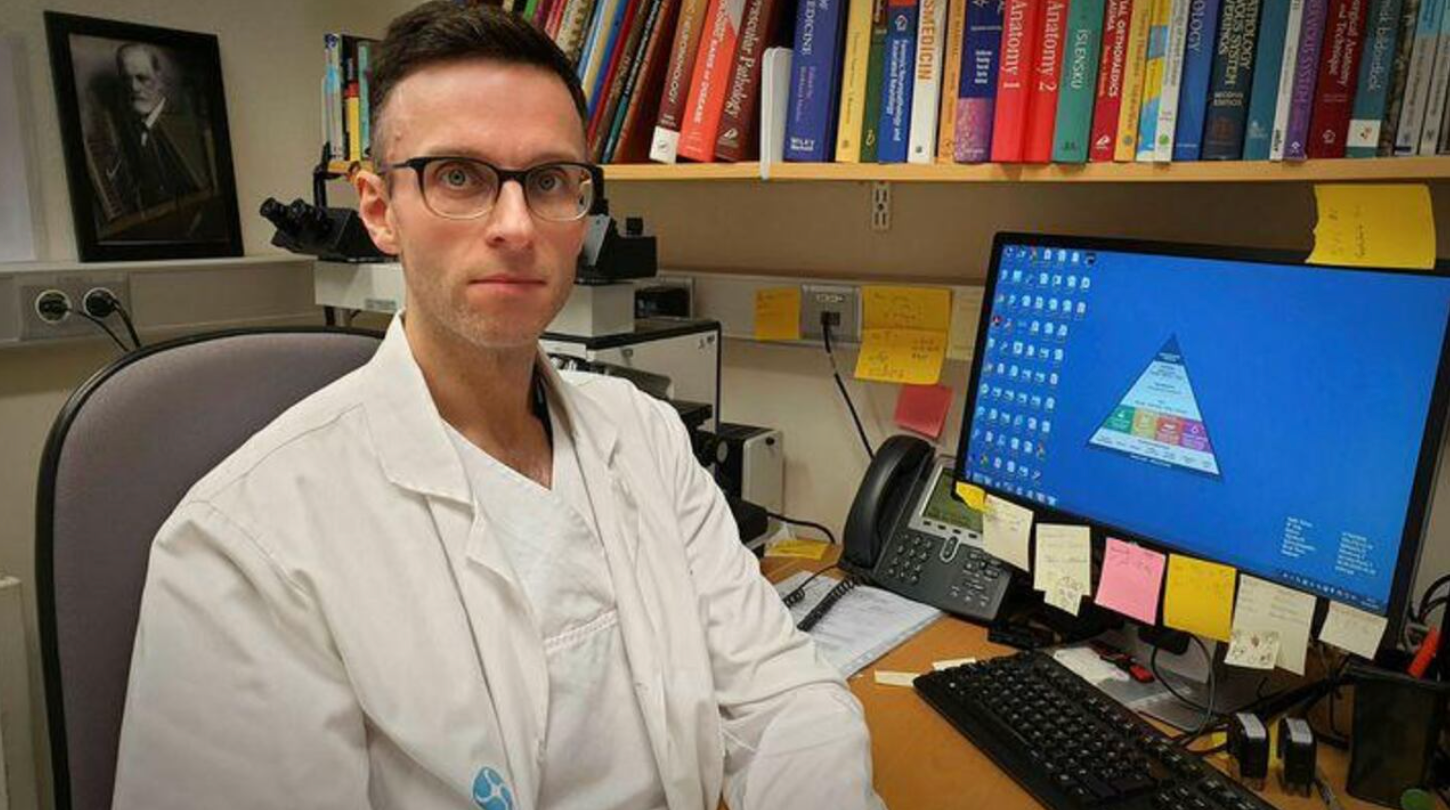
Petur Gudmannsson works from an old blood bank in Reykjavik’s National Hospital. (Courtesy of Petur Gudmannsson)
As a medical detective in one of the world’s safest countries, he’s found himself in the midst of an unlikely upswing: the Icelandic literary crime boom. And he’s not entirely comfortable with it.
‘It’s always about what you see’
Petur Gudmann Gudmannsson never planned to be Iceland’s sole forensic pathologist, or a pathologist at all. Initially, he hoped to be a psychiatrist. But after a year in the speciality, he knew it wasn’t for him.
“In psychiatry, you have nothing to hold onto,” he says. “You don’t even have blood tests or anything to guide you.”
His mind began to wander back to the thing he’d loved about medical school in the first place: anatomy. Unlike psychiatry, anatomy felt real and reachable.
“It’s like a map,” he says. “It’s the landscape you’re working in. It’s always about what you see.”
He remembered a course in forensic pathology from early in med school, taught by an Icelandic doctor who studied and lived in the US.
Didn’t Iceland need a forensic pathologist of its own? He thought it did, and Reykjavik’s National Hospital agreed.
Iceland is so small — just under 400k people — that the only medical school in the country didn’t offer the necessary courses. He went to Sweden instead.

Iceland’s lava fields make for some thrilling Gothic settings. (Photo by Cris Toala Olivares/Getty Images)
In 2018, he moved back, and became the only full-time forensic pathologist in the country. Today, he works from an office in the old blood bank in the National Hospital. His days often start in the autopsy room — surrounded by clamps, knives, scissors and a saw — and end doing paperwork for the ~300 autopsies he conducts annually for the police.
Each time a death is unexpected, sudden, or suspicious, it crosses Gudmannsson’s desk.
“You don’t really know sometimes what you are looking for, but the interesting things… they’re there, even if in the moment you don’t know what they are,” he says.
“But you just examine the scene or the body very thoroughly, and then you find everything that matters.”
An influx of writers
Two years into his job, something unusual happened.
He’d decided to do a seminar on forensic medicine for professionals in the justice and healthcare systems. Through the University of Iceland, Gudmannsson launched a continuing education course. He’d hoped to build a bridge between his profession and theirs, explaining the intricacies of investigating sudden death.
Most of the uptake wasn’t from police and prosecutors, though. It was from writers.
For four years, he taught a course for writers every semester, ~25 bright-eyed students staring back at him as he explained mummification and traumatology.
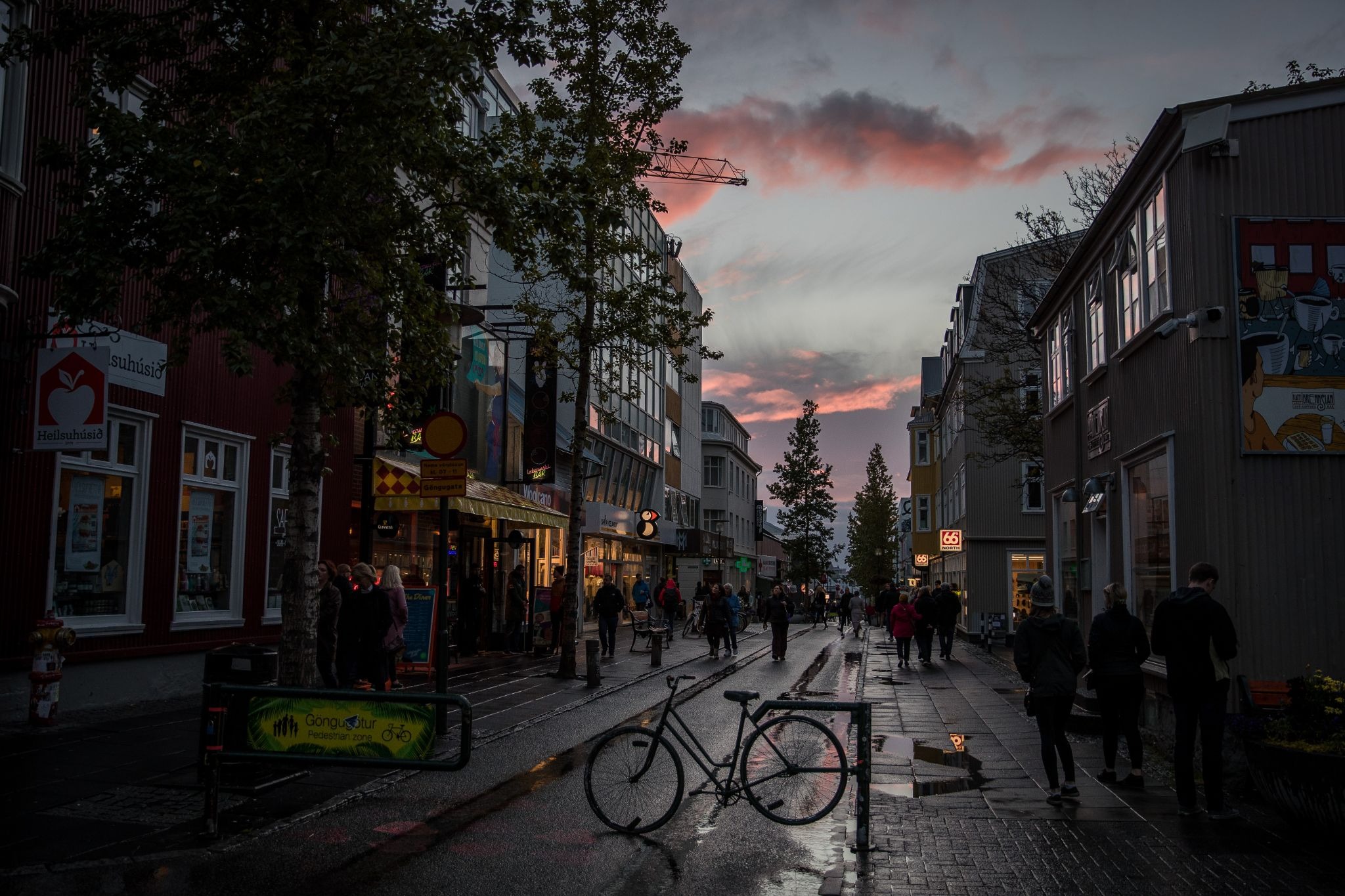
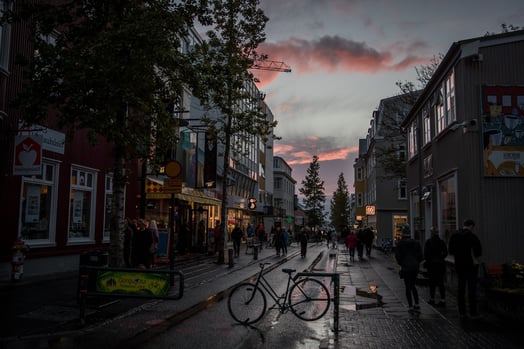
Reykjavik’s streets are considered some of the safest in the world. (Photo by Maja Hitij/Bongarts/Getty Images)
After he stopped the course — he had the sense that it was veering too close to entertainment for his pupils — the questions from writers kept coming.
Because Iceland is so small, and considered one of the safest countries in the world, it has more fictional murders than real ones. You’re more likely to give birth to twins, be born on February 29, or die by a killer bee than you are to be a victim of homicide in Iceland. Gudmannsson estimates he sees just two to four a year.
By contrast, literary crime is popping off: Ragnar Jonasson, Yrsa Sigurdardottir, and Eva Bjorg Aegisdottir are a few of the bestselling authors from the tiny nation, and have helped to spawn the creation of Nordic Noir, a genre all its own.
Gudmannsson, who speaks with a detached solemnity, isn’t quite sure what to make of it. He prefers to stay focused on the medicine.
“There is some kind of a thirst there in people for this kind of stuff. They have to do with very basic and deep common human factors. I think the explanation must lie somewhere in that area,” he says.
“It’s disturbing in a mild way.”
Bach like an autopsy
Still, every few months, like clockwork, the questions come in. How would a body look if it were left for a year on a lava field or stuck for three years in an airtight suitcase? What does a body smell like as it decomposes? How many times does someone have to be stabbed to be really stabbed?
“Being in this business that revolves around violence, I don’t really get the feeling that there is a low rate of violence in Iceland because I’m in contact with each and every case,” he says. “It’s more than enough for me.”
These days, he tries to remind his inquiring writers that fiction is fiction for a reason and not everything needs to perfectly resemble reality.
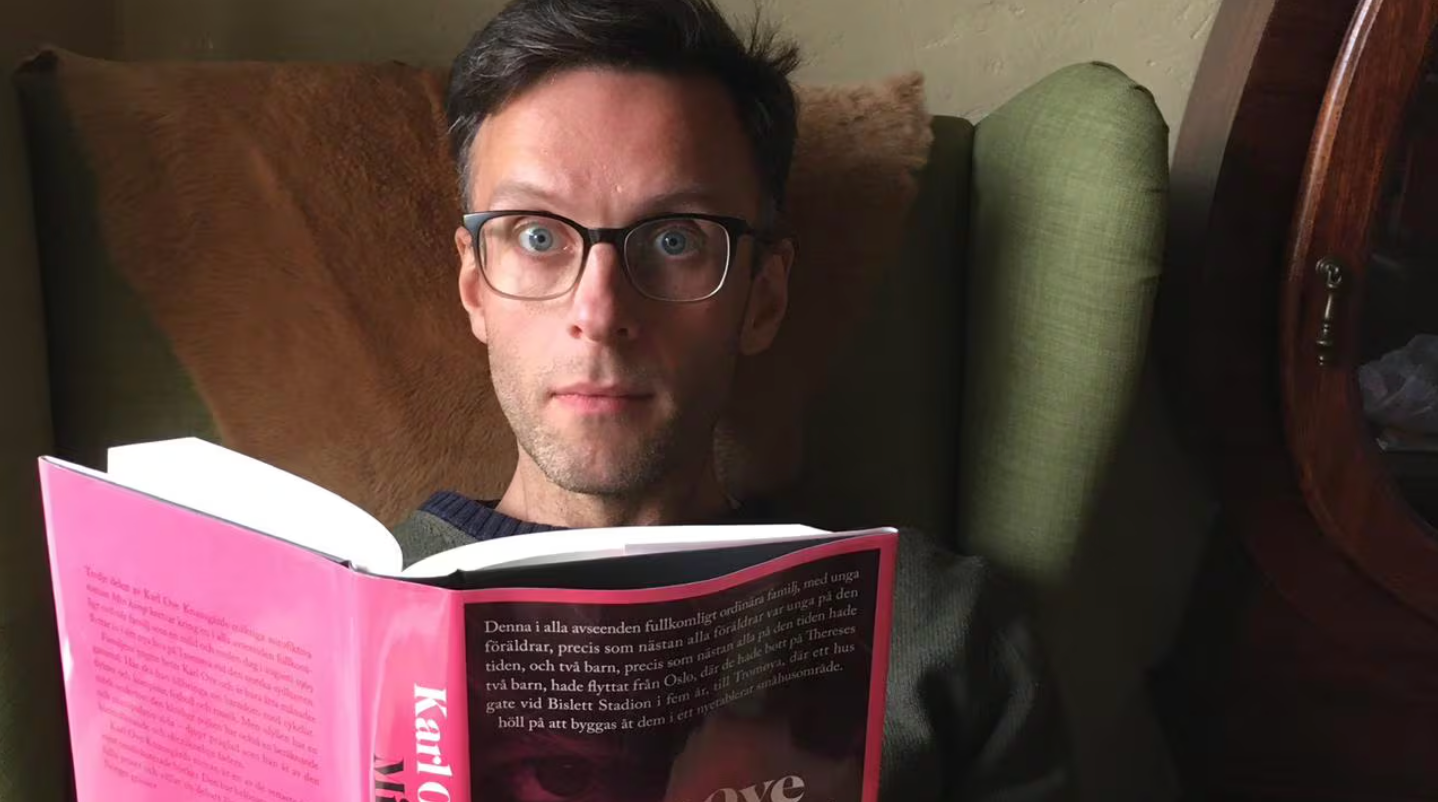
At home with Karl Ove Knausgaard. (Courtesy of Petur Gudmannsson)
In the Reykjavik home Gudmannsson shares with his wife, also a doctor, and their six children, he sits quietly and reads, though not about crime. Most often, he’s reading about Bach, his favourite composer, deconstructing his sonatas with surgical precision. He likens Bach’s music to conducting an autopsy: both are intertwined with voices and details that weave together a story, if you know where to look.
“It’s a real introvert nerdy thing to do,” he says. “But it’s my relaxation method.”
As for the cases that continue to haunt him, he leaves the ghost stories to the writers.
“I usually forget the cases when I walk out in the afternoon,” he says.
“I don’t have a really hard time emotionally with any type of case. If that is the case, I don’t think it’s a career that you would choose.”