
The answer lies in a complex game of cat and mouse between carmakers, thieves and technology.

The search was frantic and intense.
It started one evening, when my partner asked me if I knew where the car key was. I’d been the last one to use it, but it wasn’t where it should be. My purse, pockets, all the usual places – empty.
Twenty minutes later, we were outside, desperately hunting around until we spotted the key: lying on the ground, right next to the driver’s side door. I must have dropped it while juggling grocery bags and our dog.
The real shock arrived the next day.
Determined to prevent a repeat, I called the dealership to find out what a spare key would cost. The answer was ~$400. My internal reaction was a saltier variation of “you’ve got to be kidding.”
As anyone who has had to replace their car key recently can (and likely will) tell you, the cost of doing so comes as a gut punch. According to car pricing specialists Kelley Blue Book, new keys generally start at $125.
Depending on make and model, they go way up from there. Some modern BMW keys cost over $1k to replace. Replacing all the keys for a standard Subaru can run you $1.5k at the dealership.
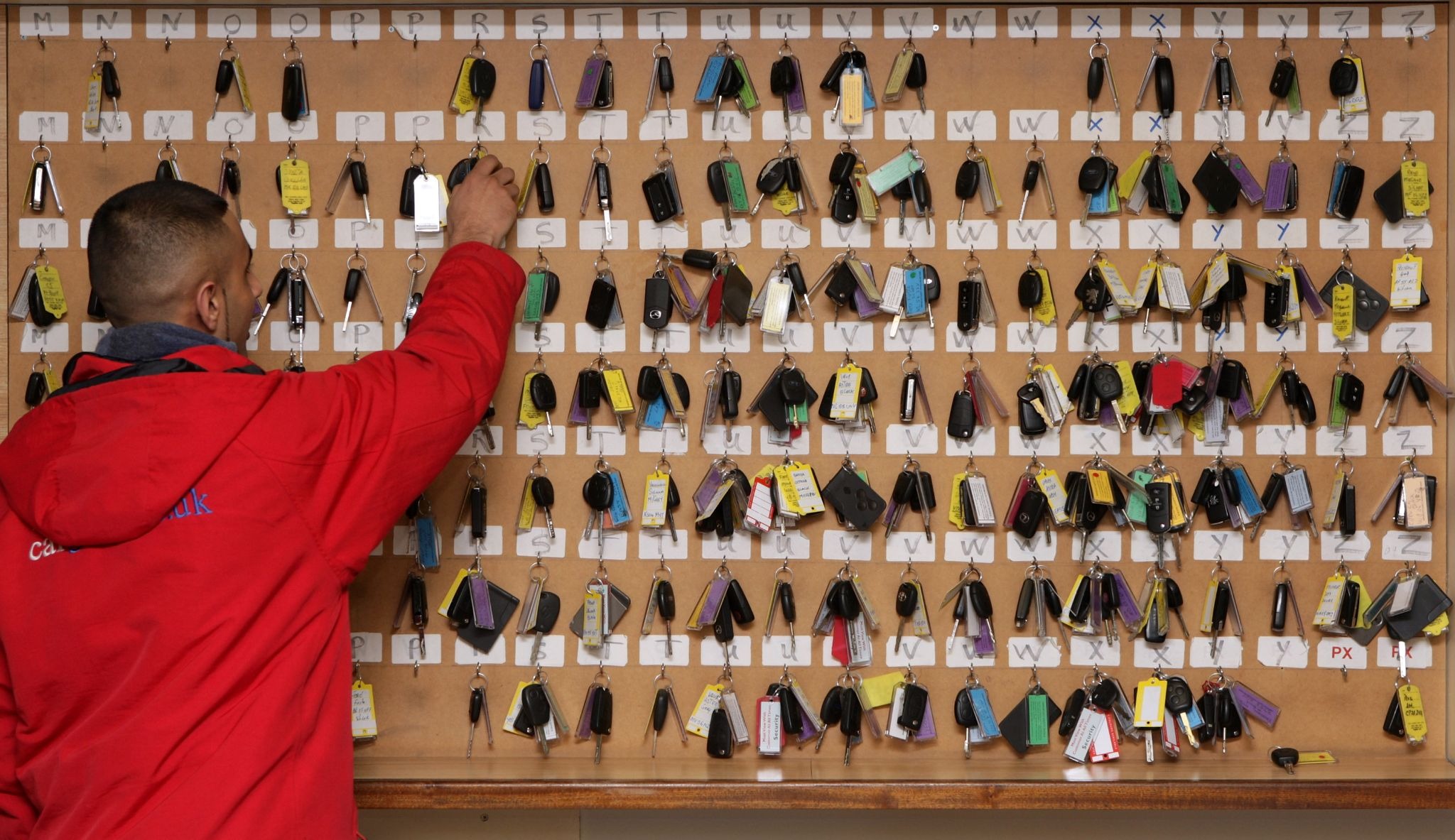
At London’s Cargiant supermarket, cars aren’t the only things on display. (Photo by Oli Scarff/Getty Images)
By comparison, $400 seemed like a bargain. But our Kia Forte was six years old; we’d soon be replacing it. Until then, I resolved to better resist the dog’s efforts to distract me.
But it did get me curious. Why have car keys gone from simple slabs of plastic and metal with a negligible replacement cost to something priced more like concert tickets or a new iPad?
Cat vs. mouse
In the earliest days of the automobile, most cars were at least partially open to the elements; some of the first Ford Model Ts had no doors at all. It was easy to get in, but hard to pull off a stealthy getaway: starting a car typically took around 10 steps.
A 1903 car manual outlines the process, which included physically opening the throttle, flushing the carburetor, hand-cranking the engine, and “one or two explosions.”
As cars became easier to start, they also became easier to steal, and the long game of cat and mouse between carmakers and car thieves began.
A driver’s first defense was a key to start the engine, introduced in the 1910s. Car doors soon got their own keys, too.
The form these took was traditional — cast from metal and cut to align with tumblers inside the lock. They were quick, easy, and inexpensive to replace.
Good news for scatterbrained motorists like me, but great news for car thieves. If it was easy enough to copy stolen keys, it was even faster to “hot wire” a car: connect the electrical wires that enabled the engine to turn on with a paper clip or scrap of tin foil. Between 1950 and 1965, rates of car theft roughly doubled in the US.
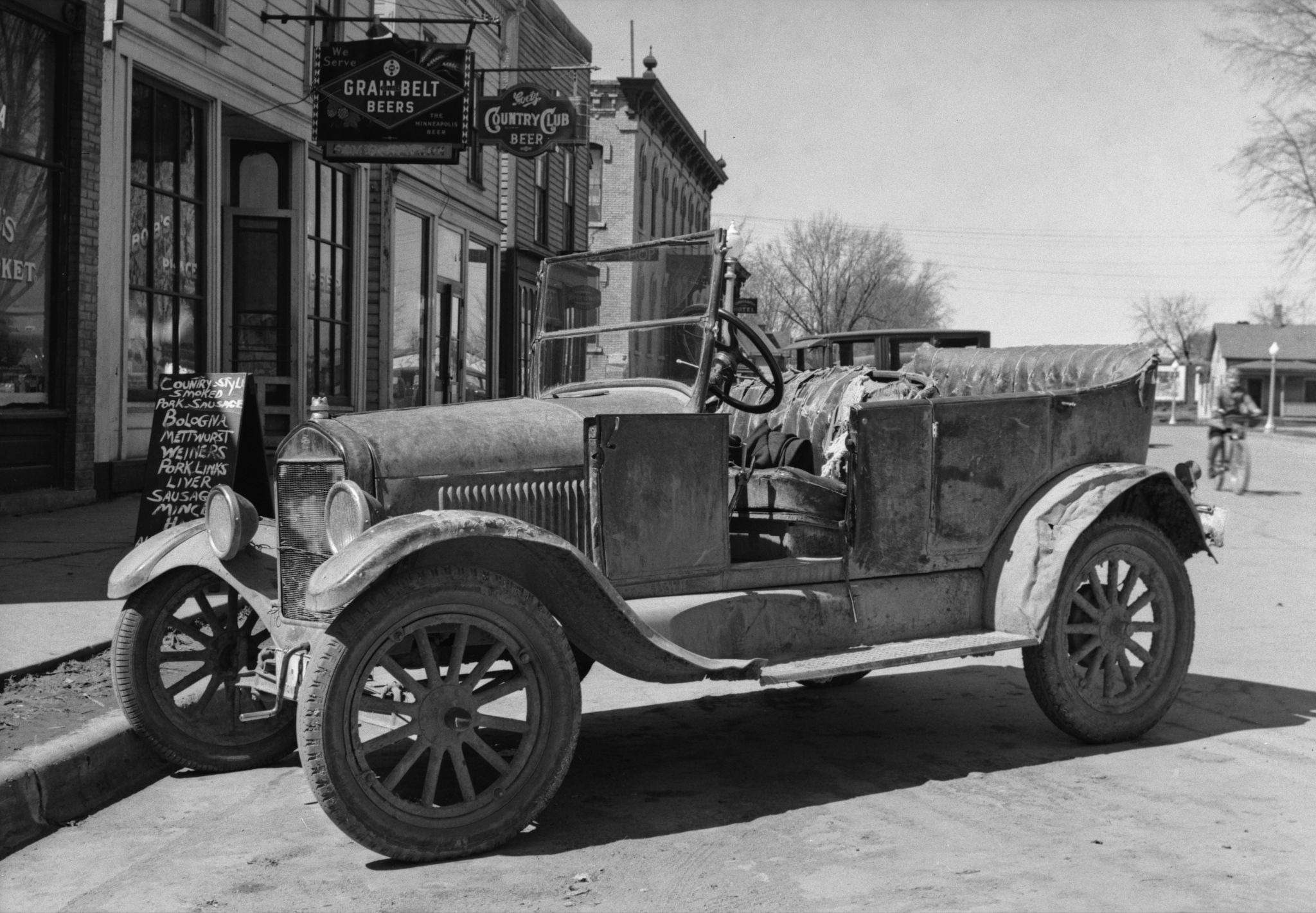
A 1930s Model T, exposed to the elements in Iowa. (Photo by Archive Photos/Getty Images)
Carmakers fought back with tech. In the 1980s, they introduced “engine immobilizers,” which prevented a car from starting without a verification signal. By the ‘90s, that message came from a transponder — a chip with a tiny antenna — embedded in the ignition key itself. For the law-abiding motorist, this wasn’t a noticeable change; car keys still essentially looked the way they always had.
The real change in car keys came in the decades that followed. As broadcasting capabilities improved, the key didn’t have to get quite so cozy with the ignition system to effectively communicate. The transponder relocated into another new convenience: electronic remote controls that opened the doors. This eliminated the need to insert a key into an ignition lock entirely.
Car keys had shed their traditional shape for their current form: the modern key fob.
With much of the credit going to engine immobilizers, car theft rates fell 80% between 1990 and 2020, according to Security Journal.
But car criminals upskilled too. Their focus shifted to getting their hands on the digital tools that could reprogram engine immobilizers, by any means necessary, says Donny Seyfer, executive officer of the not-for-profit National Automotive Service Task Force (NASTF).
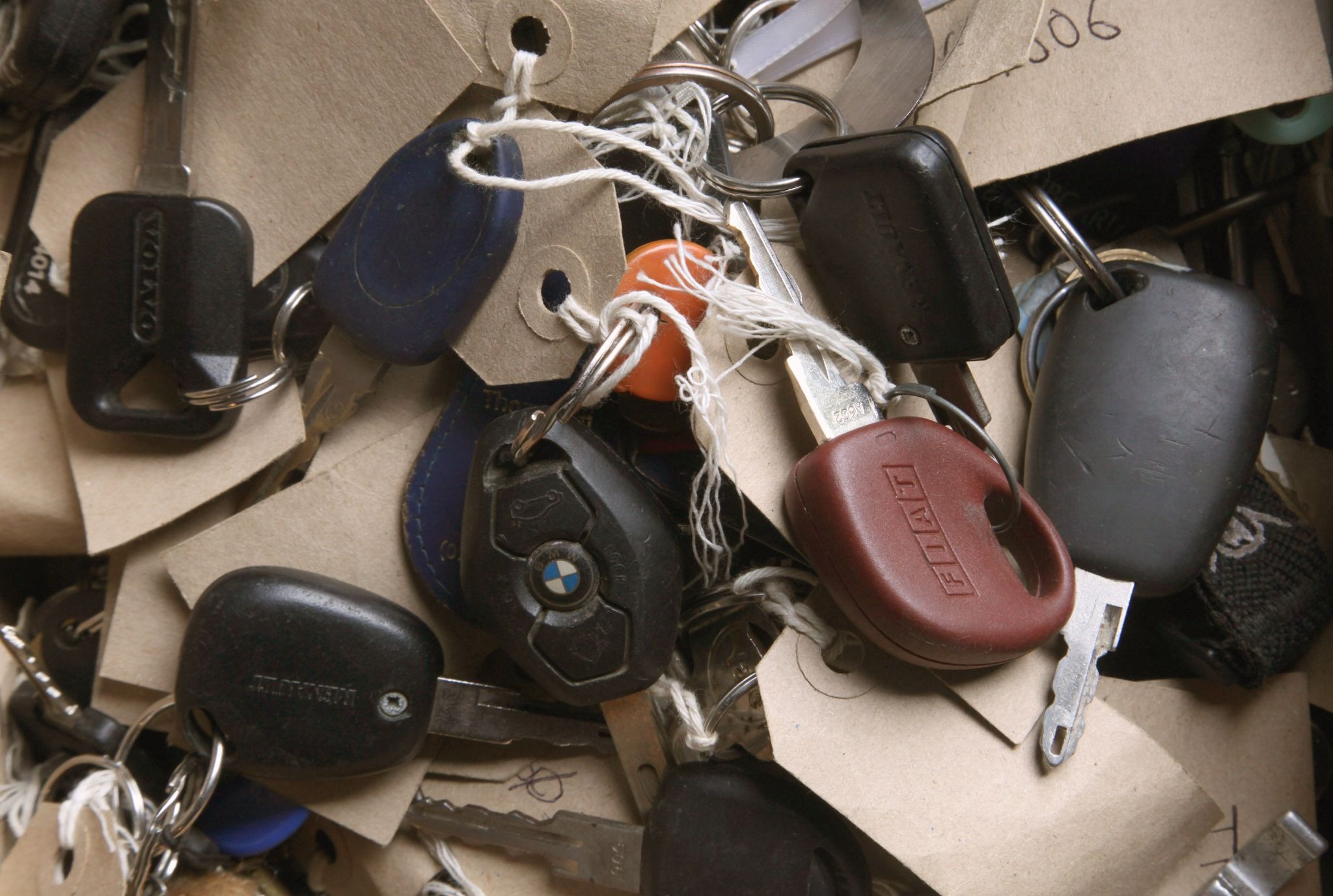
In recent decades, car keys have evolved from metal turnkeys to electronic fobs that don’t require keys at all. (Photo by Matt Cardy/Getty Images)
He tells me about a demonstration he conducted earlier this year at a police station in Westminster, Colorado.
The grand finale involved a break-in attempt on a vehicle – and not just any vehicle, a locked police Dodge Durango SUV driven by an officer.
“He was certain that his car had better security than regular people’s cars,” Seyfer recalls.
It didn’t take NASTF’s locksmith long to shatter his certainty.
First, he inserted a mechanical tool that sprang the door lock. Then he plugged a key-programming tool, which looks like a rugged hand-held computer, into the on-board diagnostics port under the dashboard and paired a new key. (Tools like this are available online; the least expensive ones cost ~$500.)
Less than a minute after starting the break-in, he had the engine running. It happened so fast that the officers asked for a repeat performance.
It was an effective way to demonstrate what thieves can do with the tools — and why countermeasures continue to be critical to automakers staying ahead. NASTF recently introduced a verification system to the tools themselves: many now won’t work without a login from a registered locksmith.
It all adds up
Which brings us back to where we started: how modern car keys became so crazy expensive.
Alongside combating criminal ingenuity, car keys’ capabilities have become ever more sophisticated. Current models from BMW, Hyundai, and many others control windows, mirrors, and climate control. Some can even start a car remotely and maneuver it in or out of a parking space while you stand nearby. Futuristic features jack up the physical cost of the key, Seyfer says.

A wall of Porsche key fobs, looking more like remote controls than car keys of yore. (Photo by Hou Yu/China News Service/VCG via Getty Images)
Another reason is that car manufacturers keep tight controls over their security protocols and programming tools. There’s a financial incentive: Dealers’ service departments do excellent business. In the first half of 2026 alone, according to the National Automobile Dealers Association (NADA), they pulled in nearly $83B in service and parts revenue, averaging $4.88m per dealership. The average hourly service rate at a dealership is now $192.
Simple key fob reprogramming usually takes about an hour, but can be much longer if the model requires the security module inside the dashboard to be replaced.
And even though independent repair shops can be cheaper, that isn’t always the case — not least because their own costs have soared. In a 2026 survey by the trade journal Locksmith Ledger, one business reported that key-programming equipment for Ford models cost them $1.2k annually. For Mopar, the service division for Stellantis lines like Chrysler, Dodge, and Jeep, it was $1.85k.
“You need to take out a mortgage for VW and another for Audi and another for Porsche,” they wryly noted.
Unsurprisingly, some consumers take matters into their own hands. It’s easy to buy blank and refurbished key fobs online. And there’s plenty of DIY video content available explaining how to program them. For some older cars, it involves a complex choreography of button-pushing, ignition-turning and door-opening.
But that’s appealing to a certain kind of person, says Mike Wessman, who founded Tom’s Key Company in 2018 to offer key supplies and reprogramming tools online.
“There are some people who never paint a wall in their house, and then there are the people that would tear their whole house apart and rebuild the entire thing.”

A slick 2026 Mercedes interior, no metal key in sight. (Photo by Sjoerd van der Wal/Getty Images)
He advertises savings of up to 80% for a remote key or fob, compared to a typical dealer’s price. But it’s not without its own complications. “We’re not a theft business,” Wessman is quick to point out. The tools he provides won’t work if you’ve lost all your keys, for instance; you need at least one working key to program a new one. And, as at any locksmith, there may be other identity checks.
“You can’t just read the VIN number off your neighbor’s vehicle, or a nice car in the parking lot, and make yourself a key for that vehicle,” Wessman says.
The key to the future
Today, the car key itself could be going the way of engine hand cranks. A growing number of manufacturers now offer mobile apps, some of which serve as fully functioning car keys by adding a key to your phone’s digital wallet alongside credit cards and boarding passes.
Part of the pitch is that this makes a key more secure, since it uses “the same type of cryptography and protection… that you use when you’re doing tap-to-pay,” says Ian Televik, senior marketing director at the Car Connectivity Consortium, an industry group.
They may not be a money saver, though. Although they could choose to make them free, many major automakers are already charging a subscription fee for their apps, to the tune of about $10 to $50 a month, per the car research site Edmunds, requiring drivers to rent access to their own car keys.
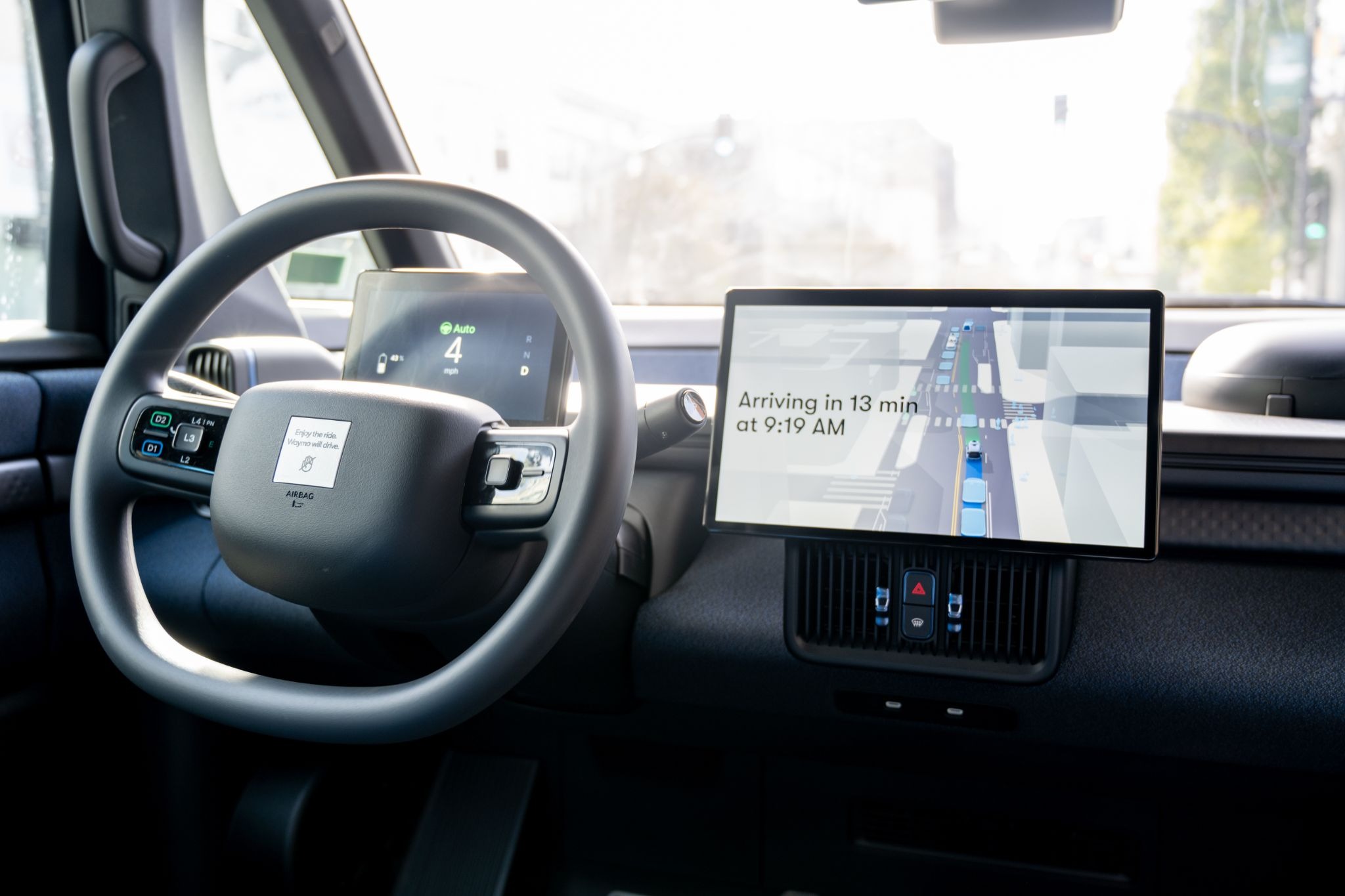
Soon, cars won’t even have drivers, let alone keys, if Waymo has anything to say about it. (Photo by Smith Collection/Gado/Getty Images)
Questions of cost aside, many of us who’ve grown up with car keys will find it hard to forgo them entirely.
“Some folks will refuse to do it,” says Wessman. He expects that holdouts like these will keep Tom’s Key Company in the physical key business for some time yet. But he also expects his grandchildren will one day marvel as he tells stories about the olden days, when “we used to have this thing called a car key.”
We’ve yet to learn how ingenious criminal minds will crack key apps. But surely that’s only a matter of time. For myself, I’m pretty sure that going digital won’t give me more peace. It’ll just be yet another reason to worry about dropping my phone.