
In the next decade, it’s estimated that one in every three homes in Japan will be vacant. Why?
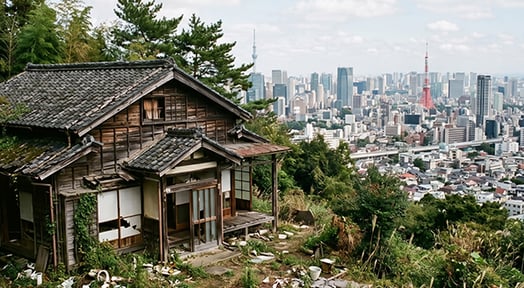
Japan’s Yamanashi prefecture, southwest of Tokyo, is home to some of the Earth’s most stunning land. Mount Fuji looms on the horizon, cherry blossoms line the roads, and Buddhist temples dot the foothills. It is, by all measures, an enviable place to live.
But if you pay close attention to the homes in the region, you may notice that many of them are in a state of neglect.
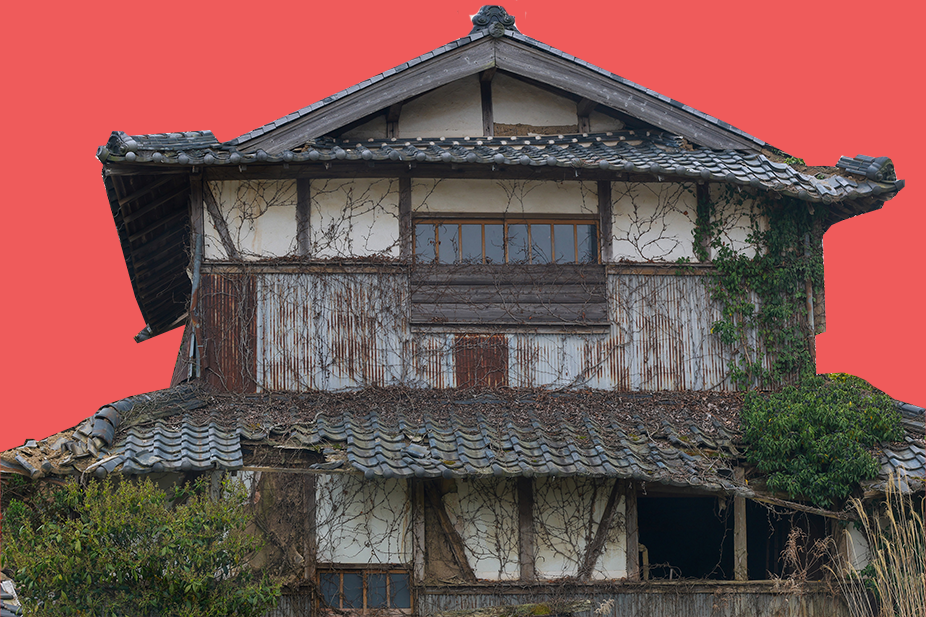
An abandoned house in Japan (Buddhika Weerasinghe/Getty Images; edited by The Hustle)
Homes like this are an increasingly familiar sight in Japan.
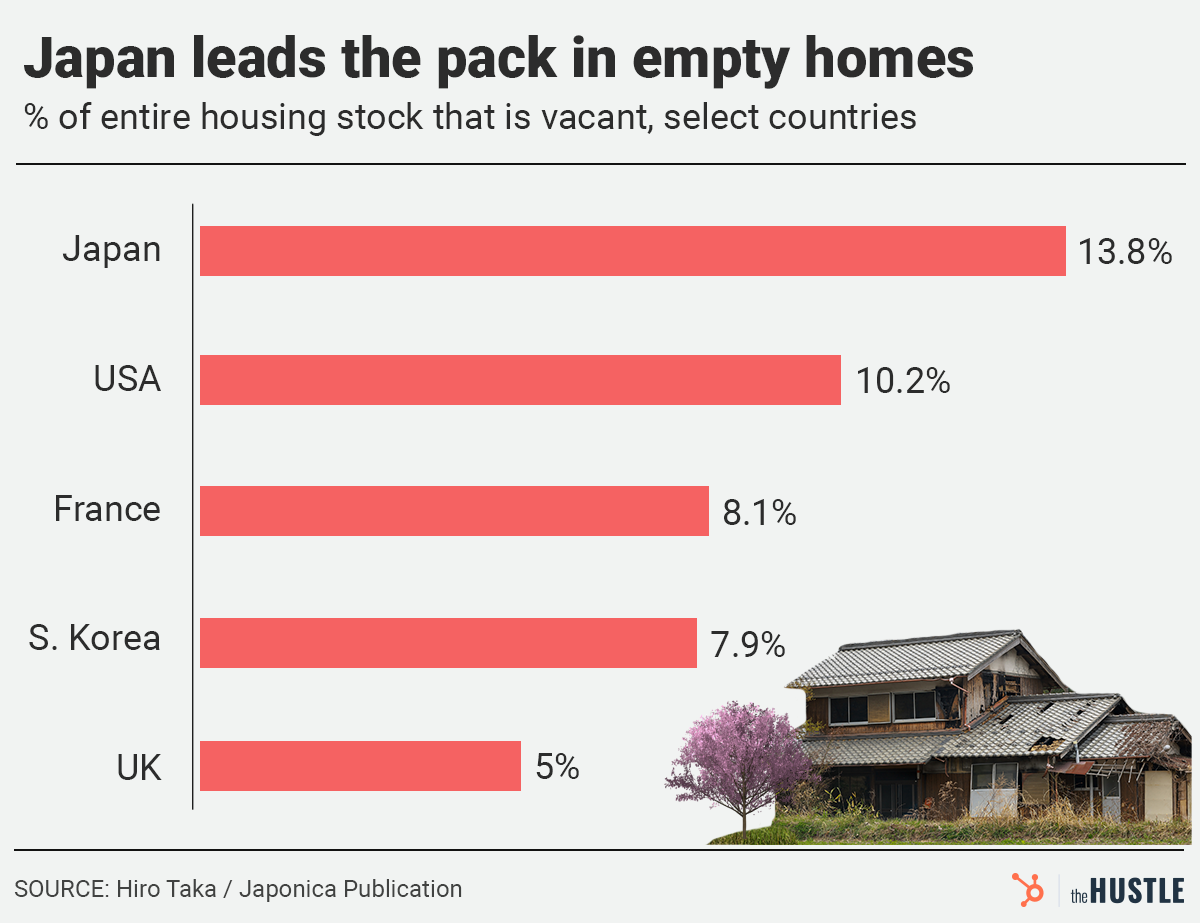
According to a 2023 report from Japan’s Ministry of Internal Affairs and Communications, there are now more than 9m vacant homes in the country. That’s an astonishing 13.8% of Japan’s entire housing supply. And the problem is only getting worse: by 2038, one in every three homes are projected to be vacant.
.png?width=1200&height=1142&name=vacanthomes%23(1).png)
Zachary Crockett / The Hustle
Of course, every nation has its share of vacant homes. In real estate, there are always unoccupied rental units and on-the-market properties that can’t find buyers. But Japan’s rate far outpaces that of other developed countries like the US, UK, France, and South Korea.
Zachary Crockett / The Hustle
What sets Japan apart is that a substantial portion of its vacant properties — some 3.9m — are entirely abandoned.
In Japan, these abandoned structures are called akiya. And they aren’t just in the countryside. Major cities, like Tokyo, Osaka, and Nagoya, are riddled with thousands of condo units and single-family homes that serve no economic purpose.
Why?
A population crisis
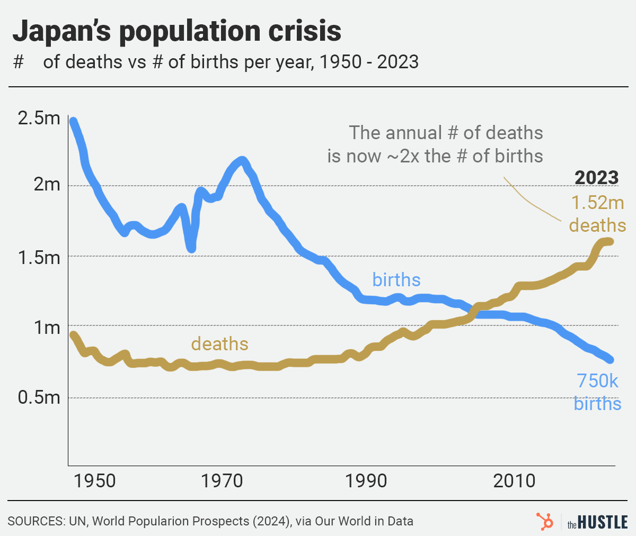
Part of the answer is simple. For several decades, Japan has grappled with a declining population. The death rate is now higher than the birth rate.
Today, the country is home to ~122m people — 4m fewer than 20 years ago. The UN forecasts that Japan’s population could dip below 100m by as soon as 2050.
 The Hustle
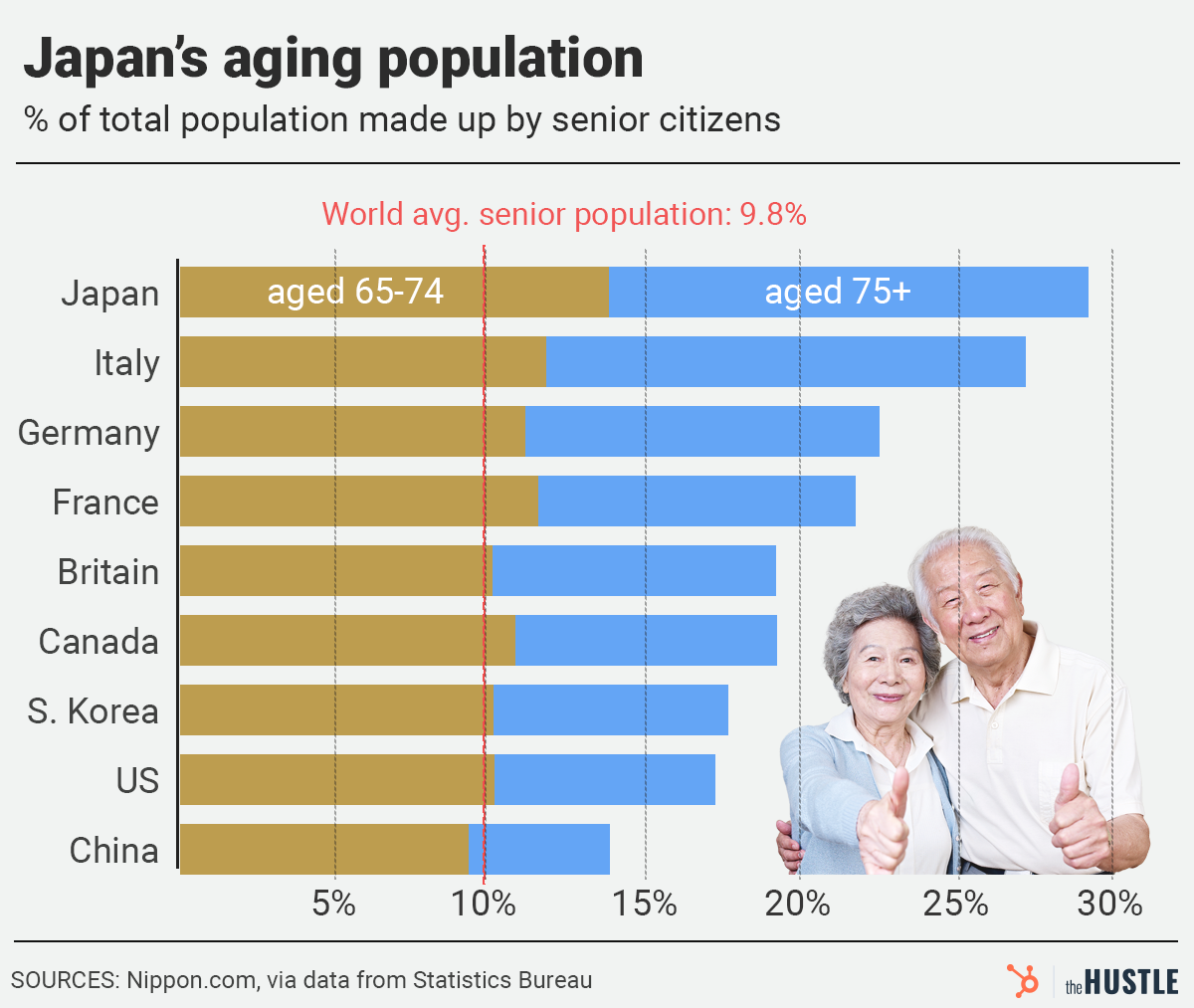
As the population has declined, it has also aged. Nearly 30% of Japan’s residents are 65+ years old. That’s roughly 3x the world average.
The median age in Japan is 49 years old — the second-highest in the world, trailing only Monaco. Many of these elderly citizens have left their homes empty and moved into care facilities or the homes of family members.
Zachary Crockett / The Hustle
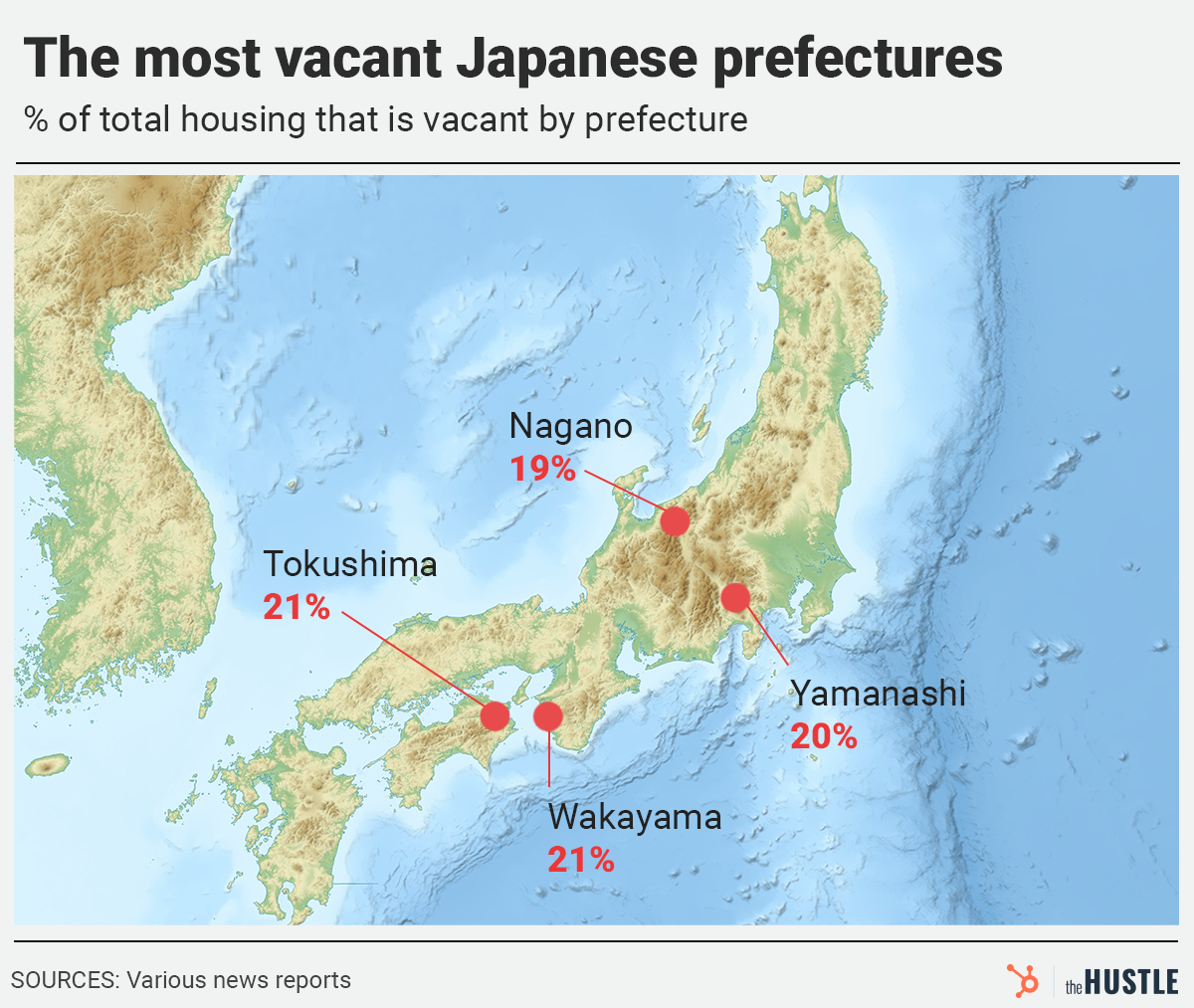
At the same time, Japan has rapidly urbanized. Many young people have migrated from the countryside to major cities. Across the country, smaller villages in particular have been left with a glut of homes.
Zachary Crockett / The Hustle
Some of these towns have become virtual ghost towns.
In Nagoro, a remote village in Tokushima Prefecture, the population has dipped from 300+ to less than 30. And the remaining residents have created hundreds of life-sized dolls and placed them in front of abandoned homes to make the village feel less empty.
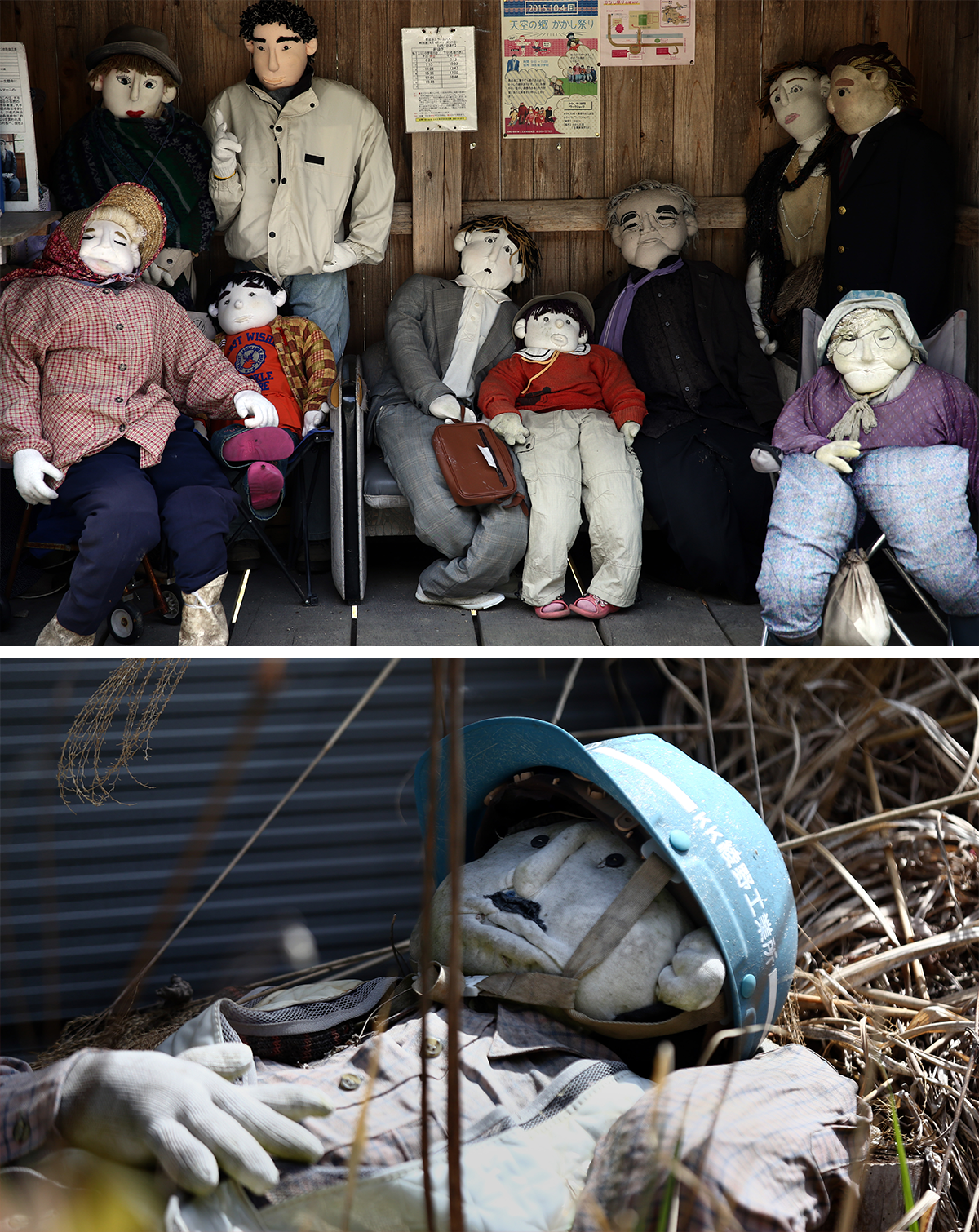
Handmade dolls sit in front of abandoned houses in Nagoro village, in Miyoshi, Japan, an effort by locals to replace the dwindling population (Carl Court/Getty Images)
But Japan’s aging and declining population only explains one part of its abandoned housing stock.
Japan’s old house conundrum
In the US, there is a certain romanticism around older homes.
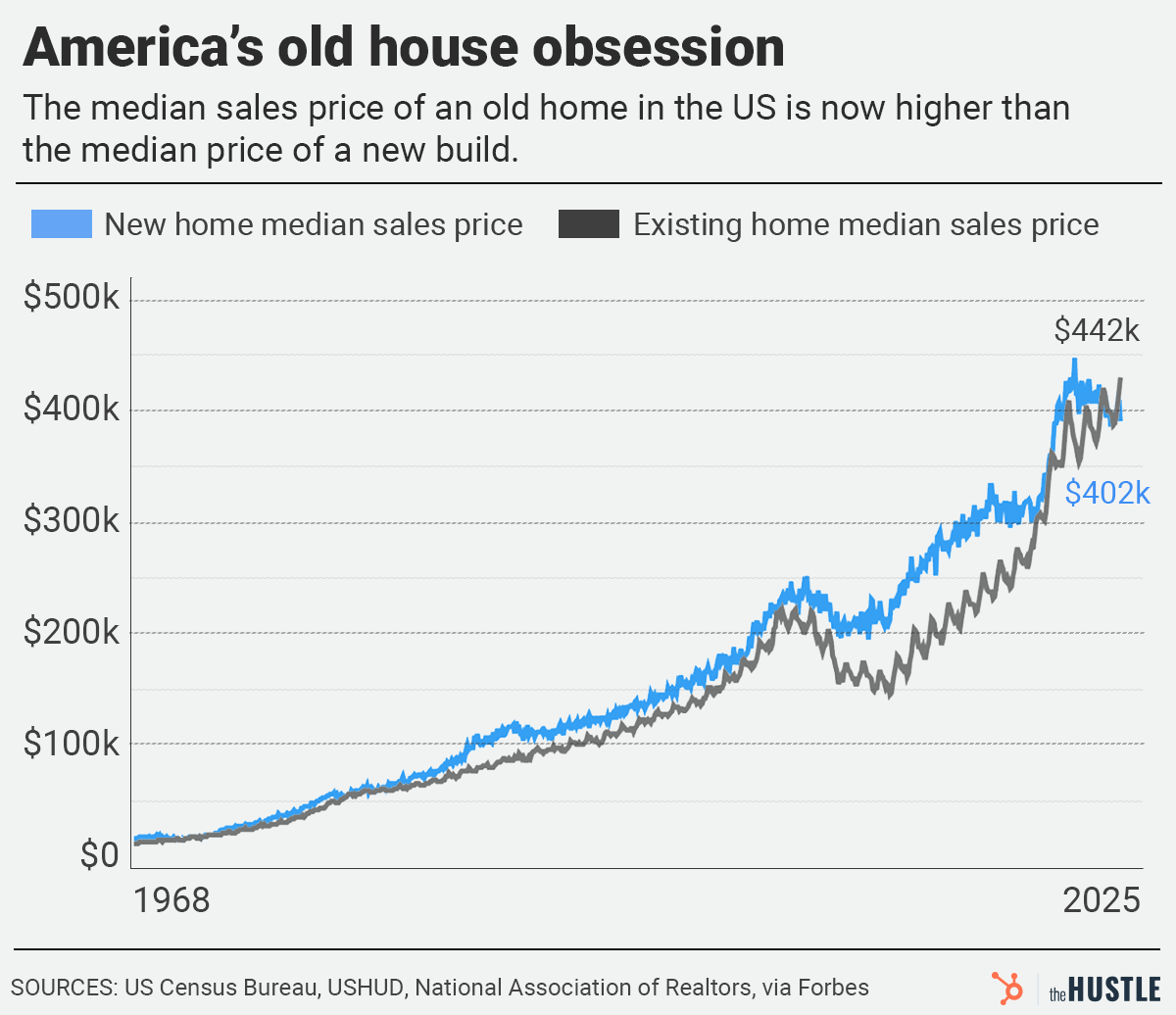
Younger buyers often prefer the character and build quality of a century-old craftsman over a newer build. In fact, last year the median sales price of an existing home ($441,500) surpassed that of a new home ($401,800).
Zachary Crockett / The Hustle
You’d think Japan — home to 1,400-year-old temples and many of the world’s oldest businesses — would share this appreciation. But this is not the case.
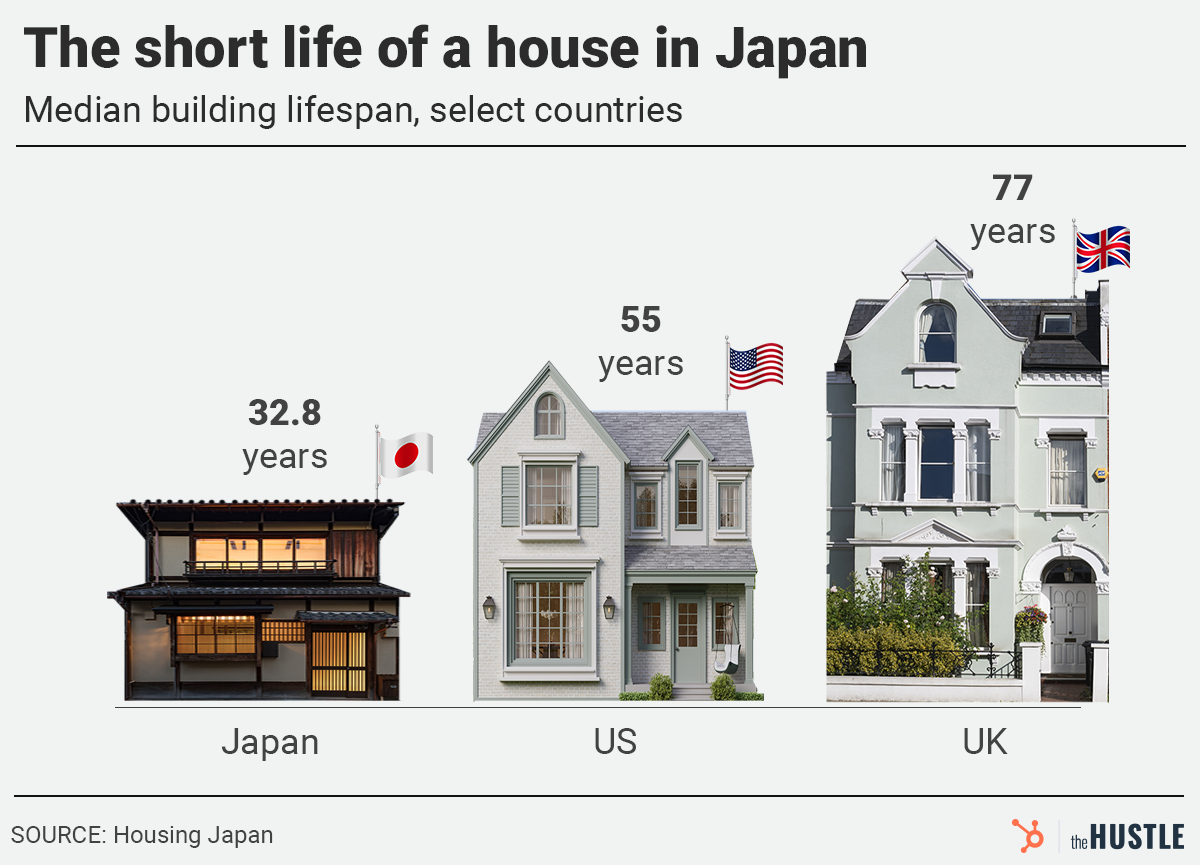
In Japan, most homes fully depreciate after a few decades, making older houses largely undesirable. The Japanese real estate market is driven by a “scrap-and-build” culture that favors frequent teardowns and new builds. In fact, the average lifespan of a home in Japan is just 32 years, compared to 55 years in the US and 77 years in the UK.
Zachary Crockett / The Hustle
There are several explanations for this:
- Structural concerns: After the widespread destruction of WWII, hundreds of thousands of homes were rapidly rebuilt across Japan and quality was sacrificed for expediency. Shoddy construction became a major problem in 2011, when a 9.0-magnitude earthquake completely leveled 130k+ homes, and damaged an additional 1m structures.
- Sentimental reasons: Many homes contain butsudan, ancestral altars inside the property that contain memorial tablets, statues, or scrolls dedicated to deceased ancestors who are the spiritual guardians of the household. Many family members are opposed to demolishing and/or selling the property.
- Financial practicality: Japan’s tax code incentivizes building new homes over purchasing existing homes, and banks are more amenable to financing new builds.
When elderly residents move out of their older homes, they are often either opposed to selling, or struggle to find a buyer. And family members see the homes as more of a burden than a valuable economic asset.
As such, hard-to-sell older homes often sit abandoned.
The vacant land hack
On the surface, Japan’s abandoned house situation seems pretty straightforward: Japan’s population is declining, younger people are urbanizing, and nobody wants to inhabit old homes.
But there’s a hidden side to the problem, too.
If you own a vacant lot in Japan, you’re taxed based on the assessed value of the land. But if you build a new property on that land and accrue debt, it’s considered leased land and you can greatly reduce your tax burden. As a result, land owners have continued to build new housing supply, even as demand declines.
In a sense, says Japan housing expert Shu Matsuo, Japanese land owners are manufacturing vacancy — or at least compounding the problem.
Want a $10k house?
This supply-demand imbalance has created interesting opportunities for foreign investors in the market for affordable housing.
On websites like AkiyaMart, Akiyahopper, and AkiyaHub, you can find hundreds of abandoned homes listed for sale — often for less than $10k USD.
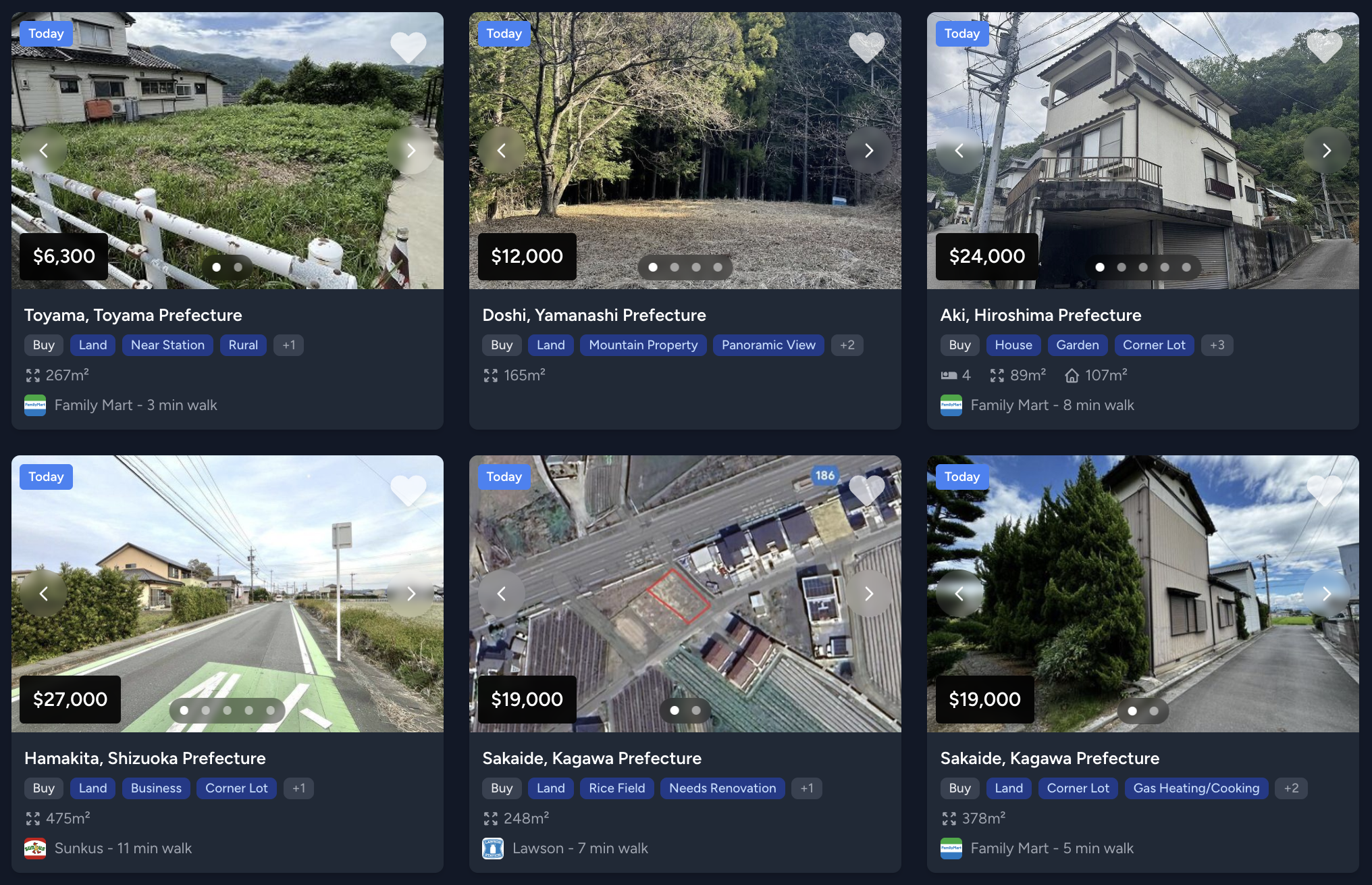
A selection of abandoned homes for sale in Japan for (Akiya Japan)
Interest in the term “Akiya” (“empty house” in Japanese) has ballooned in recent years on TikTok and YouTube, largely driven by the viral exploits of expat influencers like Anton Wormann.
Wormann, a 34-year-old ex-model, relocated to Japan in 2018 and purchased an abandoned 2,690-square-foot, 11-room farm in the town of Kujukuri for $15k. He chronicled his journey rehabbing the home, and it’s now a luxury Airbnb that books $11k/month in revenue.
He has since replicated the process with a number of other properties, typically spending between $50-100k on renovations per build.
For Wormann, and other Americans disillusioned by the dismal US housing market, the millions of abandoned homes in Japan are an opportunity to capitalize on a growing international interest in Japanese tourism.
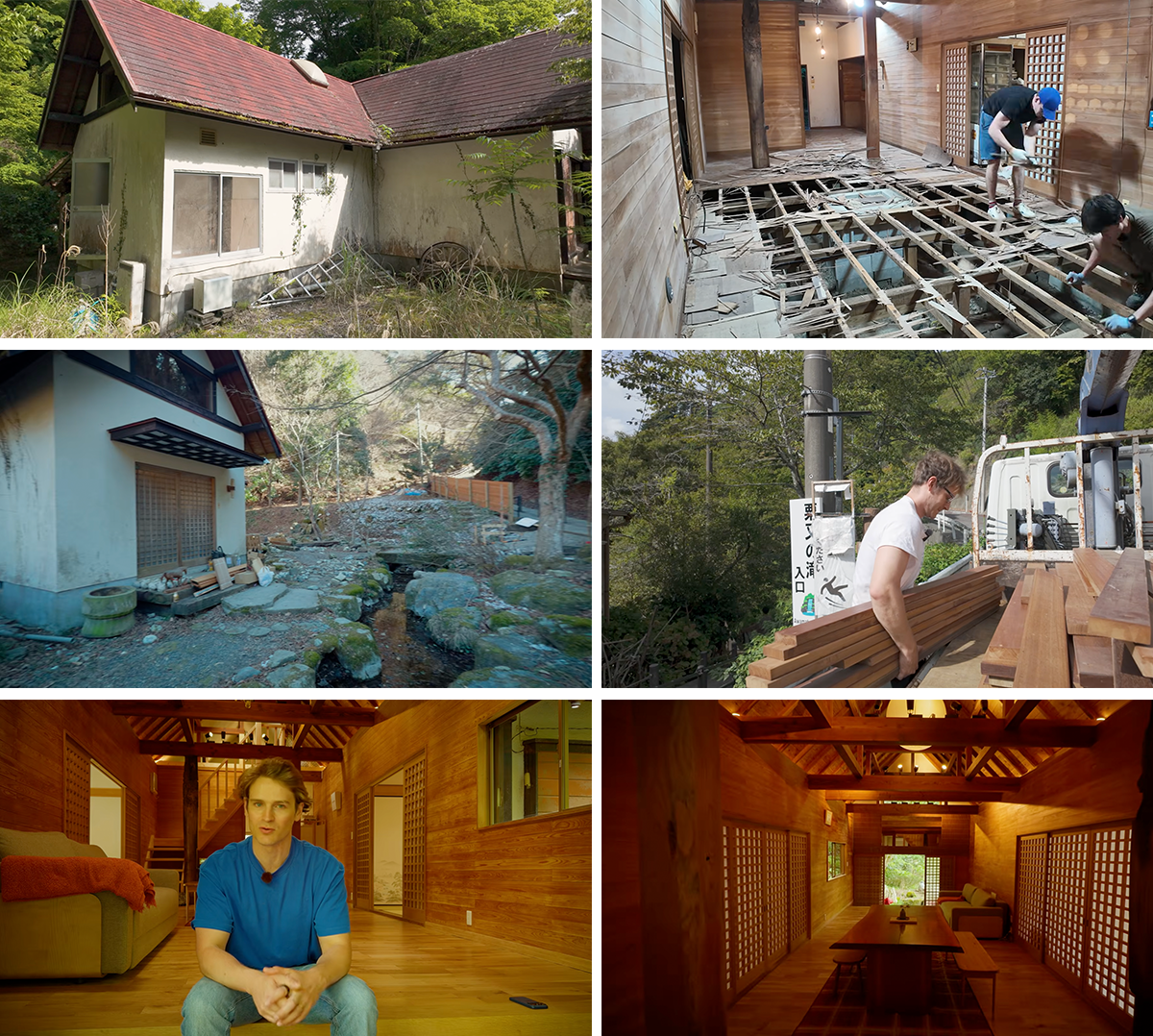
Scenes from one of Anton Wormann’s Japan home remodels (Anton in Japan/YouTube)
Some municipal governments have launched “akiya banks” to connect buyers with vacant homes. Other regions are offering subsidies to renovate, or even giving properties away for free, provided buyers commit to living in them.
But these are partial solutions to broader structural concerns: depopulation, mismatches between housing supply and demand, and policies that unintentionally encourage overbuilding.
In Japan, each empty home is a reminder of the work that needs to be done.