Just like Uber and Facebook, weekends thrive because of something known as network effects. Always-on work culture weakens them.

This story is adapted from Planet Money: A Guide to the Economic Forces That Shape Your Life, a book by Alex Mayyasi (a Hustle contributor) and NPR’s Planet Money team about the underlying economic principles that show up in our daily lives.
In 1929, Soviet leader Joseph Stalin decided that the weekend was bourgeois and inefficient. So he introduced nepreryvka, or the continuous workweek.
It was five days long, with each worker receiving a single, randomly assigned day off. Now Soviet factories could keep humming 365 days per year.
On paper, this was a better deal for Soviet workers, who previously had only Sunday off. Now they got their day off after four days at work, not six.
Still, workers hated nepreryvka. Rather than most of the country having Sunday off, now 20% of the population was free any given day.
“What are we to do at home if the wife is in the factory, the children in school, and no one can come to see us?” one worker griped. “That’s no holiday, if you have to celebrate by yourself.”
By 1931, Stalin backtracked, and reinstated a coordinated day off.
Stalin’s misadventures in calendaring reveal that weekends aren’t just days of the week. Weekends are a technology to organize time.
Like the internet, weekends’ usefulness comes from network effects: They’re valuable because of all the other people using them, and their value grows as more and more people participate.
Network effects are key to understanding the modern economy. They also explain why leisure time today faces its greatest threat since Stalin.
History’s hardest product launches
In December 1842, Samuel Morse walked into the Capitol Building in Washington, DC, and pitched world leaders on the telegraph.
At the time, it took more than a month for a message to steam by ship from New York around Cape Horn to San Francisco. Morse felt confident he could send messages quickly and accurately across continents, even oceans.
But no one seemed to grasp the telegraph’s potential. Morse’s problem was that watching a single telegraph in action was like playing catch with yourself — he was demonstrating a network good — a product whose usefulness comes from network effects — without a network.
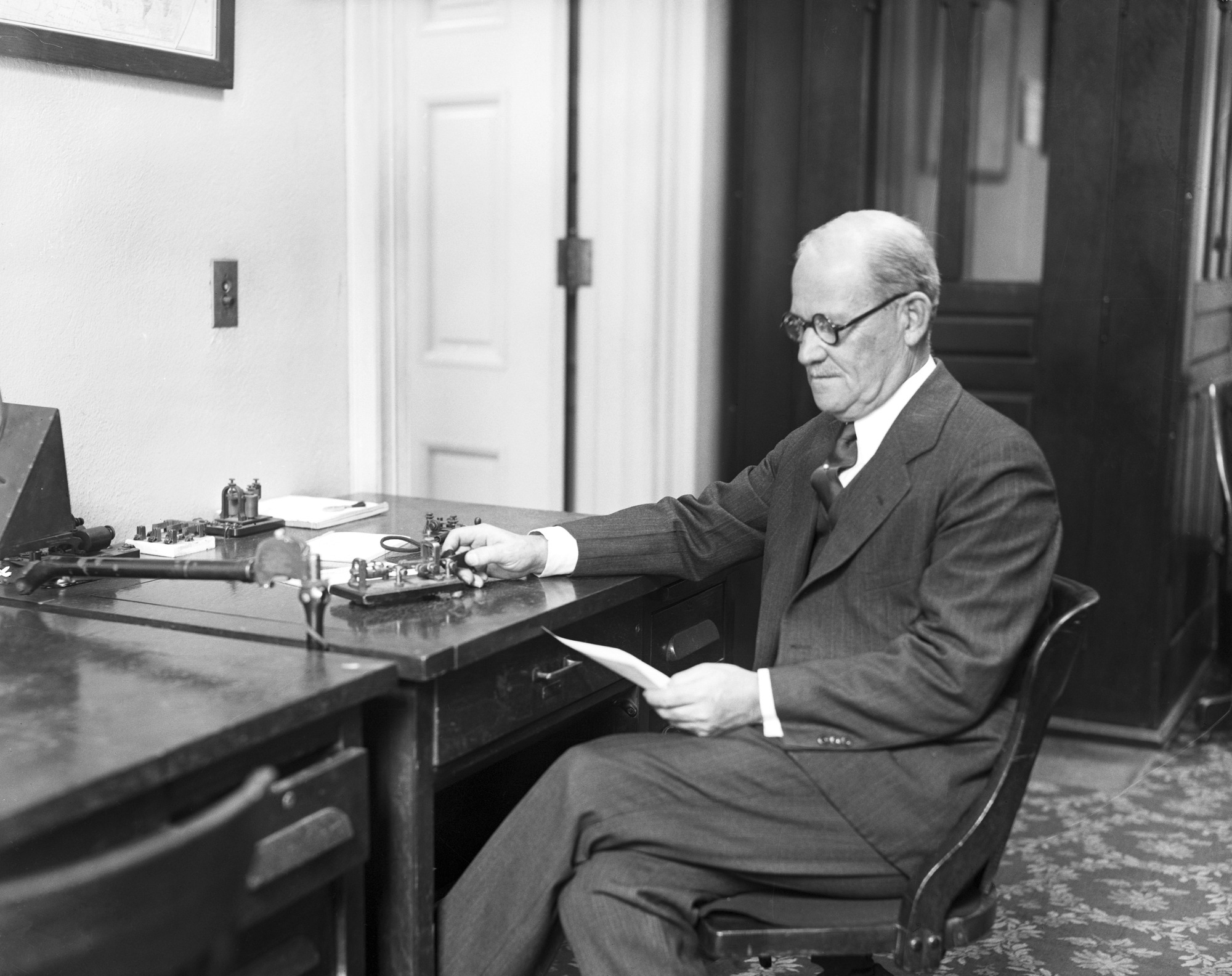 Edward Smithers, the telegraph operator for several presidents, works on a telegraph at the White House in 1928. (Bettmann/Getty Images)
That day in DC, he tapped out a message in the system of dots and dashes he’d invented, then received it, via the wire, in another room. The assembled congressmen seemed skeptical; some ridiculed him.
Network goods aren’t actually useful until you’ve built the entire network. Despite the skepticism, Congress narrowly voted to fund Morse, who then built a telegraph line along the railway from Baltimore to Washington.
- Residents played chess matches over the wires.
- Baltimore police telegraphed a description of a criminal fleeing by train to DC so the crook could be arrested at the station.
- Someone messaged a bank to ask about a customer’s creditworthiness.
People started to get it.
Within a few years, Morse’s company was racing to build telegraph lines faster than their competitors.
With network goods, the race to build the network tends to be winner-take-all. If a telegraph company wires an entire region and opens convenient telegraph offices, it becomes more difficult for a competitor to build a separate, parallel network and win customers.
With his early lead, Morse established large, profitable telegraph lines that transformed him into a titan of industry.
A century or so after the telegraph wired much of the world, a new network — the internet — arose, which enabled new kinds of network goods. The construction of these new goods was as simple and affordable as creating a website (thefacebook.com, ebay.com) or app (Uber, Hinge).
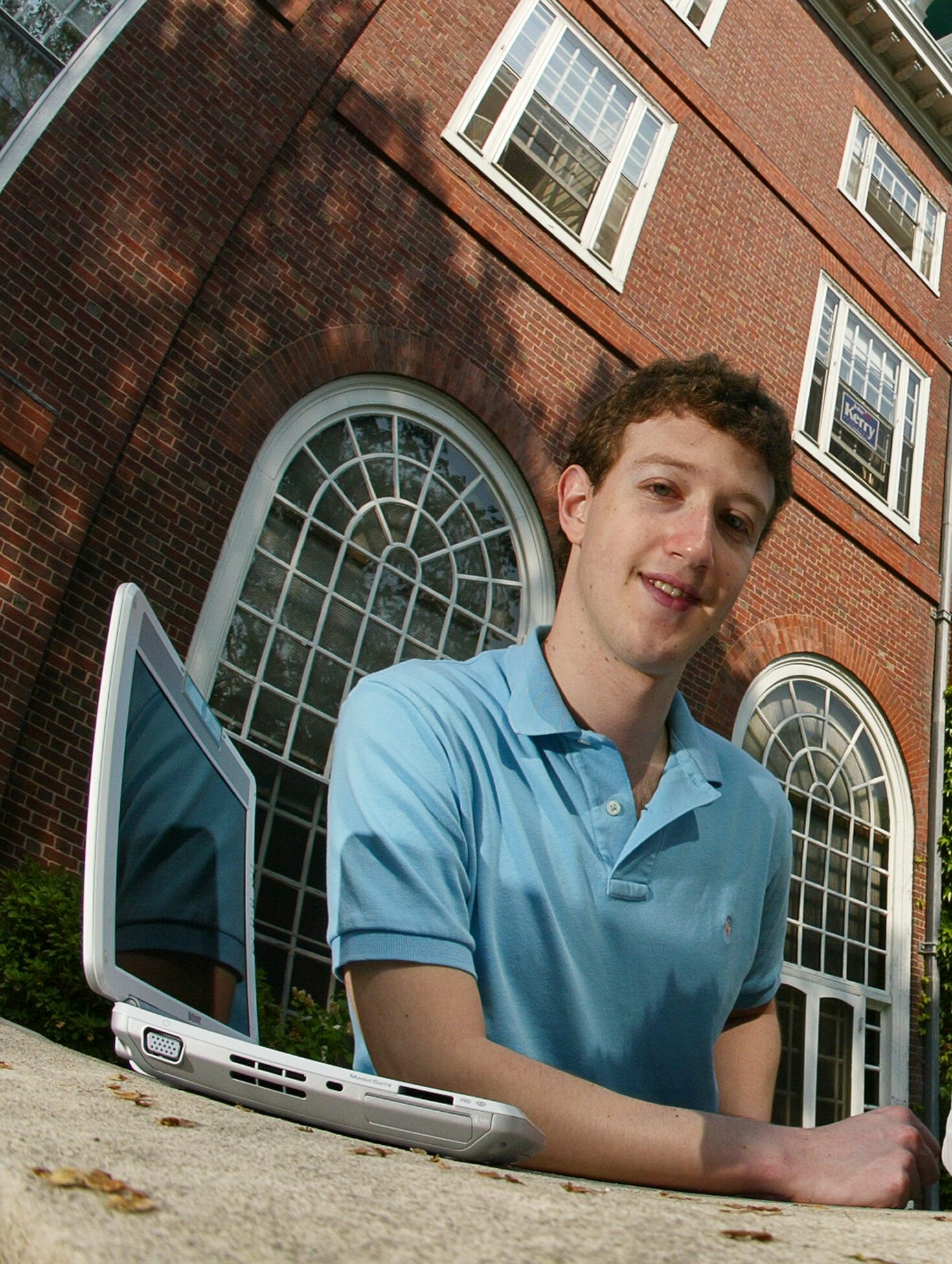
Mark Zuckerberg needed network effects to grow Facebook into a behemoth. (Rick Friedman/Corbis via Getty Images)
But companies still had to convince people that their networks offered value to the customer. Why download Uber if there aren’t already lots of drivers or customers?
The companies that solved this conundrum were rewarded with a network that grew increasingly valuable as more customers joined.
Investors and start-up founders love network effects. In the past few decades, a majority of the world’s biggest new companies have risen, at least in part, thanks to more people using their product:
- As more businesses sold their products on Amazon, the selection attracted more customers, which attracted more sellers.
- The data from Google search queries became a competitive advantage that allowed Google to continually improve its search algorithm and ad targeting.
- As more people joined, Instagram became more useful and entertaining. (Or at least increased FOMO.)
Network effects are a powerful concept in business. But their impact doesn’t end there.
Schrӧdinger’s Saturdays
Days, months, years. These units of time arise from natural phenomena: the sun rising and setting, the moon waxing and waning. A week, though, is a human invention.
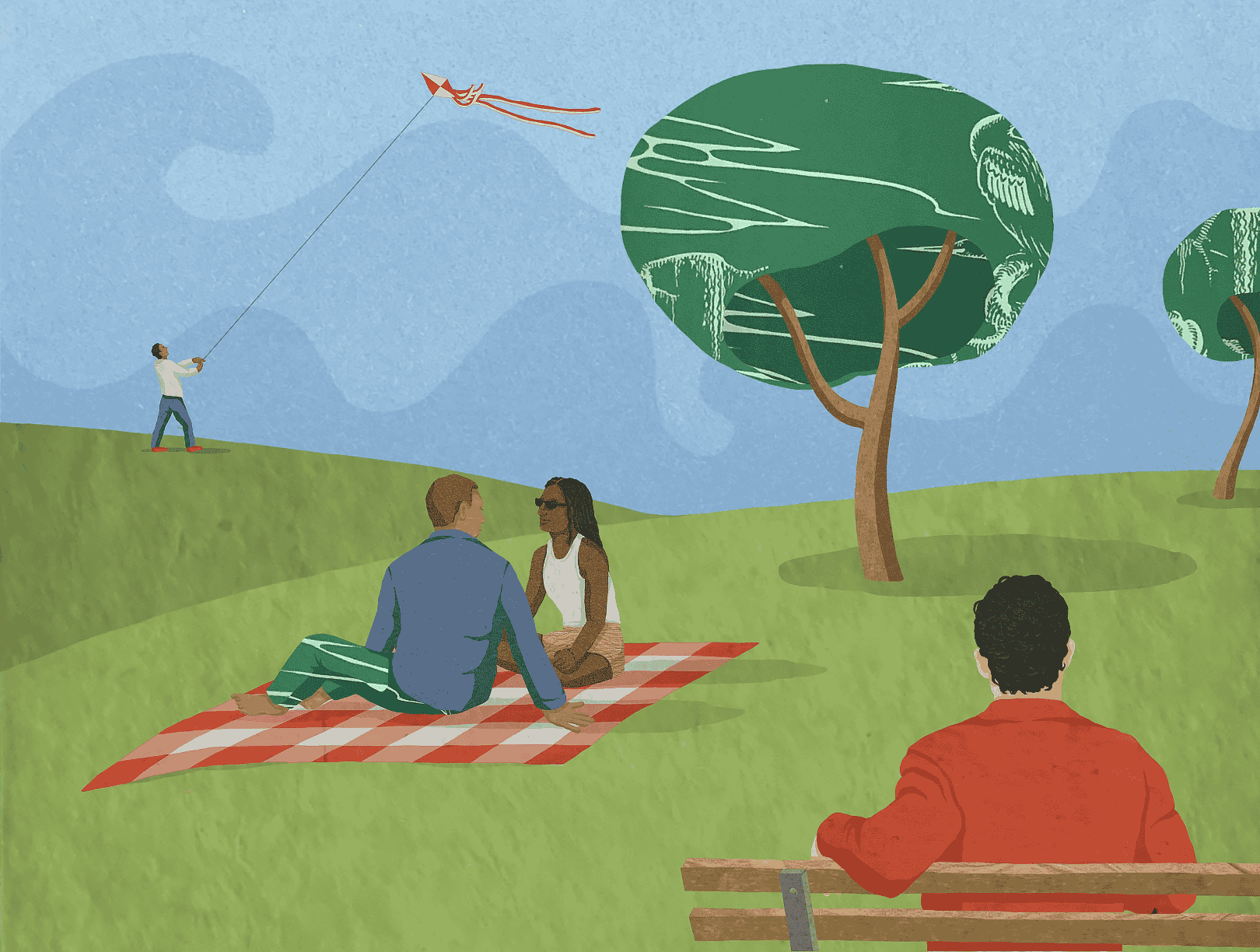
The idea of the weekend really started to codify after the Industrial Revolution created a clear distinction between work hours and leisure time. (In preindustrial agrarian societies, farmers rested when the day’s work was done or when the sun set, not at five o’clock sharp.)
 Olivia Heller/The Hustle
The workers who marched into New England’s textile mills and English coal mines generally had Sunday off as a religious day. They might also cheekily take Saint Monday, which was the euphemism for shirking on Monday to nurse a hangover.
The weekend’s official expansion had many protagonists and motivations:
- Unions lobbied for capped hours and time off.
- Henry Ford believed that a weekend would encourage road trips and car ownership.
- Executives used longer weekends to reduce hours during the Great Depression in order to cut costs and limit layoffs.
In 1938, the United States’ Fair Labor Standards Act established a 44-hour workweek (reduced in 1940 to 40 hours) and mandated that workers receive overtime after 40 hours, and the five-day workweek became standard.
The weekend meant more free time. It also created something new: weekly leisure time that the majority of the population enjoyed together.
We’ve now lived with weekends so long that many of its network-effect benefits are invisible to us. Like Apple’s app store (a classic network-effect business), the weekend became a platform for others to build upon: dance halls, sports arenas, country getaways to cater to weekenders.
“The modern idea of personal leisure emerged at the same time as the business of leisure,” writes Witold Rybczynski, a well-known architect and academic. “The first could not have happened without the second.”
Without weekends, you don’t get many giant music festivals and 80k-person stadiums. A world of nepreryvka doesn’t develop cute B&Bs for weekend getaways and restaurants that serve bottomless mimosas.

Coachella: likely not possible without a critical mass of people having weekends. (Karl Walter/Getty Images for Coachella)
Not everyone has weekends off, of course, and plenty of people prefer a free Tuesday so they can get chores done or enjoy uncrowded theaters, stores, or ski lifts.
Overall, though, the value of collective days off is so strong that researchers Cristobal Young and Chaeyoon Lim found that unemployed people reported almost as big a happiness spike on weekends as people with jobs.
“The essential characteristic of the weekend is not just the having of a day off,” they write in their paper Time as a Network Good, “but rather that other people have the day off.”
Yet even as the average worker has gained more leisure time over the last century, many people feel busier than ever.
That’s partly because the market has delivered us so many products and activities to spend our leisure time consuming. But many workers have also lost the clear demarcation between work and time off.
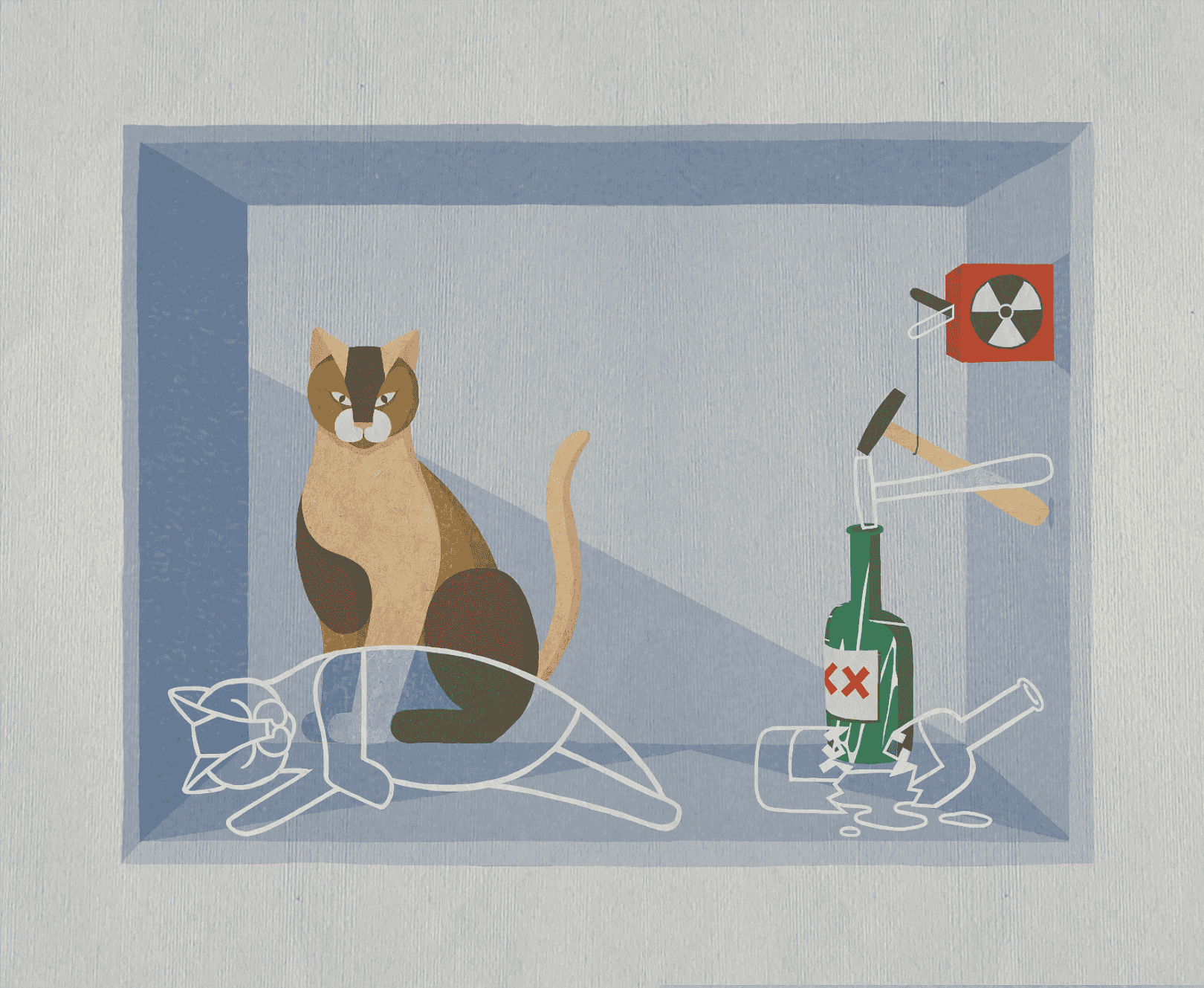
In the 1930s, physicist Erwin Schrödinger attempted to explain a counterintuitive principle of quantum mechanics using the example of a cat in a box. In his thought experiment, the box contains poison that will be released depending on the state of a subatomic particle. Until you open the box and check, Schrödinger’s cat is somehow both alive and dead.
Olivia Heller/The Hustle
Today millions of us have Schrödinger Saturdays — sure, we have the day off, but we’re expected to check our work email, which might send us scurrying to review a contract or respond to our boss.
Or we live according to the whims of just-in-time scheduling. Fast-food restaurants and clothing stores make workers show up, but then send them home if the scheduling software predicts a slow day.
The encroachment of work into free time reminds us of something fundamental about life. Economists spend lots of time thinking about money. But our most valuable resource is time.
Like dollars, time comes in different denominations. A free hour alone on Tuesday afternoon might be worth five dollars; a free hour on Saturday evening when all your friends are available for dinner might be worth 20. Stalin’s mistake was to replace everyone’s twenties with fives.

Olivia Heller/The Hustle
The innovation of weekends increased the value of our leisure hours; smartphones, always-on work culture, and addictive entertainment threaten to reduce that value.
Turning off your phone before a family meal; not answering emails in your off-hours; spending Saturdays with people you love — that’s putting the power of network effects to work in your own life.
You can order the Planet Money book and get tickets to their book tour at planetmoneybook.com.
economics