
Charm pricing has endured for centuries.
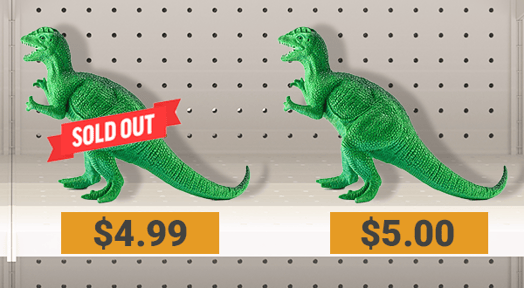
Pay close attention to prices and you'll notice that hardly anything ends in a zero.
- A standard Netflix subscription costs $19.99.
- Target had an online sale on Pokemon Crocs last month for $49.99.
- A variety pack of LMNT electrolytes went for $26.91 on Amazon.
These last-digit choices likely weren't made at random. The practice of intentionally ending a price in something other than a zero is often called charm pricing.
For decades, researchers have found that retail prices ending in precise numbers, often a nine, occur way more often than chance would predict. It’s one of the oldest psychological tricks in the capitalism playbook, dating back to the 19th century and enduring today.
In fact, charm pricing has been in the news recently. In 2025, the US stopped producing new pennies, prompting issues among retailers and consumers who lack the needed coins and leading to proposed legislation that would round prices at the register for cash purchases — and allow charm pricing on the shelves to continue.
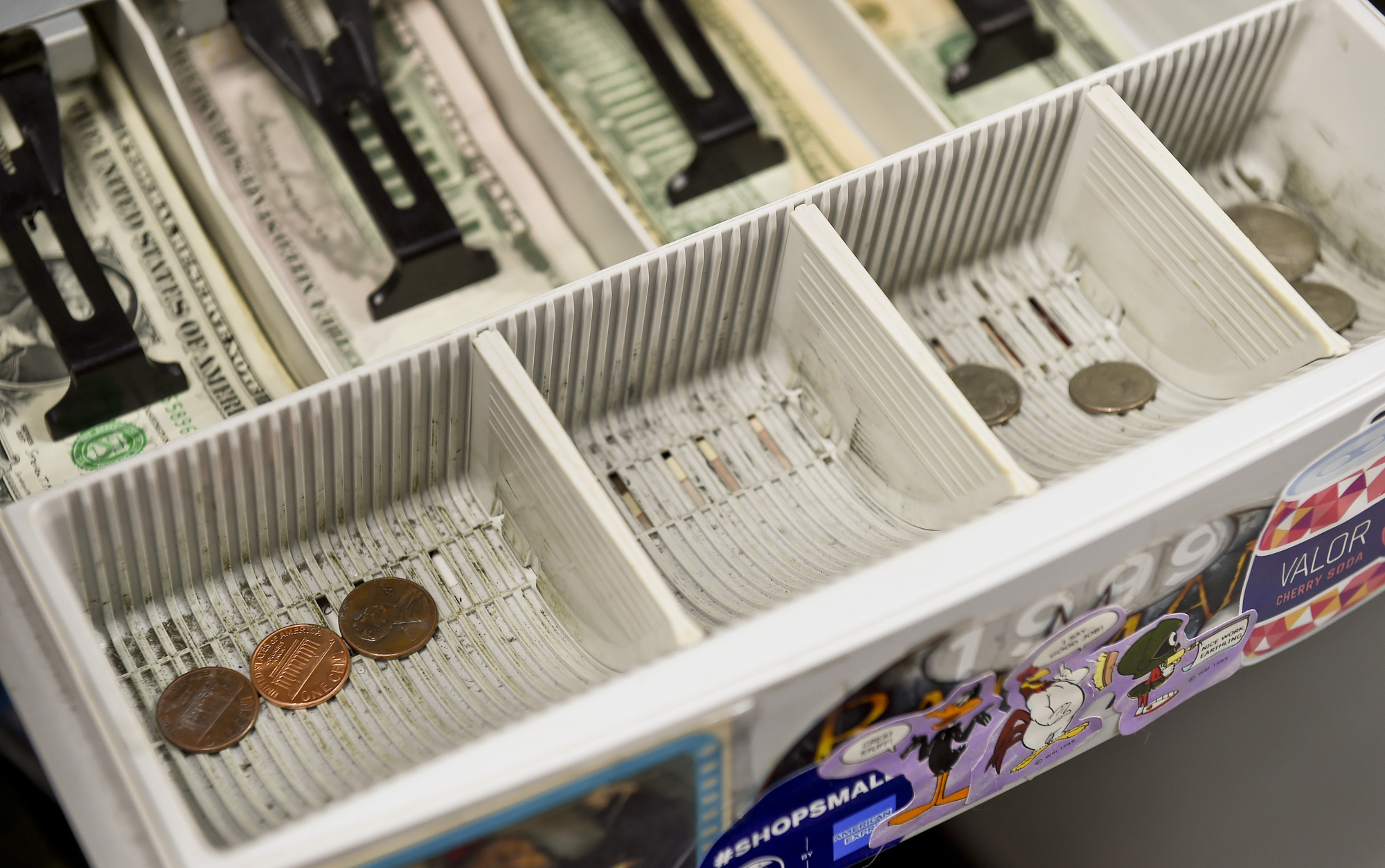 After the US stopped producing pennies, some retailers asked employees to bring pennies in from home to help make change. (Photo by Ben Hasty/MediaNews Group/Reading Eagle via Getty Images)
A simpler solution might be for retailers to stick to prices that can be paid with coins that still exist. But many other countries have also eliminated their lowest denominations, and businesses rarely go that route. The costs of giving up charm pricing seem too great.
How, exactly, did .99 pricing become so powerful? And will the spell of charm pricing continue, as the US penny fades into memory?
The ‘Incorruptible Cashier’
The story of charm pricing begins in 1879 with James Ritty, the proprietor of The Empire, a saloon specializing in fine whiskies, wine, and cigars.
Despite an invariably packed bar, Ritty’s business was struggling. He believed his bartenders were pocketing cash after pouring drinks, and the suspicion provoked something of a nervous breakdown.
He set sail for Europe to convalesce. On a tour of the ship’s engine room, he was riveted by a mechanism automatically recording the movements of the ship’s propeller. He thought the same principle could be applied to a machine for counting coins in his store: an “Incorruptible Cashier.”
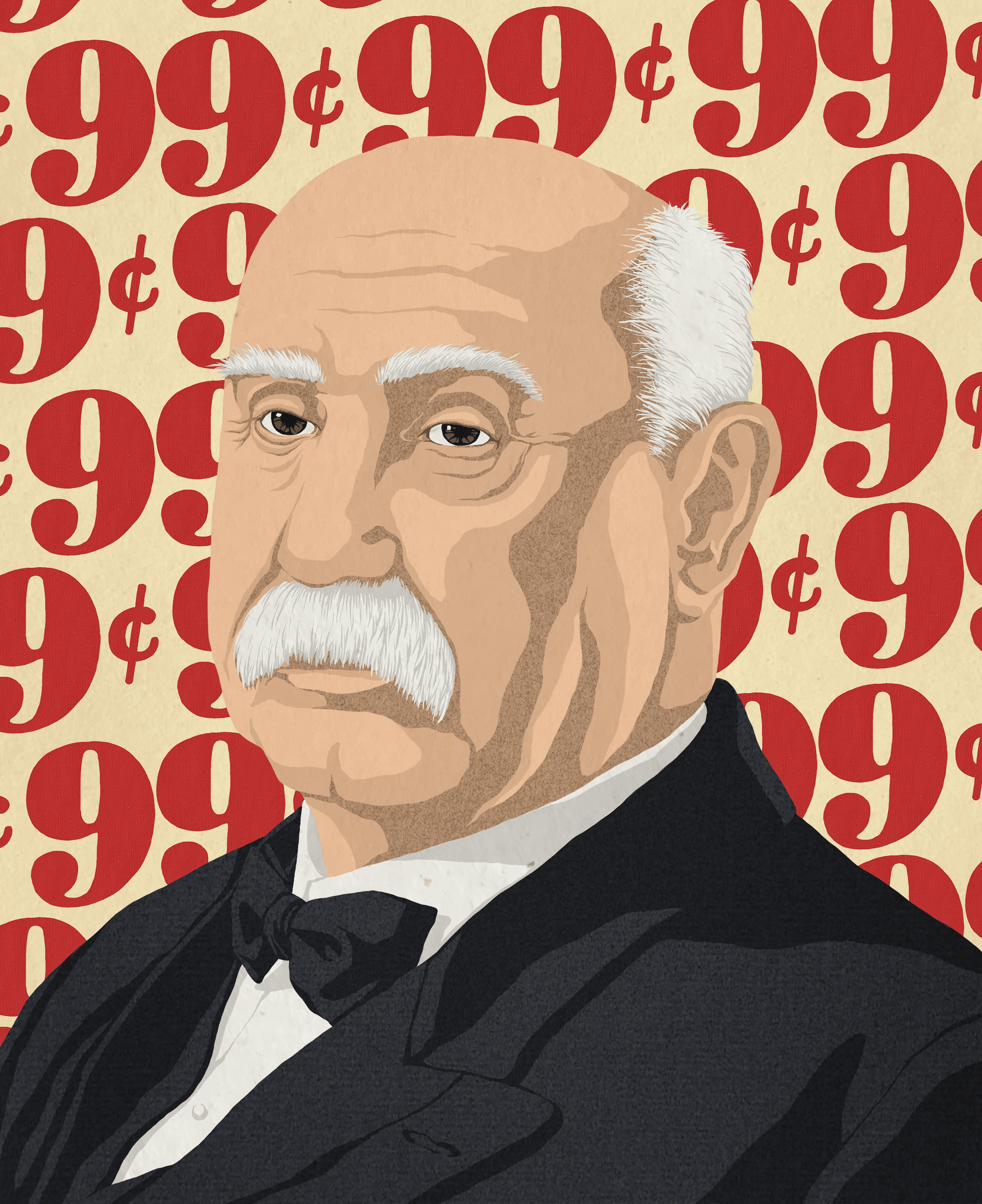 James Ritty. (Olivia Heller/The Hustle)
Ritty produced his own registers in a room above his bar in Dayton, Ohio, catching the attention of a coal magnate who’d grown suspicious of his own employees. John H. Patterson purchased a few registers, then the patent and the company. He paid $7,750 in 1884, or ~$250k today, and gave his new business a descriptive name: National Cash Register Company.
Patterson knew his “thief catchers” were pricey — as much as $250, more than $8k in today’s dollars. But experience had convinced him that his new machines would quickly pay for themselves. He placed advertisements that blared “Stop the Leaks!” in major US city newspapers, warning other merchants to be wary of their workers.
“He devoted his entire life to making sure every retail store on Earth had a National Cash Register, and a register from no one else,” says Gary Hoover, executive director of the American Business History Center.
His methods were innovative and often relentless. They included:
- Hiring private detectives to surveil his customers’ establishments, mailing them typewritten reports on how clerks were handling transactions, and if they were registering them properly.
- Developing “The Primer,” credited as the first sales manual, complete with detailed scripts and choreographed hand gestures.
- Hosting the first sales conferences, with separate conferences for wives.
He showed no mercy to competitors, as they emerged. “Before any of the weak ones get strong, we must crush them out,” he wrote in the company newsletter. He hired a squad of “special men” charged with sabotaging competitors by jamming their registers with sand, bribing freight agents to hold their shipments, and blackjacking, or clubbing, their salesmen.
NCR, as it became known, dominated its industry for over a century. It was acquired by AT&T for $7.4B in 1991.
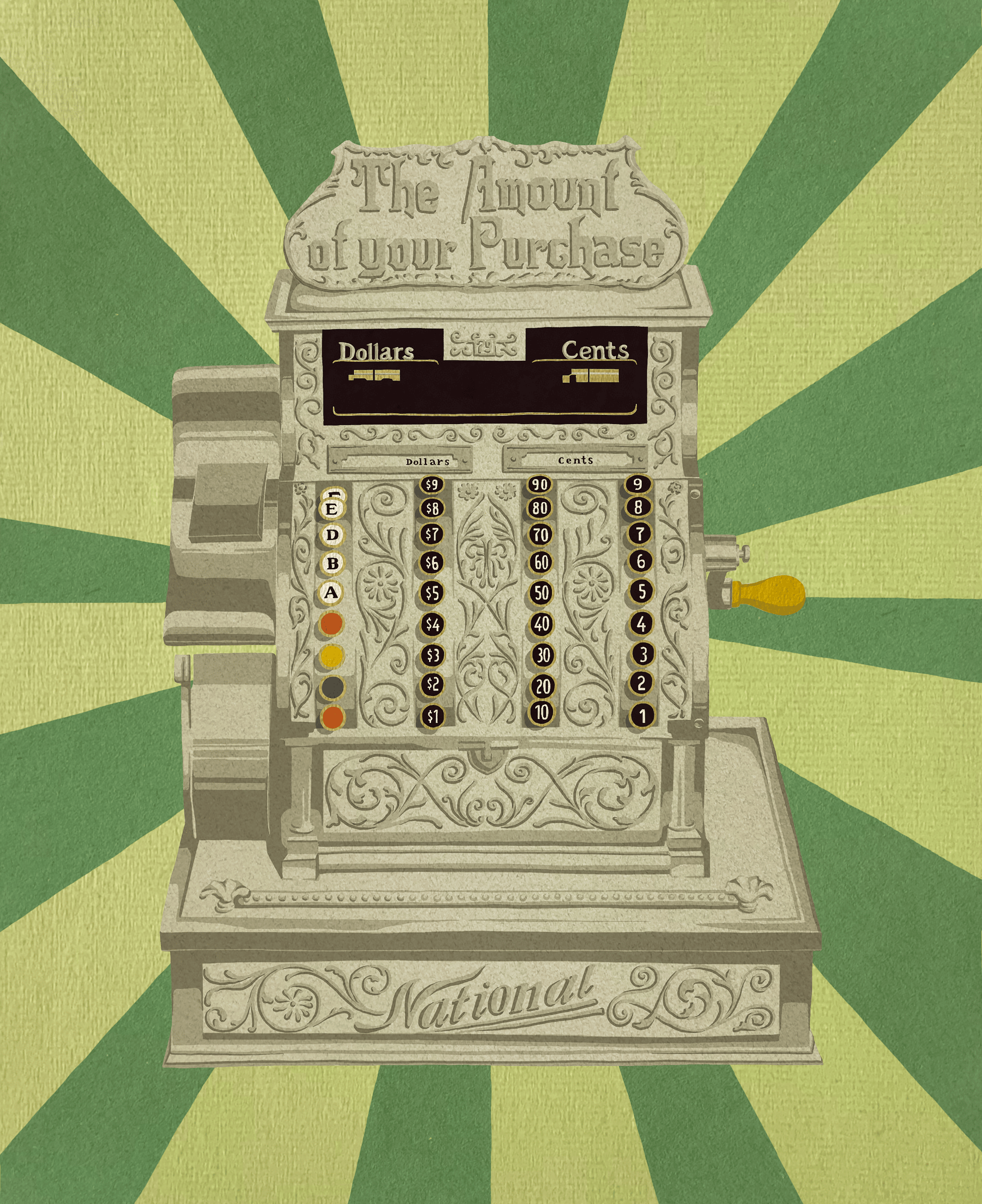 Olivia Heller/The Hustle
In the meantime, NCR’s cash registers became a fixture on retail counters all over the world.
Charm pricing did too: it was a cash register’s silent partner in theft prevention. Setting a price that required pennies made sure clerks needed to open the register for every sale, which made it harder to pocket cash undetected.
Merchants also soon realized it had another benefit. Products priced that way often outsold items priced on a round number.
Peanut butter and heuristics
Mention “charm pricing” to an academic or a pricing professional, and they’ll usually cringe.
“Charm pricing has a connotation of pricing at an earring shop at the local mall,” says Jeet Mukherjee, CEO of Veyebo, a pricing consultancy. He prefers to call it psychological pricing.
For researchers in the field, “charm pricing” describes prices designed to subtly appeal to personal or cultural associations with certain numbers. (The word “charm” is used in its magical sense.) This could include adding the number seven to a price because it’s considered lucky.
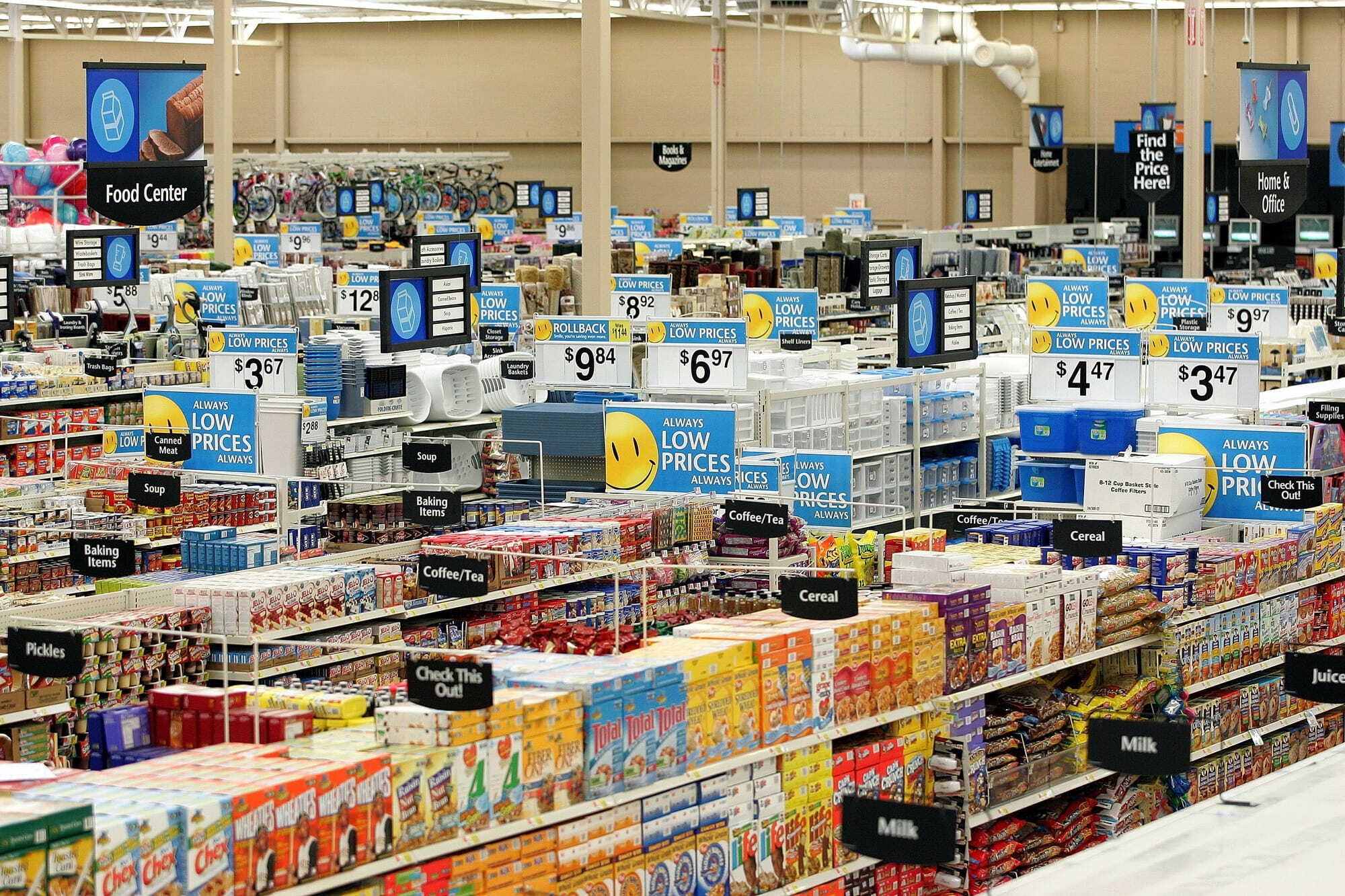 Walmart has long employed charm pricing to help shoppers feel they’re getting a deal. (Photo by Tim Boyle/Getty Images)
The main reason for charm pricing, however, is to make consumers feel like they’re getting a bargain — through something known as the left-digit effect. The left-digit effect causes us to overemphasize the first number we read.
Manoj Thomas, professor of marketing and management at Cornell University, who has studied the effect for decades, says it’s the result of our brains processing information quickly.
In one of Thomas’s studies, consumers compared the price difference between premium and generic peanut butter. When the generic was $2.99 and the premium was $4.00, consumers experienced the gap as significantly larger than when the generic was $3.00 and the premium $4.01. (You may have to reread that sentence to overcome the effect, but the difference between the prices is identical.)
The brain anchors on the first number, shorthanding $2.99 as “about $2.00” rather than “about $3.00,” Thomas says. “It’s almost like a visual illusion.” The effect happens even when you’re aware of it.
Time diminishes the left-digit effect — to remember a price, you’re likely to accurately round it — but when you’re quickly comparing prices, the left-digit bias is basically impossible to overcome.
Charm pricing is also a reason to avoid certain numbers with negative associations. Because the word for the number four in Mandarin Chinese sounds like the word for death, businesses targeting Chinese customers tend to avoid it.
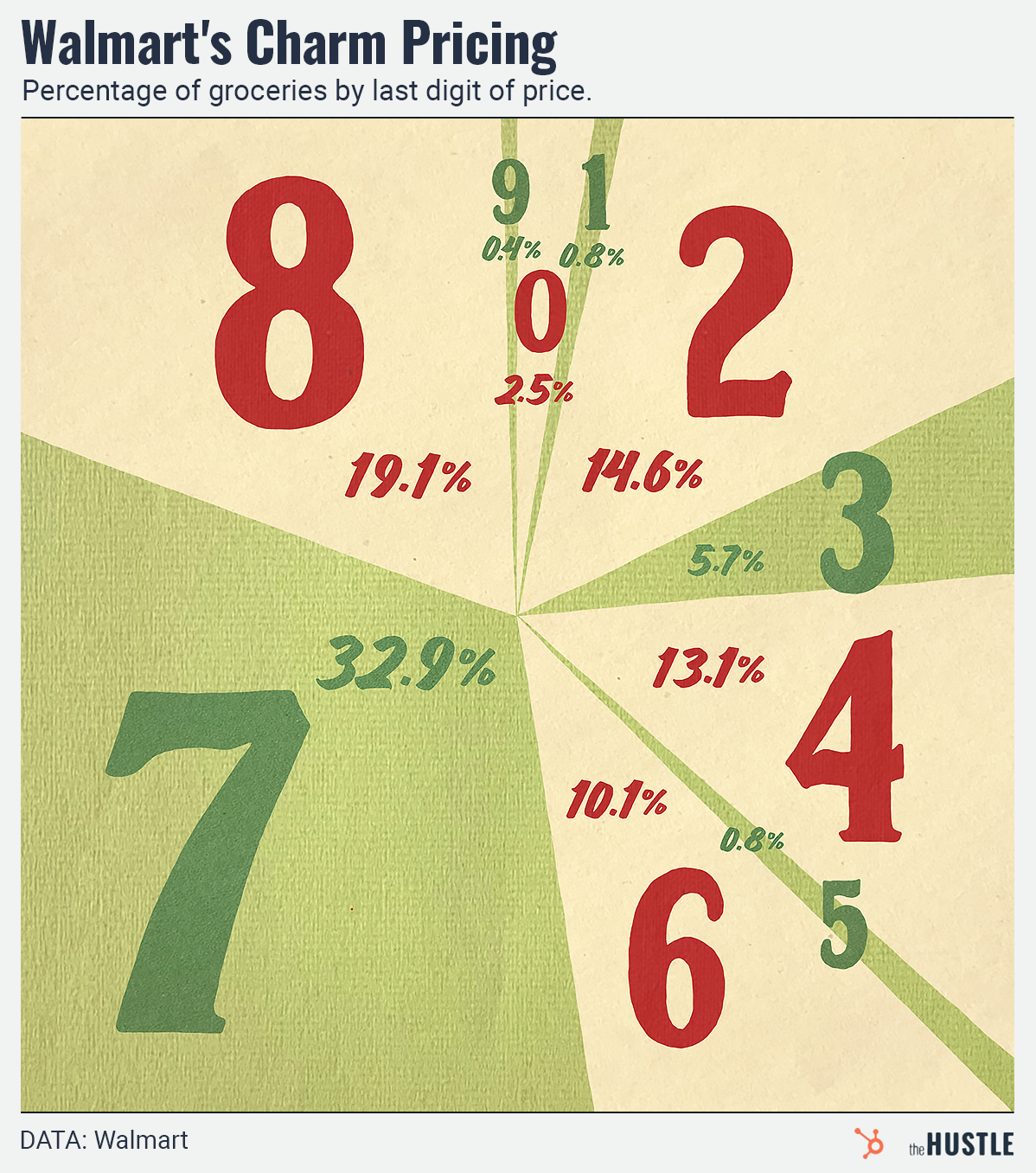 Note: 513 grocery items from online store on April 24. (Olivia Heller/The Hustle)
It’s also partially why premium brands tend to price on the .00, and avoid .99, a reaction against its entrenched “bargain” association. Indeed, as the cost of an item rises, the prevalence of prices ending in a nine decreases, according to an analysis of 58k online shoe prices in the Journal of Business Research.
You can see this phenomenon just by comparing groceries at Walmart to Erewhon, the famously luxe Los Angeles grocer.
- A Hustle analysis of prices for more than 500 online grocery items at Walmart indicated that just five items (~1%) ended in .00. (The most common last digit was a 7, with .97 appearing ~16% of the time.)
- Erewhon’s online store featured 89 grocery items (including $17 flake salt!). Seventy-seven, or 87%, ended in .00.
Charm pricing can also get extremely niche.
When Gigawatt Coffee Roasters in Chicago raises prices for their online products, owners Jennifer and Eliot Coleman have often landed on a number that includes a 33. They priced a bag of beans at $11.59, for example, because with a 10 percent subscriber discount, it penciled out to $11.33, and a bundle price at $33.33.
The number is significant to the listeners of the popular No Agenda podcast. Eliot Coleman is a sponsor, and has been a guest on the show; listeners are a loyal segment of their customer base.
“Part of the joke in the community is that once you see how often the number 33 is mentioned, you keep on seeing it everywhere,” Jennifer Coleman says. “The people in that listener community recognize it instantly and feel seen, and everyone else just sees a fair bundle price for three bags of coffee.”
The curse of crossing .99
Many major corporations have misunderstood the left-digit effect — to their detriment.
JCPenney’s “Fair and Square” pricing experiment is a classic example. In 2012, the retailer made a slew of changes to shed its bargain image, and that included eliminating .99 pricing. (CEO Ron Johnson wanted to eliminate what he reportedly called “fake prices.”)
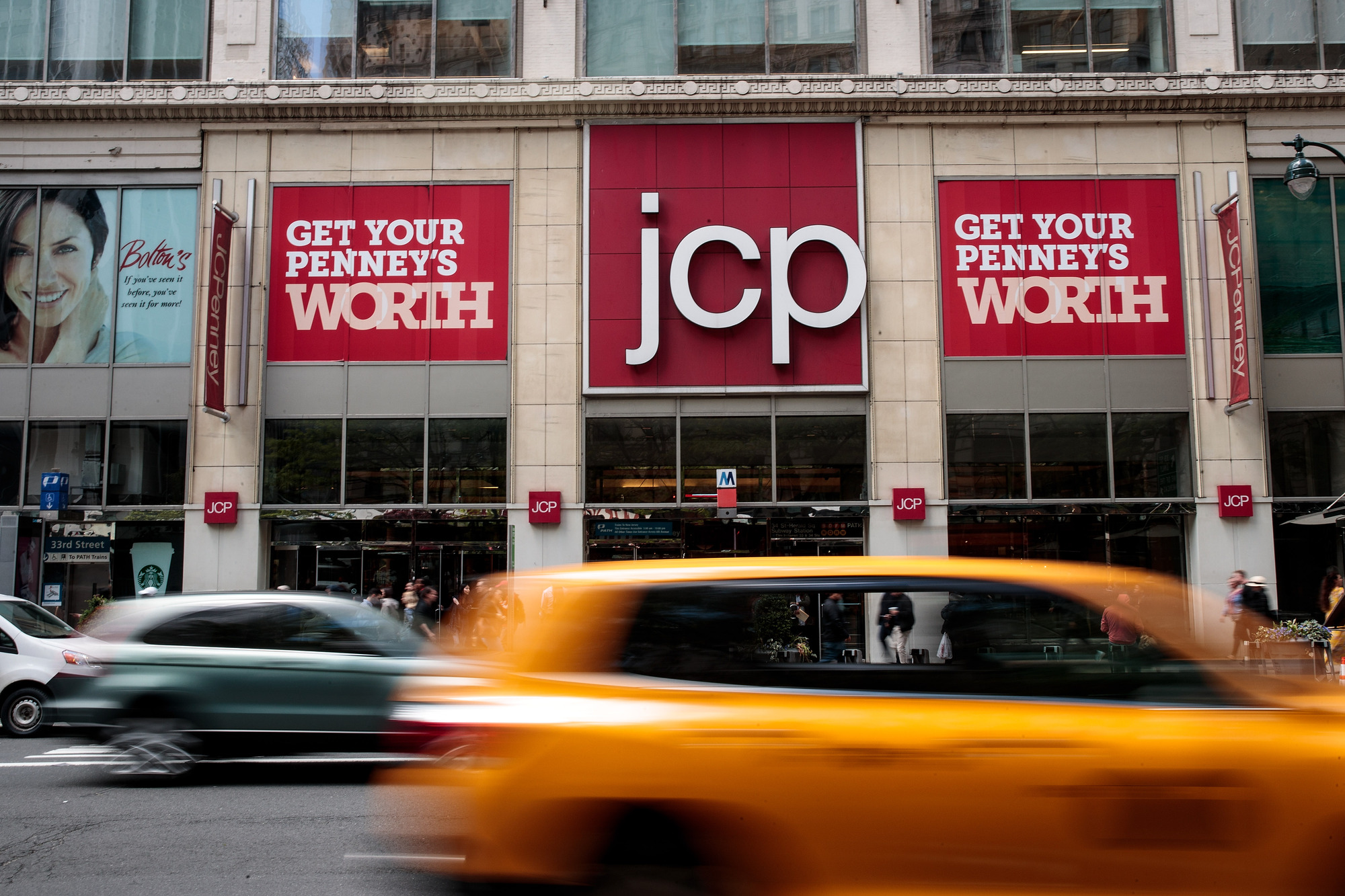 JC Penney’s pricing experiment in 2012 became a cautionary tale. (Photo by Drew Angerer/Getty Images)
Although this accompanied substantial price reductions, consumers believed the store had actually become more expensive. The company lost ~$1B that year and quickly changed course.
Cautionary tales like these are one reason why there is almost a talismanic belief in .99 pricing, even as the penny fades out and lawmakers consider rounding laws.
Last year, a bill called the Common Cents Act was introduced in the House and Senate that would establish rounding rules for all cash transactions. Retailers would have to raise all their .98 or .99 prices to .00 on their price tags or risk angering cash-paying consumers by ringing up a slightly higher price at the register. Neither bill has gained momentum.
In any case, it’s important to remember that .99 only became entrenched because it’s historically been the least expensive way to leverage the left-digit effect. It’s not the penny discount that gives it power, says Thomas: the first digit is actually where the “charm” lives.
“The effect would be exactly the same if you use 2.95 instead of 2.99,” he says. “You can ban the penny but it’s not the same as banning this pricing practice.”