Remember the old dad joke: Why do cemeteries have fences?
Because people are dying to get in. (Badum-tss.)
Well, those fences could prove useful considering that many cemeteries are running out of room to bury the dead, with some even looking to utilize vertical mausoleums and closed schools.
Faced with limited space and an increasing number of annual deaths, some cemeteries are considering greener, space-saving alternatives to traditional burials and cremations.
- Around 3m Americans die annually — expected to climb to 4m over the next 20 years, according to the National Funeral Directors Association (NFDA).
- Today, 61.4% of people expressed interest in "green" funeral options.
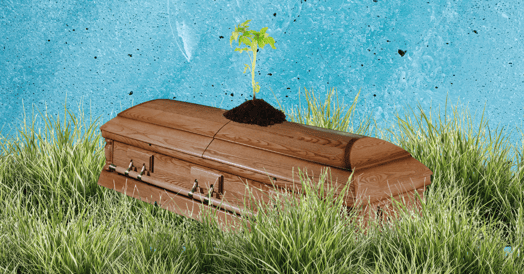
Brooklyn's historic Green-Wood Cemetery plans to be the first on the East Coast to offer "natural organic reduction" — or human composting, per The Wall Street Journal.
The nutrient-rich material could be used for the cemetery's greenery, while saving space and meeting growing demand for more environmentally sound and affordable means of memorializing loved ones.
Compost mortem
For its human composting project, Green-Wood Cemetery is working with Berlin-based startup, Meine Erde (My Earth).
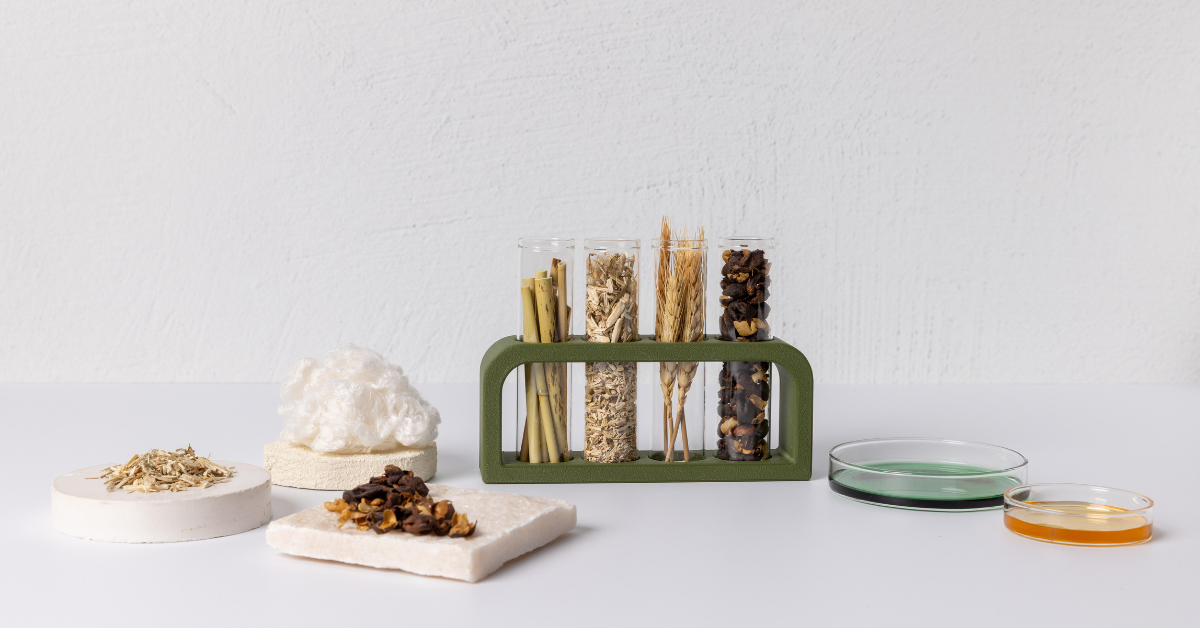
- Bodies are sealed in temperature-regulated vessels — or "cocoons" — full of straw, hay, and clover.
- The cocoon gently rocks for 40 days while microbes break down all but the bones, which are then ground into the mix.
- The process costs roughly $5k — about twice the cost of a basic cremation, but less than the $8.3k median cost of a burial.
Meine Erde is far from the only deathcare startup to offer human composting. Washington, the first of 14 states to legalize the practice, is home to four companies, including early pioneer Recompose.
Other startups offer similarly eco-friendly alternatives, including memorial reefs, mushroom coffins and burial suits, and natural burials.
Not everyone, however, is thrilled at the growing interest in burial alternatives, including religious groups, and, not surprisingly, traditional funeral-service providers who worry about losing their share of America's $20B deathcare industry.
But Christopher Robinson, former president of NFDA, notes that with only a few human-composting facilities in the US, the association's 11k funeral homes probably don't have to worry.
Of course, now that Martha Stewart said she wants to be composted, we may have a serious trend on our hands.
%20(1).png)