Ninety-one people were bitten by sharks in 2023, but biologist Dr. Laura Ryan may have a way to drop that number: lights!
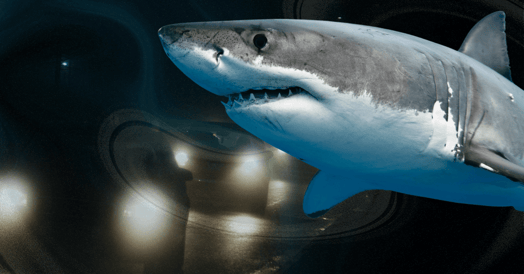
Outside of a Jaws: The Revenge situation, sharks generally attack people when they confuse something unappetizing, like a surfer, for something tasty, like a seal. Ryan’s work involves arranging LEDs on seal-shaped decoys to see if sharks are less likely to attack, per The Times.
- Lit decoys were attacked less often than unlit control decoys.
- The brightest lights resulted in zero incidents.
Ryan’s team is now developing anti-shark lighting arrays for surfers.
But you don’t have to be a shark…
… to hate having lights shined in your eyes. You could also be a motorist driving at night.
You’ve likely noticed car headlights getting brighter over the last decade or so, which is due to bluer LED lights on new cars.
New LED headlights are only as bright as old halogen headlights, but the system used to measure them doesn’t account for the brighter blue tint.
The human eye can clearly perceive the difference, which is why they’re so unpopular.
What’s the solution?
“Adaptive driving beam” headlights that automatically adjust around other vehicles.
They’re available almost everywhere but the US, where outdated regulations have made it easier for automakers to just install bright LEDs and call it a day.
This raises the question: Are the sharks getting confused, or do they just hate those damn LEDs shined in their lifeless, black eyes? Sharks aren’t so different from us after all — Who doesn’t love a tasty seal?
Science and research
%20copy-2.png)
%20copy%2017.png)
%20copy%2013.png)
%20copy-1.png)
%20(1)%20(1)-1.png)
-1.png)