.jpg?width=48&height=48&name=IMG_2563%20(1).jpg)
If you’ve ever watched a ballerina seemingly defy gravity while on the tips of their toes, you’ve probably thought “wow.” And also, “ouch.”
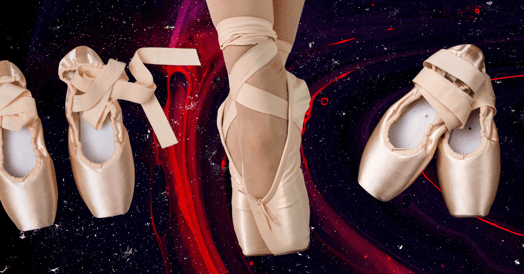
Both are warranted: The dance style is beautiful, but it can be painful and physically demanding, in large part thanks to pointe shoes.
What’s the pointe?
With its flattened end designed to let the wearer stand on tiptoe, the pointe shoe is an ingrained part of ballet. It’s also an expensive one.
And while most of us would just need one pair of dancin’ shoes (or none — no one should have to witness that), ballerinas burn through their slippers at record pace.
- One ballerina told The New York Times she goes through one or two pairs of shoes a day while dancing in “The Nutcracker.”
- The New York City Ballet alone spends nearly $1m a year on ~7k pairs of pointe shoes.
But traditional dance companies like Freed of London — which has been in business since 1929 and supplies pointe shoes to the Paris Opera and New York City Ballet — have some teams producing shoes by hand, meaning ballerinas can wait 12+ months for a pair.
Barre none
While some ballet companies require their dancers to don certain shoes, and many dancers feel strongly about tradition, there’s a growing industry of companies trying to make a better pointe shoe.
- Gaynor Minden says its shoes last 5x longer than traditional ballet shoes and shock-absorbent foam and a polymer toe box bring increased support.
- act’ble 3D-prints its shoe soles and allows dancers to order replacement parts rather than having to purchase an entirely new pair.
Pointe shoes were not the only slippers in need of a makeover: Men’s soft ballet shoes, which have been mostly untouched since the 19th century, have long lacked the cushion afforded to athletes in other sports.
Orza, created by a former dancer, is fixing that with shock-absorbing sneaker tech with ballet shoes that offers a supportive heel and layers of foam cushioning for tiny toe bones.
The shoes might be getting comfier but don’t leap to any conclusions — grace is still required.
%20copy%204.png)
%20copy%203.png)
-1.png)
-1.png)
%20(1)-2.png)