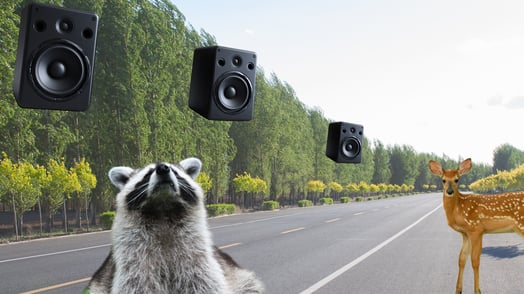
You know that part in Hoppers where the human developers who want to build a highway through a wildlife habitat plant speakers disguised as trees to scare the animals away by playing sounds only they can hear?
Maybe you don’t (which is fair… You’re probably an adult and it’s a children’s movie).
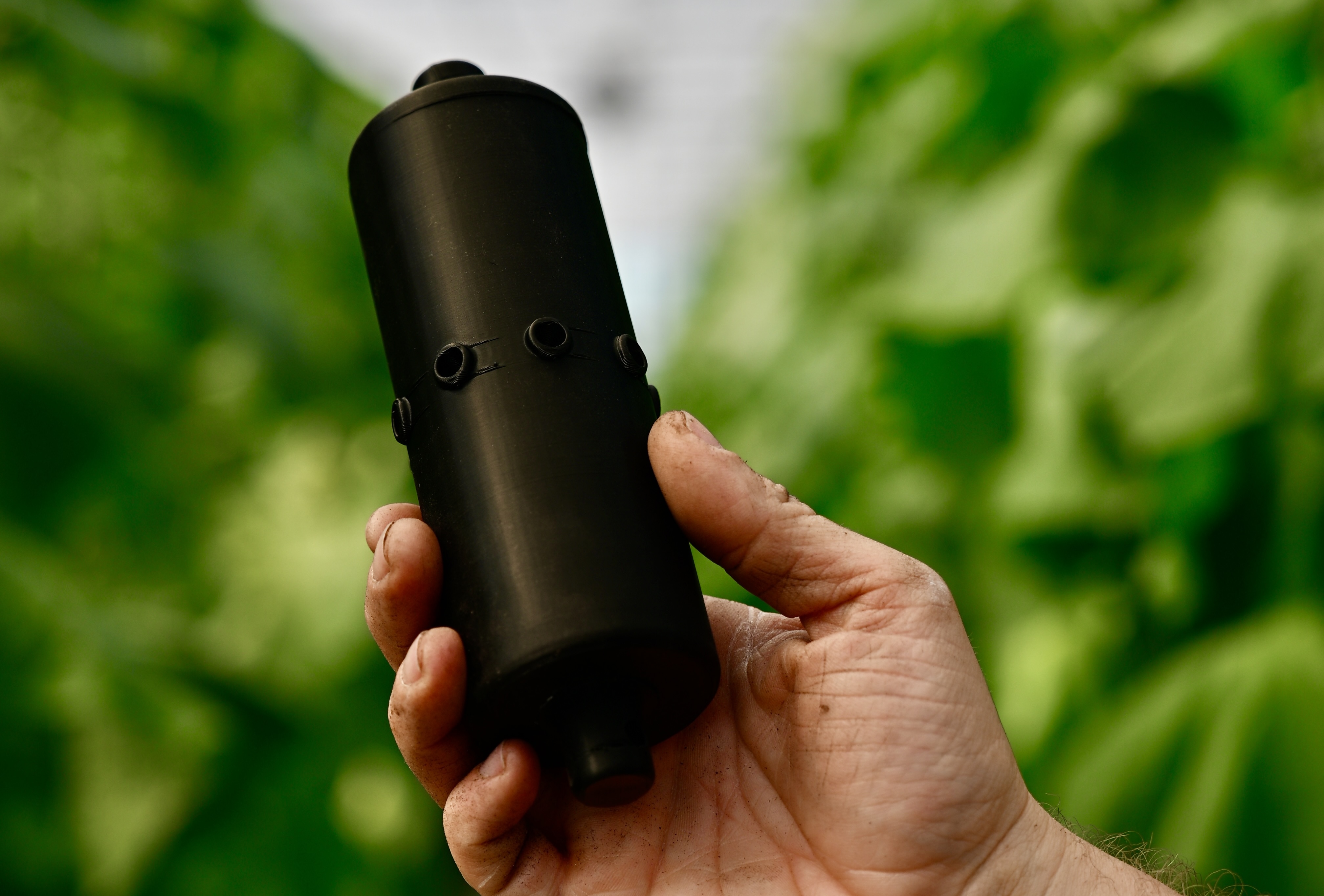
The point is, that’s essentially the concept behind Flox Intelligence’s new AI-powered Edge device — except, instead of using tech against wildlife, it uses tech to protect wildlife from existing man-made environmental dangers, like train tracks, airports, and mining facilities.
How it works
- The battery-powered device, which can be strapped to trees or other tall structures, operates 24/7.
- It uses an AI-enabled camera to detect and identify a range of animals, from migrating geese to rabbits to moose, from as far as 131 feet away.
- When it sees one approaching a hazardous area, it uses AI to generate species-specific bioacoustic sounds to signal danger, or “communicate” with the animal, per The Daily Orange.
- The device’s owner can then review a comprehensive report of the incident, as well as footage, which is uploaded to a cloud server.
Since launching in 2025, Edge, which Flox compares to a “digital sheepdog or a dynamic invisible fence,” has already helped guide 60k+ animals out of harm’s way.
It costs $3.5k, plus a $500 annual maintenance subscription after the first year.
A critter-cal solution
The startup, founded in Stockholm and based in Syracuse, views its tech as a modern, harm-free method of animal regulation that’s become increasingly necessary.
“We turn wildlife communication into coexistence in all shared landscapes,” co-founder Sára Nožková told The DO. “As humans take more space from them, we need to figure out a better way to coexist.”
It recently raised $3m in funding and is already working with orgs like the World Wildlife Fund, the Department of Agriculture, and the Department of Transportation, helping to:
- Prevent wildlife collisions
- Keeping public spaces clean
- Protecting livestock and crops
But Nožková says the goal is to eventually be “everywhere,” including home gardens — so long, scarecrows.
%20copy%2011.png)
%20copy%202.png)
.png)
%20copy%2013.png)
%20copy%2010.png)
%20copy%209.png)
%20copy%208.png)
-1.png)