

👋 Good morning. And, if you have an English lit degree, good luck. Just kidding (kinda), but the degree has fallen from the No. 4 spot to No. 16 on the National Center for Education Statistics' list of the most common fields of study in the US since 1970. Business has held the No. 1 spot since 1980 with 368k degrees conferred in 2024, 50% more than health, the No. 2 field of study. The pen might be mightier than the sword, but it’s not as mighty as being able to put “MBA” on your LinkedIn profile.
STARTING UP

Can AI spot cancer before your doctor can?
❌ The problem: Pancreatic, lung, and liver cancers are hard to catch early, but doing so is the most effective way to cure the diseases.
💡 The pitch: Xlue is training an AI model on millions of patients' medical records to flag patients at high risk before they develop symptoms. Its tool, CATCH-FM, analyzes patient trajectories to predict future cancer risk with a ~50% accuracy for first-time cases and ~70% for recurring cases.
🚀 The outlook: The startup is exploring partnerships with major health systems and says the tech could one day be expanded to predict medical events like strokes or heart attacks. If AI can autocomplete your emails, it might as well try to save your life.
NEWS FLASH
-
Uber’s empire gets bigger: SpotHero, a parking reservation app, is being acquired by Uber for an unknown sum. The rideshare and food delivery giant will use SpotHero’s tech to power a parking reservation feature in its own app for events, venues, and airports.
-
Weather report: The creators of Dark Sky — the weather app acquired by Apple in 2020 — are back with Acme Weather. Co-founder Adam Grossman wrote that the app embraces weather’s uncertainty by offering a data-derived forecast alongside alternate possible weather outcomes. Plus, you can have it notify you if there’s a cool rainbow outside.
-
Monkey business: Plush orangutans that once retailed for $20 at Ikea are now listed for hundreds on eBay because Punch, the internet-viral baby macaque abandoned by his mother and raised by zookeepers at Japan’s Ichikawa City Zoo, carries one around. Punch is currently attempting to integrate with new primate friends.
-
Keep it going: Startup 222 began in 2021 as a dinner series, launched an app in 2024, and has since raised $13.7m. In its current iteration, users take a personality quiz to get matched for social events. If two people agree they’d like to hang again or go on a date, 222 sets it up.
PROMPTS GALORE
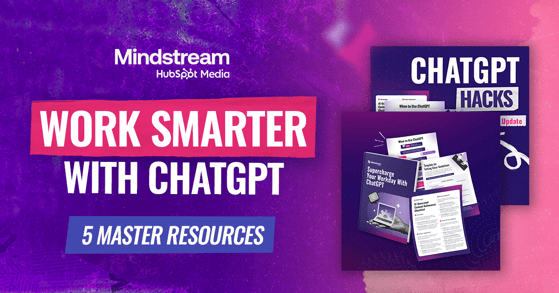
ChatGPT hacks for business professionals
Time to stop dabbling and start dominating. While you’ve been twiddling thumbs, other folks are souping up their startups or making passive income.
Why not both? Get started with 100+ ChatGPT hacks, complete with four bonus resources for navigating sales, marketing, management, and customer support.
- 100+ powerful AI prompts
- Brand style template
- When-to-use flow chart
- Content refinement checklist
- AI adoption worksheet
Don’t get caught up doing nothing.
THE BIG IDEA
A real appetite for fake food
Were you ever tempted to nibble those rubber grapes collecting dust in your grandma’s house?
You'll want to restrain yourself.
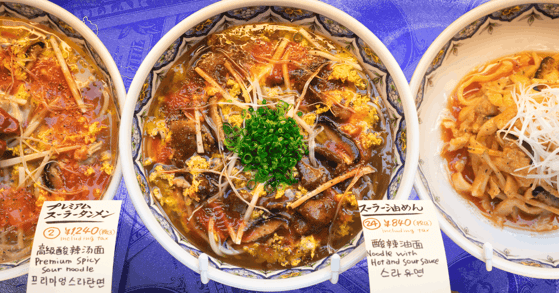
There's an entire industry devoted to lifelike food replicas so convincing that signs warn, "Don't eat the plastic models."
Welcome to the world of "shokuhin sampuru," a Japanese tradition of handcrafted, hyperrealistic food models that's evolved into a $90m industry, per The New Yorker.
More real than the real thing
Shokuhin sampuru first appeared in Japan in the 1920s, as urban restaurants aimed to attract an influx of rural workers using wax models of unfamiliar foods and fashionable Western dishes like spaghetti.
Since wax models would melt and discolor (yum!), ultra-durable polyvinyl chloride (PVC) became the preferred material (tasty!).
- Entrepreneur Takizō Iwasaki launched the first sampuru business in 1932, according to a recent exhibition on food replica culture at Japan House LA.
- Iwasaki Co. now accounts for 70% of the market, supplying models to many of Japan's 1.4m restaurants, which often rent them for a monthly fee.
- In 2017, the company, along with its sister company, earned $46m in annual sales, per The Economist.
Today’s models are still handmade, often molded from the food they're imitating. While straightforward models are priced at ~$100-$200, like this bento box and burger, premium models, like this honeycomb, can cost thousands.
At Iwasaki's Sample Village and other shops, you can even create your own for ~$20. Or order a soba smartphone stand or tempura keychain instead.
Instagrammable food you'll never want to eat
Fake food is popping up everywhere these days:
- The MoMA Design Store's faux-food pop-up features everything from tempting apple candles to giant corn stools (every home needs one).
- Love "The Great British Bake Off," but hate soggy bottoms? Scotland's Fake Food Workshop sells lifelike renditions of UK favorites like Gala Pie ($91/slice) and Raised Game Bird Pie ($397).
- Artist Leanne “Elrod” Rodriguez transforms the kitschy iridescent glow of 1960s Jell-O into works of art with her Mexikitsch line.
Still have those plastic grapes kickin' around? Don't toss them (or eat them) — they're trendy again.
HIGHLY RECOMMENDED
Even the most unappealing products need advertising… but how do you sell them without scaring off your customers?
NEWSWORTHY NUMBER

Years of Walmart’s reign as America’s biggest company by revenue, a title it lost to Amazon last week after posting $713.2B in sales for the most recent fiscal year, coming in just a smidgen under the ecommerce giant’s total of $716.9B, per The Wall Street Journal.
Since it’s neither the biggest nor the fastest-growing — Amazon’s growth outpaced Walmart’s 12.4% to 4.7% in 2025 — the 63-year-old retailer has been focused instead on becoming “America’s favorite place to shop.” Though it might have to get creative about what metrics it uses to determine that, too: Walmart’s share of US retail spending hovers around 7.6%, compared to Amazon’s 9%.
HOW YOU HUSTLE
Our readers are always cooking up cool ideas. Here’s our weekly spotlight on a Hustle reader working on something big.
Who: Laura Schaack
What: Tattd
The elevator pitch: “Tattd is an AI-powered marketplace for the tattoo industry where clients can intelligently search, easily book, and securely pay their next tattoo artist.”
The problem they’re solving: “This $150B industry runs on DMs, cash, and hashtags. We're building the first marketplace to act as infrastructure between client and artist, with AI to boot.”
One truly innovative thing they’re doing: “We built the first tattoo-specific AI — smarter for this industry than ChatGPT will ever be. It matches clients to artists with real accuracy, not vibes. How? We own the world’s largest categorized tattoo image library, powering a proprietary tattoo-native algorithm. Patent pending and strong AF.”
What are you working on? Tell us here.
AROUND THE WEB
📅 On this day: In 1940, the first televised NHL game aired. About 300 people watched the New York Rangers triumph over the Montreal Canadiens at Madison Square Garden.
🎶 That’s cool: Add a note to this community-music project.
🖊️ Useful: Swap a weak adverb for a stronger verb.
📰 Newsletter: Girlboss Daily is a work email you'll actually look forward to.
🐱 Aww: So cozy.
SHOWER THOUGHT
It's interesting that trauma dumping is far more socially acceptable when done through song. SOURCE
Today's email was brought to you by Juliet Bennett Rylah, Danny Jensen, and Singdhi Sokpo.
Editing by: Sara "Faux real" Friedman.
Was this email forwarded to you? Sign up here.
Working on something big?
We've got a whole library of business-building resources for you.
Subscribe to our other newsletters
Stay up-to-date on AI: Mindstream | Expert insights: Marketing Against the Grain | Sell better: The Science of Scaling