Even the participants at the Westminster Dog Show, the best pups in the world, are unlikely to make a fortune for their owners.
Abigail was exhausted. The six-year-old white bull terrier — officially known as GCHB Alaric Star Spangled Sister — had just been declared the best in her breed at the 2026 Westminster Dog Show.
Now, with a few hours to kill before vying against the other top terriers for the Best in Group title, she was stealing a few minutes of rest in her crate. It was an impressive show of composure considering the surrounding commotion: the whirr of hair dryers at grooming stations, excited chatter, judging calls blaring from competing PA systems, and the occasional bark from any of a few hundred dogs.
Last week, ~2.5k canines representing ~212 breeds and their owners, groomers, trainers, and handlers descended on midtown Manhattan for the Westminster Dog Show, widely known as the Super Bowl of dogs. They came from across the country and around the world, traveling from as far as Japan, Indonesia, and Peru.
I took the C train from Brooklyn to observe. What drives the people behind the spectacle? As one California-based dog handler told me, “Number one, you have to be competitive. And you have to love the dogs.”
You also have to be willing to sink a small fortune into breeding, grooming, training, feeding, and showing your prospective prize-winners, with no guarantee of a return on investment.
An expansive economic ecosystem
Dogs like Abigail don’t just come out for the big show.
Owners vying for a national title will typically run a “campaign” to raise a dog’s national ranking in the year leading up to the top contest. That may involve competing in dozens or even hundreds of shows week after week; there are ~29k events in the US every year, each with entry fees ranging from around $35 to $100 a pop.
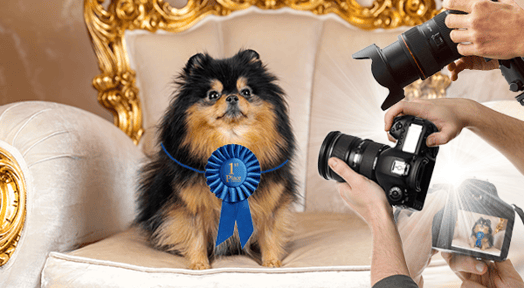
Many owners will also pony up for professional photo shoots and ad spreads in one or more of the dog-show industry’s numerous monthly trade magazines such as Dog News and Canine Chronicle, paying between $200 and over $2k for the privilege of exposure. For a big-ticket competition like Westminster, the combined costs of campaigning can easily total well into the six figures.
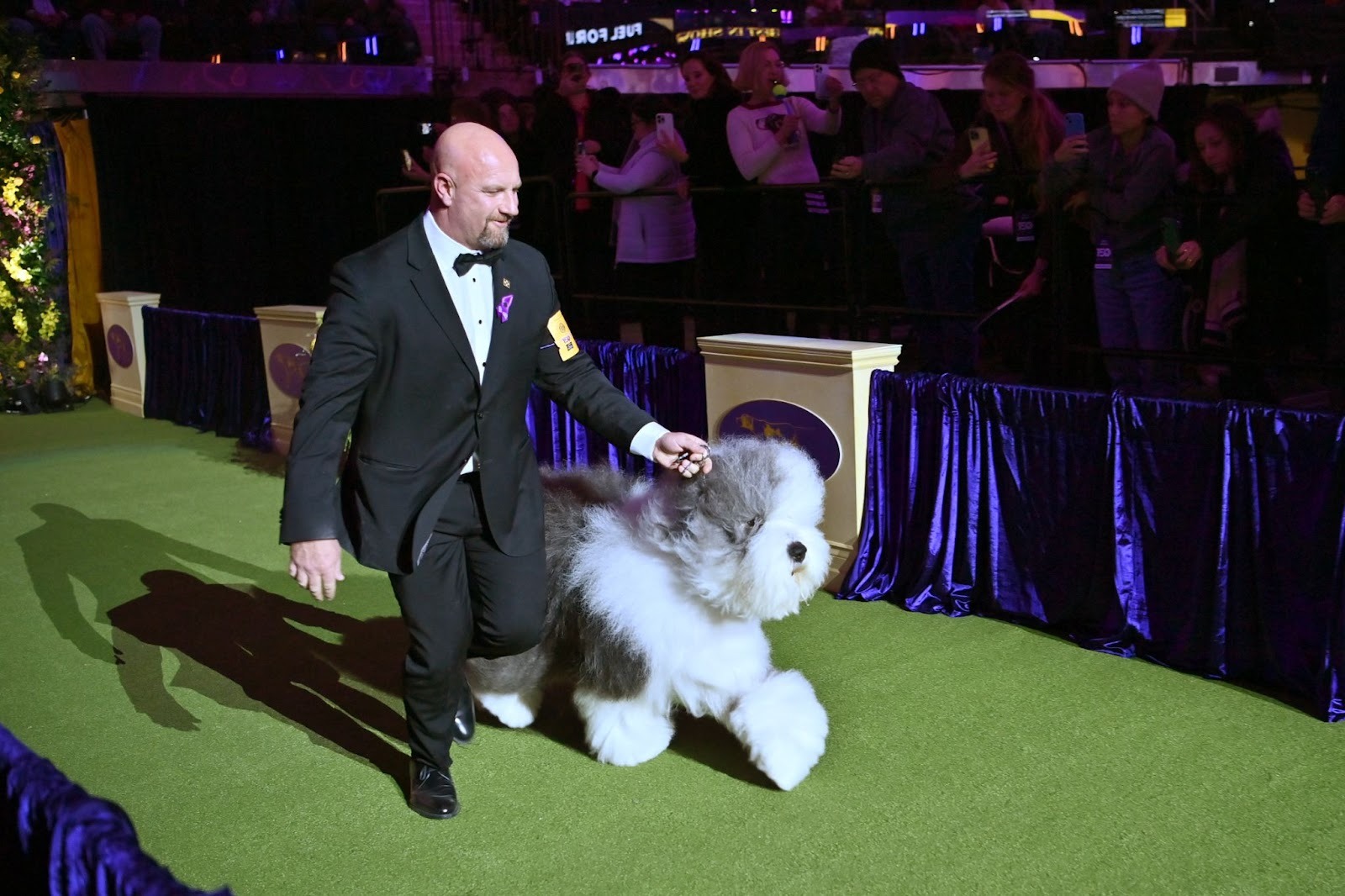
Graham, an Old English Sheepdog at the Westminster Dog Show. (Roy Rochlin/Getty Images)
The standards for success are exacting. The Westminster Dog Show is run by the Westminster Kennel Club and American Kennel Club (AKC), a 142-year-old purebred dog registry that sanctions some 5k regional and breed-specific dog clubs throughout the country.
The kennel clubs’ joint mandate is to ensure the health and continuity of each breed and variety under their oversight. In a competition setting, that means rewarding the dogs that adhere the closest to their breed’s original blueprint, whether it was first engineered to pull a cart, herd a flock, root out rodents, or look regal on a noblewoman’s lap.
“Every breed has a standard, and the idea is that you’re breeding dogs to that standard,” explains Victoria Sottile, Abigail’s breeder, owner, and show handler.
“So for bull terriers, you want an egg-shaped head that's filled under the eyes and filled in the muzzle, with no noticeable indentations and ears right on top of the head, and triangular, dark, deep-set eyes. There's a standard for every part of the anatomy that you take into consideration when assessing the qualities or virtues that your dog has and what she lacks, and you want to breed for complementary genealogy and physiology.”
Given the stakes, many owners hire professional handlers to guide the dog through the judging circuit, spending between $500 and $1.5k per event — and sometimes more for a prestige event such as Westminster. If a pooch then gets ranked as the best of its breed or breed group, owners can expect to shell out additional handler bonuses in the hundreds of dollars, and between $2.5k and $5k for the coveted Best in Show title. Travel, boarding, and grooming tack on more costs.
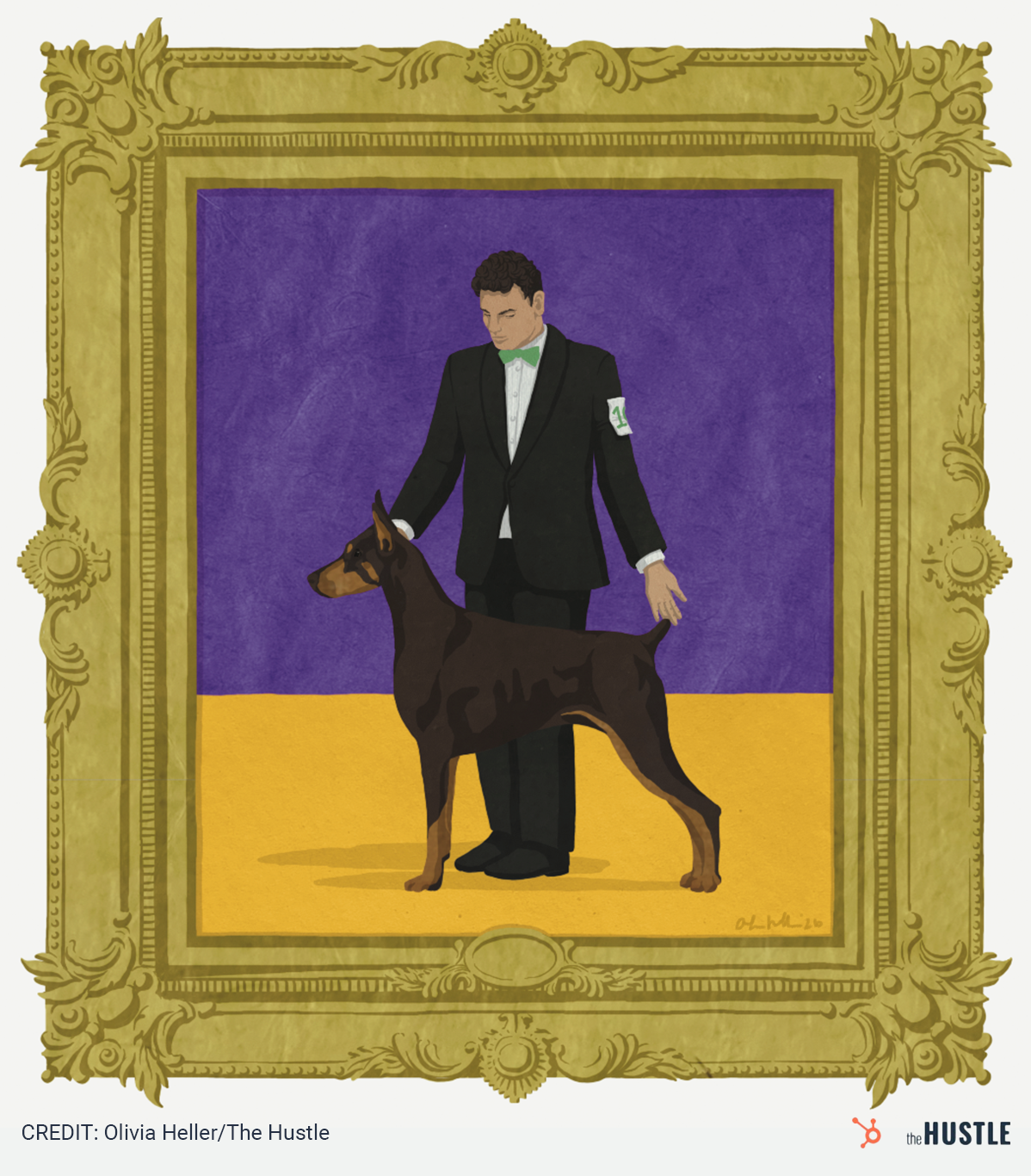
 Olivia Heller/The Hustle
To keep expenses manageable, some owners opt to go DIY.
Stacy Pagel watched instructional YouTube videos to learn how to groom her Saint Bernard — GCHG CH Kris's Kountry Three Card Monte V Northstar, or “Panda” for short. The 170-pound pup requires one to two double-shampoo and styling sessions every month, which would run Pagel upwards of $150 per appointment where she lives in southwestern Wisconsin.
But Pagel’s approach doesn’t exactly come cheap, either. “You have to buy the equipment. Dryers will cost $100 or $200, and then you have all the different types of scissors” — easily hundreds of dollars altogether — “plus the whole process takes around four hours every time,” she says.
Custom shampoo and coat conditioner require frequent restocks, as do the special pants Panda wears off duty to keep his legs clean and white in between baths. (“If you let his coat get too wet too often, it’ll turn yeasty.”)
Like a majority of show dog owners, Pagel does her own handling at competitions instead of paying a professional. But simply entering the ring with leash in-hand is a costly endeavor, requiring the use of special dog leads and snappy attire. At this year’s event, an onsite vendor stall showcased racks of tweedy skirtsuits, the unofficial uniform of Westminster handlers.
They were priced upwards of $1.5k a pop.
What’s in it for the winners
Though there’s plenty of money to be made from the dog show ecosystem, the people behind the dogs aren’t necessarily seeing major windfalls. Most dog shows hand out ribbons and trophies instead of cash prizes to even their biggest winners; last week’s Westminster’s Best in Show champ, Penny the Doberman Pinscher, went home with the Westminster Legend Trophy, a handsome crystal bowl.
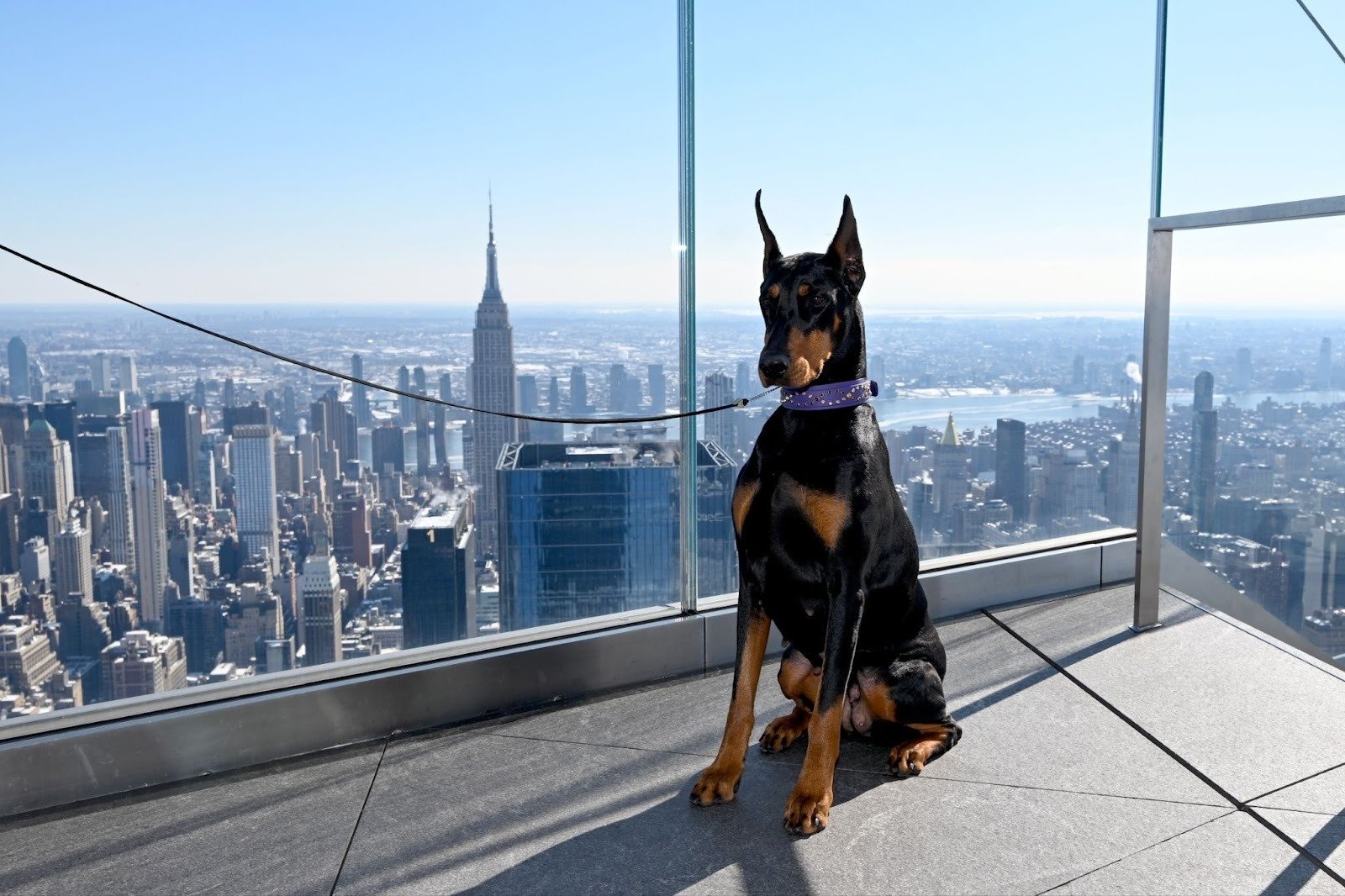
Penny the Doberman Pinscher basks in the glow of victory at a Hudson Yards luncheon. (Bryan Bedder/Getty Images)
Where the titles do pay off is in the value of a show dog’s breeding stock. People who want to raise a future show dog tend to favor the genes of a champion dog.
Winning the judges’ favor reflects well on a dog’s demeanor and adaptability, says Jane Dekovich, a Richmond travel agent who used to show Hungarian Pulis — a herding breed with thick, yarnlike fur. “These dogs have to be around other dogs in close quarters. They have strangers coming up and touching their genitals. They’ve got to get cool with a lot really quick. And dogs that aren't comfortable with that don't make it.”
Christina Miller, a breeder-owner-handler based in northwest Georgia, says that winning titles can also help demonstrate the quality of a breeding program, which leads to easier placement for puppies and a stronger reputation within breed circles.
“The more you can title your dogs, the better puppies you know you're producing,” says Miller, who was at Westminster to show a father-son pair of Canaans, a rare herding breed originating from the Levant.
Regardless of dog-show outcomes, Miller sells her puppies for about $3k each, which she says is standard for uncommon breeds. But that cost also reflects extensive early training, socialization, health testing, and lifelong breeder support. She says that when all is said and done, she’s lucky to break even.
Other event participants take a decidedly more profit-driven approach, leveraging top-tier titles for premium pricing on puppies and champion sperm. “Some of these dogs go for five or six figures,” Dekovich says. Similarly, for an elite minority of professional dog handlers and breeders, a record of victory can net a six-figure annual income.
But most people on the dog show circuit are forced to pursue their passion while supporting themselves with other work. Miller used to work in veterinary care and now runs a small boarding kennel and dog-training supply business. Sottile, Abigail’s owner, recently retired from a 36-year teaching career in the Brooklyn public school system. Both agree that breeding and showing dogs is no way to get rich — at least, not without cutting a whole lot of ethical corners.
As Sottile sees it, the dog-show economy thrives on dog lovers’ sense of avocation.
“We do this because we love the breed and we want the breed to improve and stay healthy and to continue,” she says. “Anyone who does it for money, their heart isn't in the right place.”
animals