
The art and science behind naming your favorite brands.
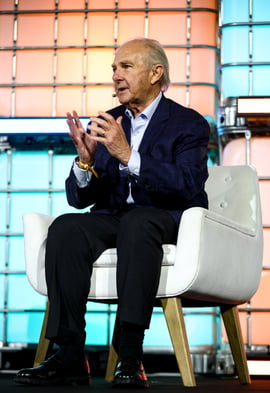
David Placek was used to hearing no. A team of tech executives sat in front of him, arms crossed, unconvinced.
They were inside a windowless vault, the conference room of Placek’s Sausalito office that once used to house naval maps.
It was 1998, and he was presenting names for a new device, a pager that would send email messages back and forth.
They’d asked Placek and the team at his firm, Lexicon Branding, to go in two directions. One, the safe play, included names like ProMail, EasyMail, DynaMail. The other, more imaginative name the team had dreamed up was BlackBerry.
The executives looked confused, dismissive even. They said it was crazy.
BlackBerry would go on to become one of the most recognizable brand names in technology. (Photo by Ethan Miller/Getty Images)
Placek explained that they’d interviewed people taking the ferry from San Francisco to Sausalito, and their response to the prospect of email had been the same: stress. The name needed to evoke joy.
A recent wave of research in six languages and countries had also determined:
- B is one of the most reliable sounds in the English alphabet.
- Black is recognizable across multiple languages.
- A blackberry brings an element of delight.
There was one more thing, he told them.
“Your current competitors would never have the courage to put BlackBerry on a device,” he told them.
They had liftoff.
Placek has been in the name game a long time. He’s the brain behind Swiffer, Windsurf, Subaru’s Outback, Microsoft’s Azure. Lexicon Branding has named nearly 4k products and businesses worth billions of dollars. Placek is the wizard behind the curtain.
How does he do it?
Why names matter
Early on in his career, Placek noticed something. The world was becoming more interconnected, more global, more competitive. Names, he thought, were going to become more important. They need to work across cultures and languages. They need to cut through more noise than ever before.
“I was right,” he says.
Placek’s philosophies are underpinned by an area of research called sound symbolism: the way letters and sounds trigger psychological responses in the brain. Through decades of study, Lexicon has mapped the alphabet’s emotional terrain with precision.
- The letter “V” (as in Corvette or Vercel) signals vibrance and vivacity.
- The letter “X” (like SpaceX), crisp and quick, indicates innovation.
- Names from compound words (like Windsurf) offer multiplying associations, from wind, surf, and windsurf all at once.
- Names with repetitive phonetic sounds (like Sonos or KitKat) are viewed more favorably.
A name isn’t just a word. To Lexicon’s team, it’s a poem, a series of sensations firing in a listener’s brain, unfurling stories, emotions, inferences, before a single dollar has been spent.
“It should act as your most original and distinctive piece of marketing,” he says.
The right name, he says, has three elements:
- It inspires imagination and trust.
- It communicates an idea, not describes a product.
- It’s accessible.
It’ll be spoken, typed, searched, hashtagged and, ideally, remembered. Get the name right, he says, and you’ll have leverage that compounds over time.
“Consumers don’t look at a brand name on a shelf and start picking the word apart,” he says. “They start imagining what it means and what it is for them.”
Babies start with words like “mama” and “dada,” consonant-vowel-consonant-vowel structures that are easy to understand and to recall. Our brains work the same way.
Building momentum
Placek’s career began in politics. After a stint as press secretary on a Senate campaign, he was hired at Foote, Cone and Belding, a prominent ad agency. He learned he had a knack for translating what his clients were hoping to say, and eliciting great work from the firm’s creatives.
Seven years later, in 1982, he started Lexicon, his own agency focused exclusively on naming.
“It was a lark, in the sense that I wasn’t married, I didn’t really have any debt, and I knew I could go back to FCB or another agency,” he says. “So I said, I’m just going to do this.”
For five years, he hung on tight to his belief that names were mission critical to business success, making enough money to live but not much more. Once, on a flight to Tokyo, he shared what he did for work with a group of fellow travelers and they laughed in his face.
“It strengthens your character,” he says. And your resolve.
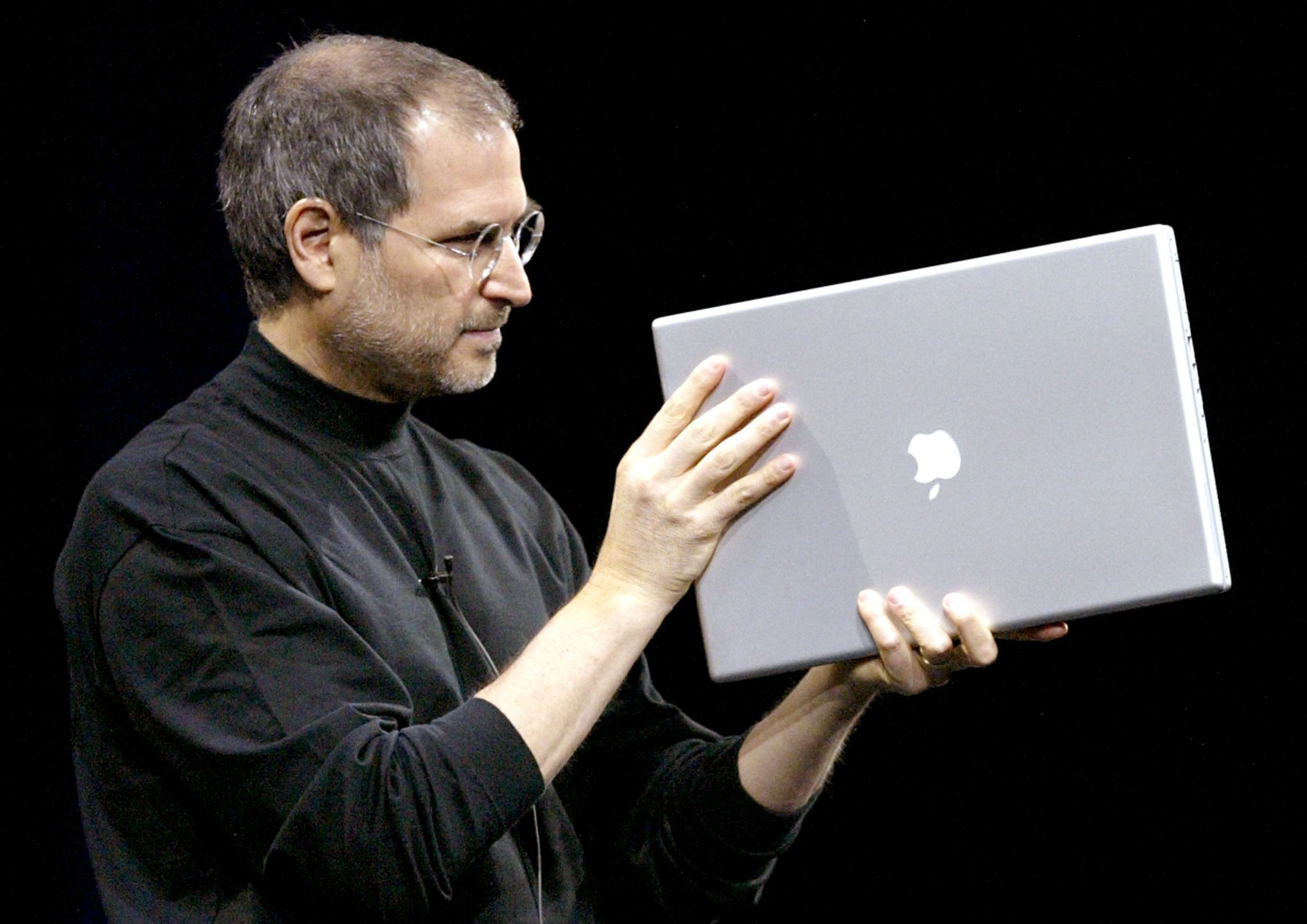
Steve Jobs holds up Apple’s bestselling PowerBook, another of Placek’s names. (Photo by Justin Sullivan/Getty Images)
Momentum was growing. He’d named Subaru’s new SUV, the Outback, and Apple’s first laptop, the PowerBook.
After he christened Intel’s processing chip Pentium, that name became better known to consumers than Intel itself.
A treasure hunt
Finding the right name is like sifting for gold. At Lexicon, they cast a wide net. “It’s a deep sea,” he says.
They often start with Greek and Latin root words or Greek and Roman mythology. When he’s brainstorming, Placek sits down with a pad and pen and starts to free associate.
Everything is fodder for inspiration: the periodic table of elements, an aurally pleasing palindrome. The company’s databases, organized by principals like “small things” and protected like a walled garden, sound like Willy Wonka’s factory for word nerds.
When he hits a slump, he goes looking for unlikely connections, armed with curiosity and a long-held belief in synchronicity. If he’s working on a household product, for example, he’ll buy a couple of aeronautics magazines. He’ll consult AI for information on the work of a physicist he just learned about. He’ll spend some time in the Lexicon library, a room of 1.5k books on math, history, language, and more.

Subaru’s Outback was coined by Lexicon, too. (Photo by Adam Gray/Getty Images)
“It’s a treasure hunt,” he says. “I don’t get frustrated. You have to break set. You can’t sit at your desk and just strain. Take a walk, get magazines, listen to a speech from someone, read something on Aristotle.”
Process and poetry
One early decision Placek made was to move away from corporate positioning and toward linguistics, much to the chagrin of some of his more logical clients.
His team focuses on four central questions:
- What does winning look like?
- What do we have to win?
- What do we need to win?
- What do we need to say?
From there, they split into two-person teams. One team knows everything about the client and their hopes for the product. The second team thinks they’re working for a competitor. And the third team comes up with a list for a completely unrelated product.
They generate 2k names between them, before whittling them down to a shortlist of 50 to 100 to take to the client.
Alongside the namers, Lexicon works with 105 linguists, many of whom are professors at universities, in 78 different countries to help identify useful prefixes, suffixes and infixes, and to assess a name’s cultural relevance, political implications and repeatability.
That network and the proprietary research Placek spent years and $6m to develop are his own compounding leverage.
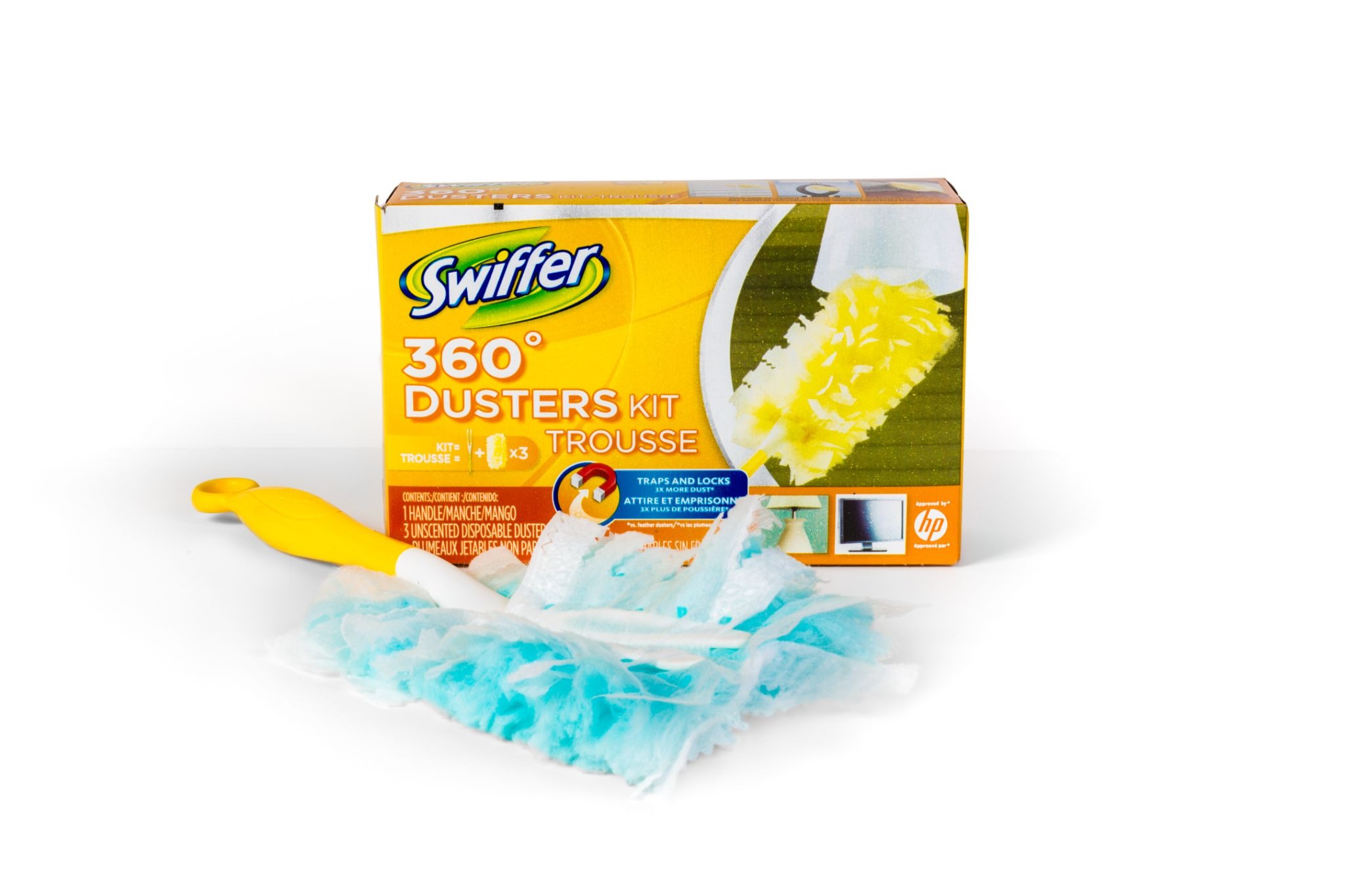
Swiffer: the name that launched a slew of offshoots. (Getty Images)
It’s never been tougher to get a consumer’s attention. The global market is saturated, and with more than 5.5m trademarks registered in the US today, so is the trademark registry. On a recent project for an insurance company client, Placek says, they were contending with 531k names already in existence.
“That’s bigger than the dictionary,” he says.
He advises to avoid naming by committee, to look instead for a name that generates heat and sparks conversation.
Today, Placek’s fingerprints are everywhere: Sonos, Dasani, Febreze. Out in the world, he and his team play a game. If they can take a drive down the freeway, and line up three cars in a row named by Lexicon, that counts as a win.
Billions > millions
Placek likes to tell a story that illustrates the chasm between the right name — one that’s surprising and familiar all at once — and more predictable choices.
When Proctor and Gamble hired the firm to name a new cleaning product they’d developed, a mop without strings, they looked to words like sweep, swipe, and swift, words that danced around the unfortunate fact that nobody really likes to mop.
They landed on Swiffer.
A few years later, in 2002, Clorox launched a similar product and called it ReadyMop. That brand is worth ~$200m today, Placek says.
“ReadyMop is comfortable, it’s acceptable,” he says. “But it’s not a tool.”
Swiffer? It’s a ~$5B brand.
branding